Hear from Our Customers
When you’re working with steel, aluminum, or titanium, heat is the enemy. Traditional cutting methods create warping, discoloration, and hardened edges that slow down your project and cost you time in secondary finishing.
Waterjet cutting metal eliminates that problem completely. No heat means no distortion, no burrs, and no heat-affected zones that compromise material integrity. You get a smooth edge straight off the table, ready to weld, assemble, or install.
The process is CNC controlled, so your parts come out exactly as designed. Tolerances hold to +/- 0.001″ even on complex shapes with tight inside corners. That precision matters when you’re building something that has to work right the first time, whether it’s architectural metalwork for a Long Island commercial project or custom components for marine fabrication.
Material waste drops too. The cutting stream is narrow—about 0.030″ to 0.040″—so parts can nest tightly on the sheet. You’re not throwing away expensive material because of wide kerfs or rough cuts that need trimming.
We operate out of West Islip, NY, serving contractors, architects, designers, and fabricators across Long Island and the tri-state area. We run a Flow Mach 500 CNC waterjet system and maintain AS9100D certification for precision work.
Our team comes from a traditional machining background, so we understand tolerances, material behavior, and what it takes to produce parts that actually work in the field. That experience shows up in how we handle your files, recommend materials, and communicate throughout the job.
West Islip’s location gives us quick access to the marine, construction, and manufacturing industries that drive demand for custom metal cutting on Long Island. Whether you’re in Babylon, Islip, or farther east, turnaround stays fast because we’re local and the process is efficient.
The process starts with your CAD file. You send over a DXF, DWG, or similar format, and we review it for any potential issues—tight tolerances that might need adjustment, material thickness considerations, or nesting opportunities to save you money.
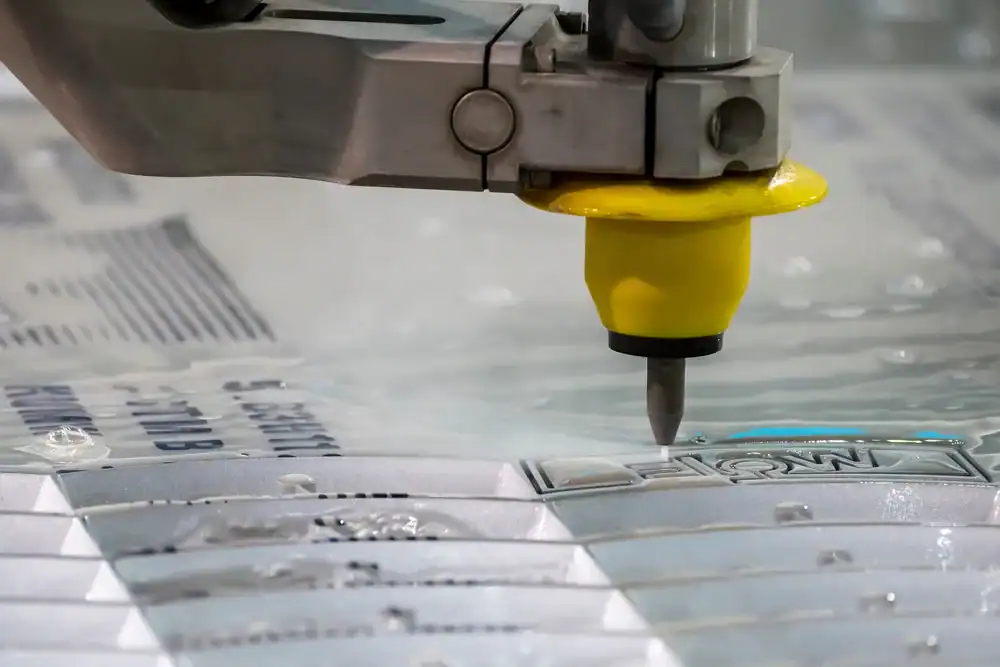
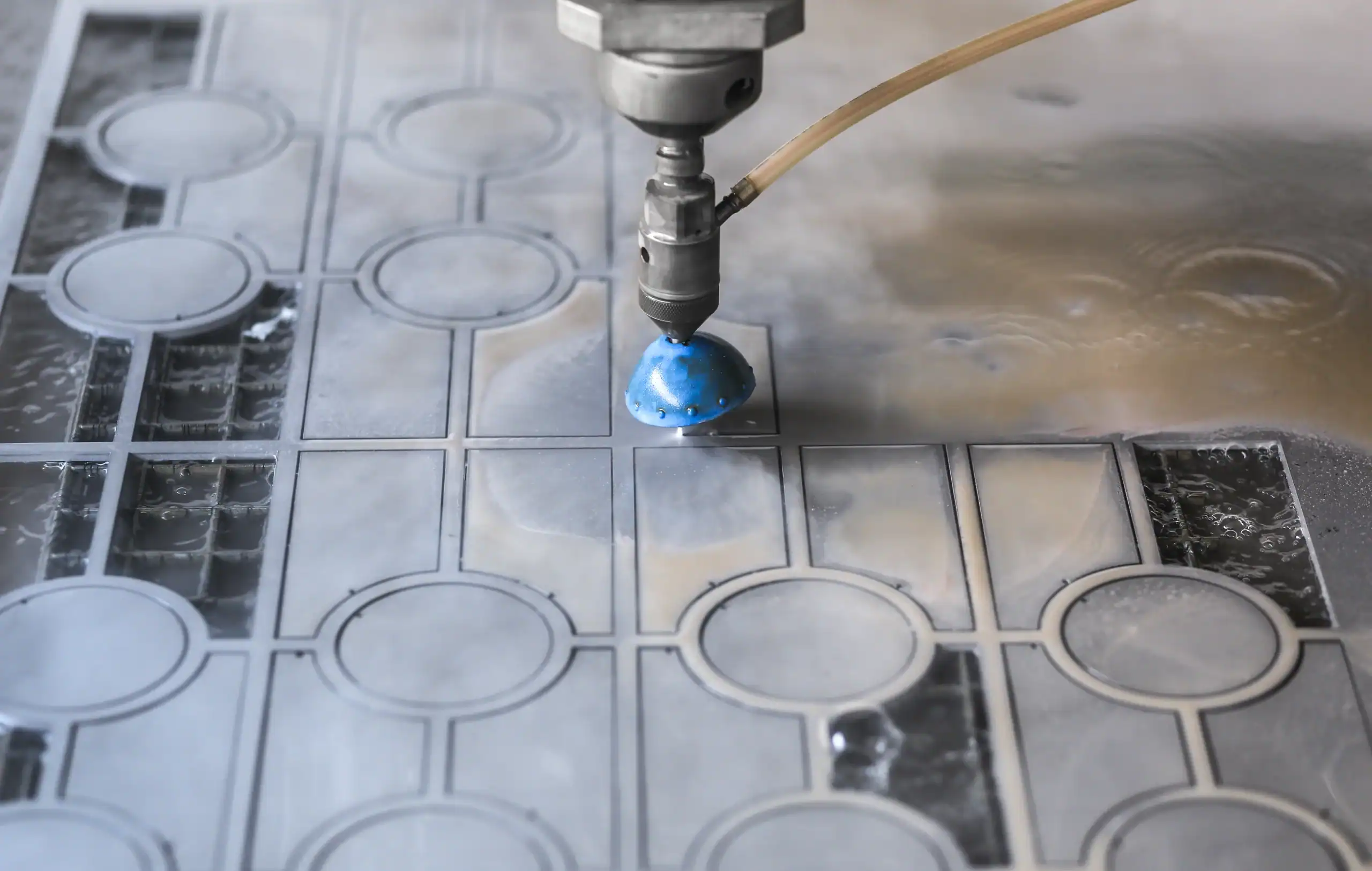
Once the file is dialed in, it goes directly into the CNC system. The waterjet uses a high-pressure stream mixed with abrasive garnet to cut through metal with precision. The cutting head follows your design exactly, handling sharp corners, small holes, and intricate shapes without the limitations of traditional tooling.
There’s no heat involved, so the material stays cool throughout the cut. That means no warping on thin sheets, no discoloration on stainless steel, and no hardening on tool steel that would require annealing. The edge comes off smooth—not mirror-polished, but clean enough that most applications don’t need additional finishing.
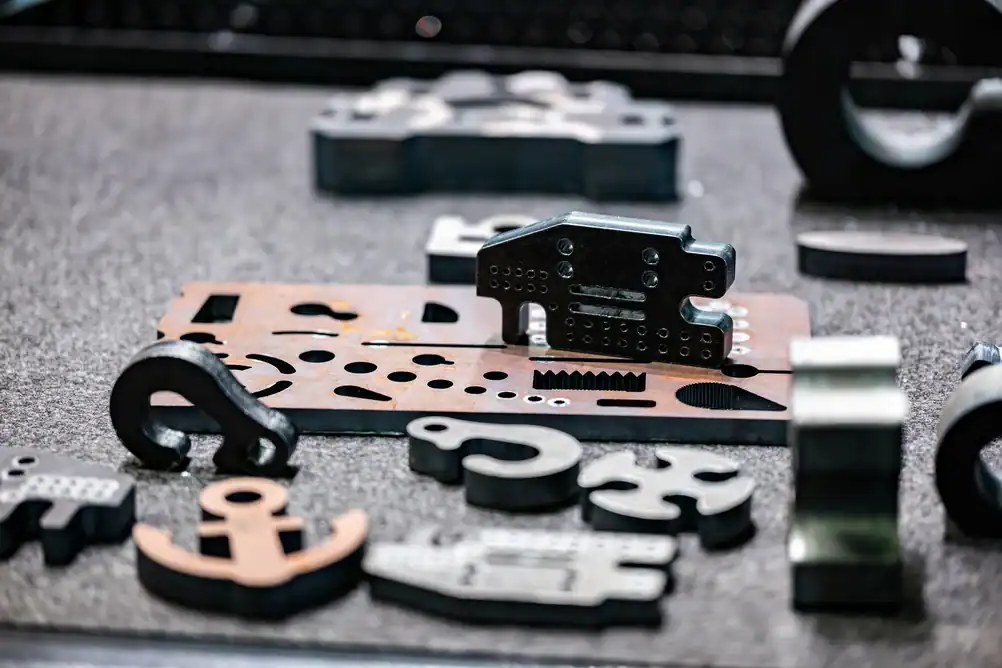
Thickness capacity ranges from thin gauge sheet up to several inches, depending on material. Steel, aluminum, brass, titanium, Inconel—the process handles them all. After cutting, parts are inspected, deburred if needed, and prepped for pickup or delivery.
Ready to get started?
Every job includes material consultation upfront. If you’re not sure whether to use 304 or 316 stainless for a marine application, or whether aluminum thickness will hold up under load, you get that guidance before the cut happens.
CNC programming comes standard. Your CAD file gets optimized for the waterjet process, with lead-ins, lead-outs, and toolpathing that maximizes speed without sacrificing edge quality. You’re not paying for trial-and-error programming or wasted material from inefficient nesting.
Edge finish is consistent. Waterjet cutting produces what’s called a “striation pattern”—slight vertical lines on the cut edge. On thinner materials and slower cutting speeds, those striations are minimal and the edge is smooth enough for most applications. Thicker materials or faster cuts may show more pronounced lines, but even then, the edge is clean and burr-free.
West Islip’s proximity to Long Island’s construction and marine industries means we understand local project demands. Fast turnaround matters when you’re coordinating with other trades or waiting on a part to finish a build. We prioritize communication and realistic timelines, so you know when to expect your parts and can plan accordingly.
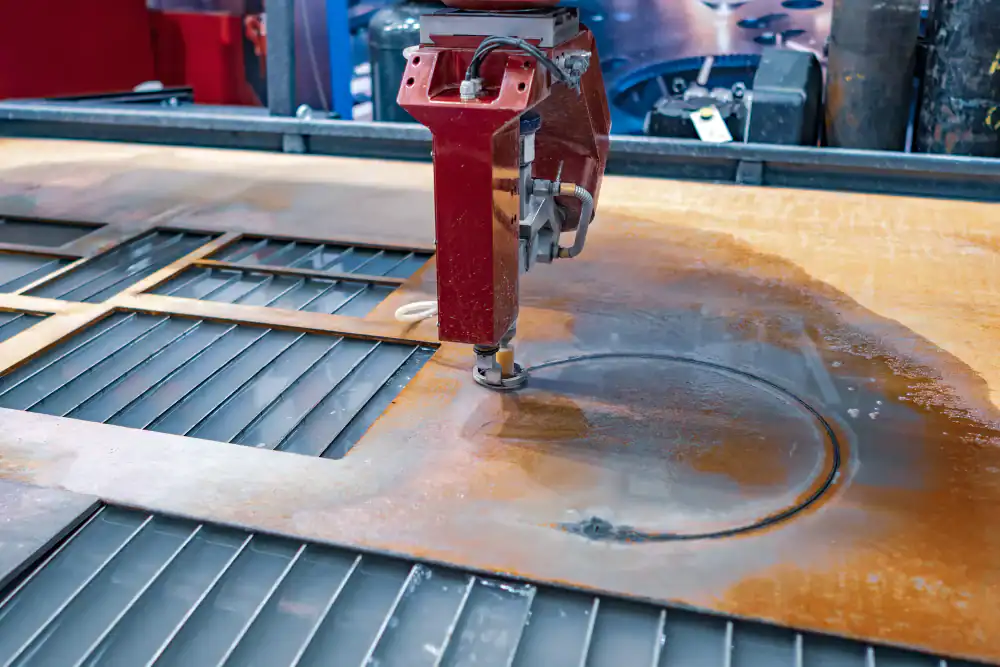
Waterjet handles nearly any metal you’d use in construction, fabrication, or manufacturing. Steel—mild, tool, or stainless—cuts cleanly without heat distortion. Aluminum is straightforward, from thin sheet up to thick plate. Brass, copper, and bronze work well for architectural or marine applications.
Harder materials like titanium and Inconel are where waterjet really shines. These metals are difficult to machine with traditional methods because of work hardening and heat buildup, but waterjet’s cold-cutting process eliminates those issues. You get clean cuts without degrading the material properties.
Thickness depends on material hardness and your tolerance requirements. Steel can be cut up to 8 inches thick, though most jobs fall in the 1/4″ to 2″ range where speed and accuracy balance out. Thicker cuts are possible but slower, and the edge angle may drift slightly as the stream passes through more material.
Standard waterjet cutting holds tolerances around +/- 0.005″ on most materials and thicknesses. With optimized programming and slower cutting speeds, that can tighten to +/- 0.001″ on thinner materials—comparable to laser cutting but without the heat.
Accuracy depends on material thickness. Thinner sheets hold tighter tolerances because the cutting stream stays more focused. As thickness increases, the stream widens slightly, which can affect edge angle and dimensional accuracy. For critical tolerances on thick material, secondary machining might be needed.
The CNC system controls the cutting head directly from your CAD file, so dimensional accuracy matches your design. Inside corners, hole diameters, and complex contours come out as programmed. There’s no tool deflection or chatter like you’d see with milling, and no thermal expansion like you’d get with plasma or laser cutting.
Most jobs turn around within a few days, depending on material availability and shop schedule. Simple parts from stock material can often be cut same-day or next-day if you’re in a bind. More complex jobs with special materials or high quantities might take a week.
Turnaround depends on cutting time, which varies by material and thickness. Thin aluminum cuts fast—sometimes several feet per minute. Thick stainless or titanium slows down to inches per minute to maintain edge quality. We provide realistic timelines upfront based on your specific job.
Being local to West Islip helps. You’re not waiting on shipping from across the country, and if there’s a question about your file or material choice, it gets resolved with a quick call instead of days of email back-and-forth. Rush jobs are possible when the schedule allows.
Waterjet cutting produces a smooth edge with minimal to no burrs, especially compared to plasma or laser cutting. The edge has a slight texture from the abrasive particles, but it’s not rough or sharp. Most parts go straight to welding, assembly, or installation without additional finishing.
The edge quality depends on cutting speed. Slower speeds produce smoother edges with finer striations. Faster speeds leave more pronounced vertical lines on the cut face, but even then, the edge is clean and consistent. There’s no slag, dross, or heat-affected material to grind off.
If your application requires a polished or deburred edge, that’s a quick secondary process. But for structural parts, brackets, panels, or components that get powder coated or painted, the waterjet edge is usually fine as-is. You save time and labor by skipping the grinding and finishing steps that other cutting methods require.
Waterjet doesn’t generate heat, which matters when you’re cutting materials that warp, harden, or discolor under thermal stress. Stainless steel stays bright and clean without oxidation. Aluminum doesn’t warp on thin sheets. Tool steel doesn’t harden at the cut edge, so you can machine or drill it afterward without breaking bits.
Laser cutting is fast and accurate, but it’s limited by material thickness and creates a heat-affected zone. Plasma is even hotter and leaves a rough edge that needs grinding. Both methods can cause warping on thin material or distortion on long, narrow parts. Waterjet eliminates those issues entirely.
Material versatility is another factor. Waterjet cuts reflective metals like brass and copper that cause problems for lasers. It handles thick plate that’s beyond laser capacity. And it works on hardened or exotic materials like Inconel and titanium without the tooling wear or heat buildup you’d see with mechanical cutting. For shops that need one process to handle multiple materials and thicknesses, waterjet is the most flexible option.
Waterjet cutting costs more per hour than plasma but less than laser for most materials and thicknesses. The real cost comparison depends on your specific job—material type, thickness, edge quality requirements, and whether you need secondary finishing.
For thin sheet metal with simple shapes, plasma or laser might be cheaper upfront. But if those methods leave burrs, heat distortion, or rough edges that need grinding, your total cost increases when you factor in labor and time. Waterjet’s clean edge often eliminates that secondary work, which balances out the per-hour cutting cost.
For thicker materials, exotic metals, or jobs where heat distortion would ruin the part, waterjet is often the only viable option. The operating cost runs around $14 per hour for the machine, plus material and labor. We provide quotes based on your file and material, so you know the cost upfront without surprises.
Useful Links
Other Services we provide in West Islip