Hear from Our Customers
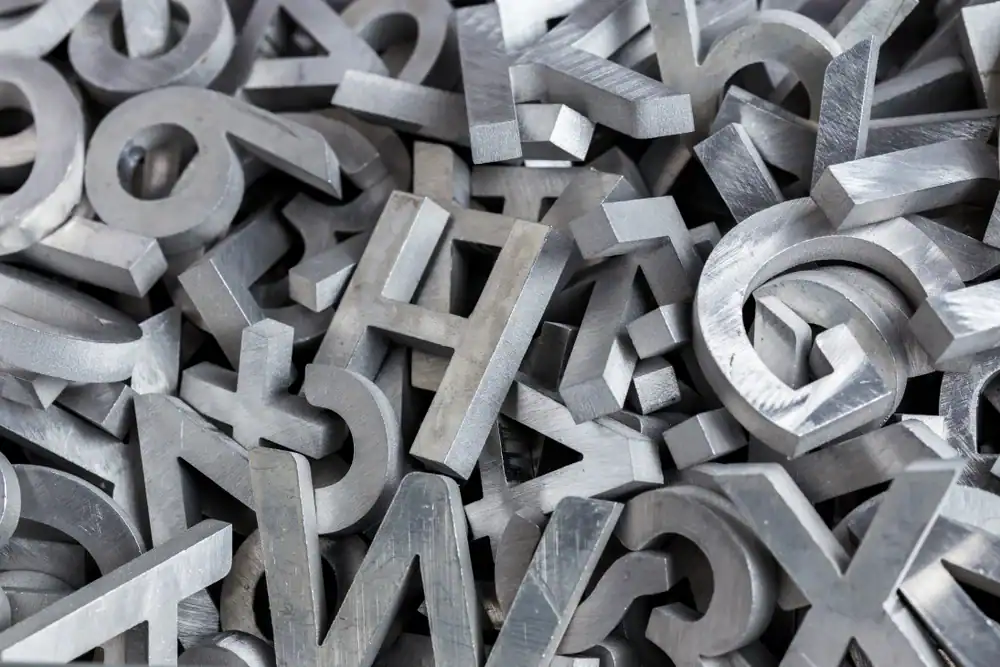
You don’t have time for parts that need rework. When tolerances matter and your timeline is tight, waterjet cutting metal gives you accuracy down to thousandths of an inch with edges clean enough to skip secondary finishing in most cases.
No heat means no distortion. Your stainless steel, aluminum, titanium, or composite materials come off the table exactly as designed—no warping, no hardened edges, no micro-cracks that show up later. Whether you’re prototyping a single piece or running a full production batch, the cut quality stays consistent from part one to part one thousand.
This matters when you’re working with expensive materials or complex geometries. Less waste, fewer rejected parts, and no need to factor in extra processing time or cost. You get what you ordered, when you need it, ready to install or assemble.
We bring precision waterjet cutting, custom design consultation, and material expertise to manufacturers, fabricators, architects, and contractors across Woodmere, NY and the greater Long Island area. Based in West Islip, we’re close enough to understand your local project demands and experienced enough to handle everything from one-off custom pieces to full production runs.
Woodmere’s proximity to major manufacturing centers, aerospace suppliers, and custom fabrication shops means you need a cutting partner who understands tight deadlines and tighter tolerances. We’ve built our reputation on delivering both—without the runaround or the wait times you’d get from larger, less responsive operations.
When you’re dealing with supply chain delays, rising material costs, or projects that require custom solutions, you need someone who gets it done right the first time. That’s what we do.
You send us your design file—CAD, DXF, or even a sketch if that’s what you’re working from. We review it, confirm materials and tolerances, and flag anything that might cause issues before we start cutting. No surprises halfway through your job.
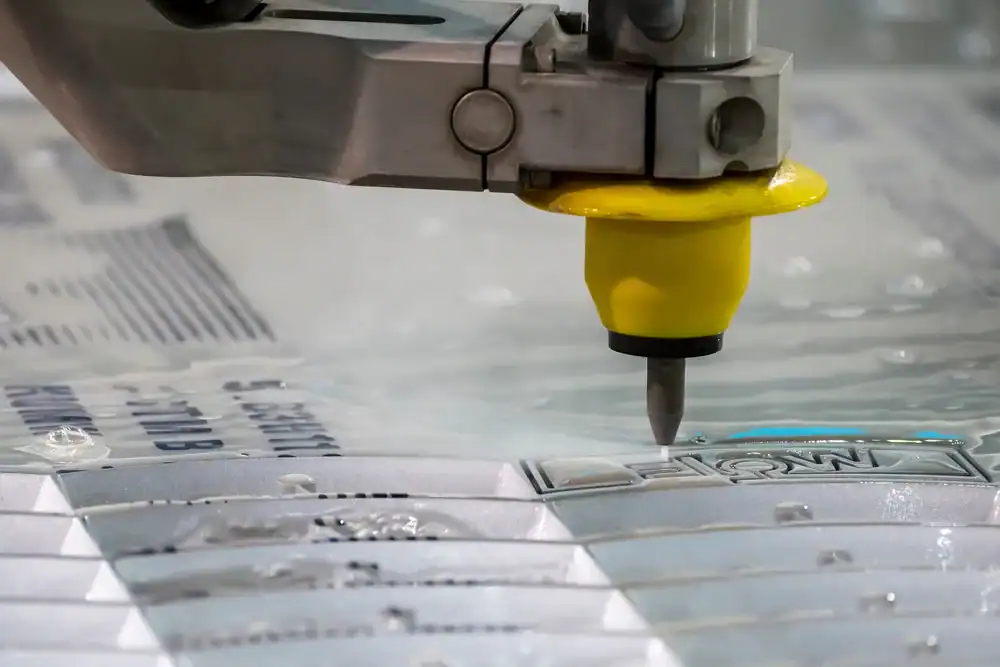
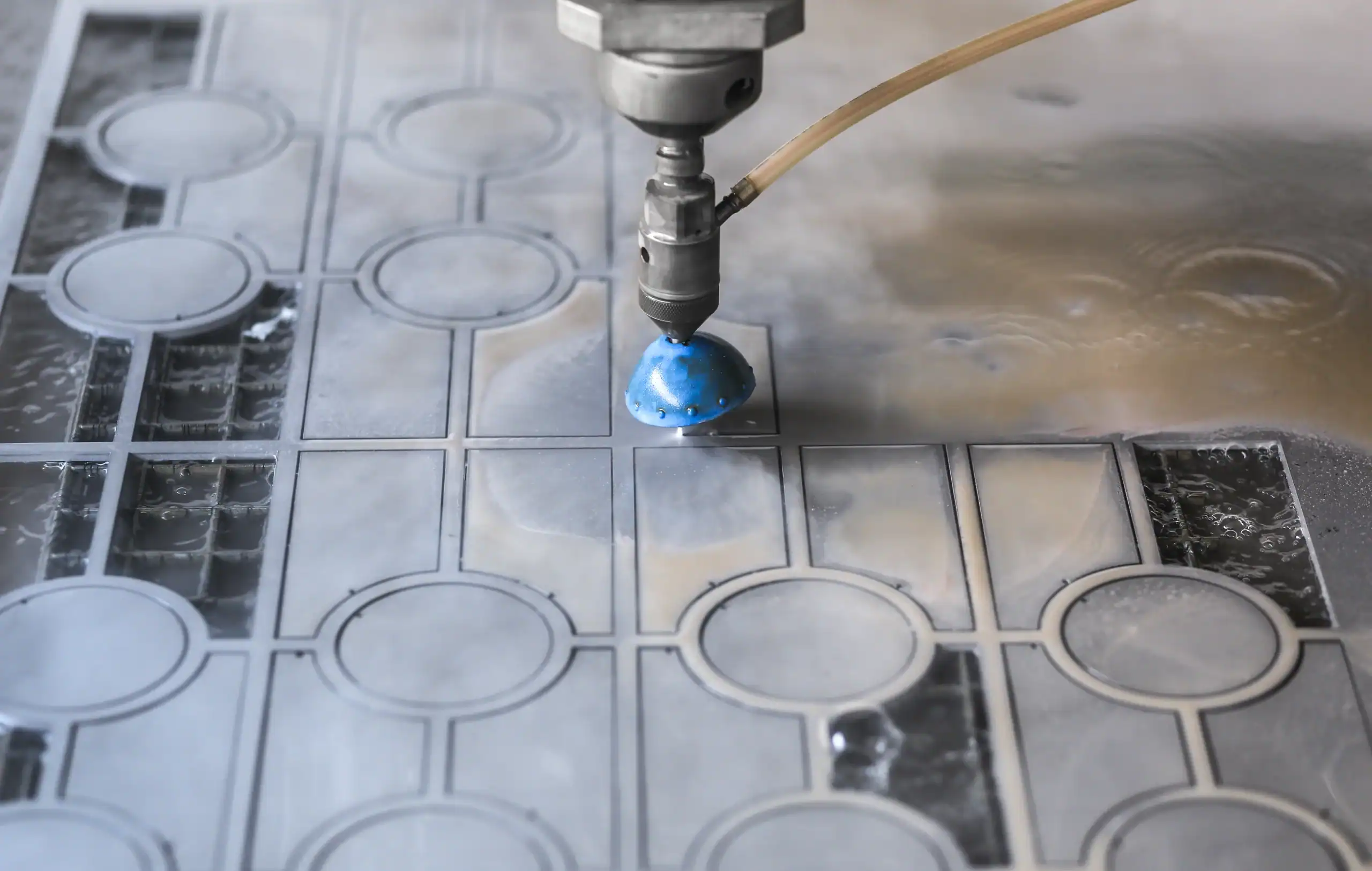
Once everything’s confirmed, your material goes onto our CNC waterjet table. A high-pressure stream of water mixed with abrasive garnet cuts through metal with a kerf width thinner than most saw blades—usually around 0.03 inches. Because there’s no heat, there’s no warping or hardening along the cut edge. Complex shapes, tight inside corners, and intricate patterns all come out clean.
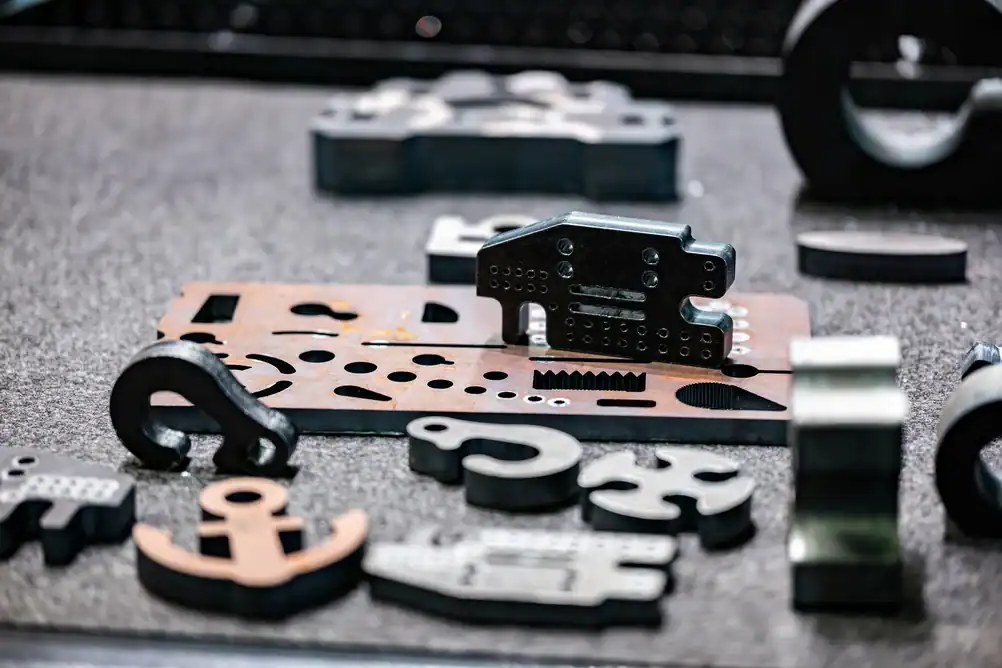
After cutting, parts are inspected and prepped for pickup or delivery. Most jobs don’t need deburring or additional finishing, which saves you time and money on the back end. If your project does require secondary work, we’ll let you know upfront so there are no delays when you’re ready to move forward.
Ready to get started?
Waterjet cutting handles virtually any metal you’re working with—stainless steel, aluminum, titanium, brass, copper, tool steel, and more. Thickness isn’t a limiting factor either. We cut materials from thin gauge sheet up to several inches thick, all with the same level of precision and edge quality.
In Woodmere and across Nassau County, manufacturers are dealing with tighter budgets and less room for error. Material costs are up—iron and steel prices have more than doubled in recent years—so waste isn’t just inefficient, it’s expensive. Waterjet cutting minimizes scrap by maximizing sheet utilization and eliminating the need for oversized blanks that account for heat distortion or rough edges.
You also get an environmentally responsible process. No toxic fumes, no hazardous waste, and no heat-affected zones that compromise material integrity. The water is recyclable, and the garnet abrasive is inert. If you’re working on projects with environmental standards or LEED requirements, waterjet cutting checks those boxes without adding steps to your workflow.
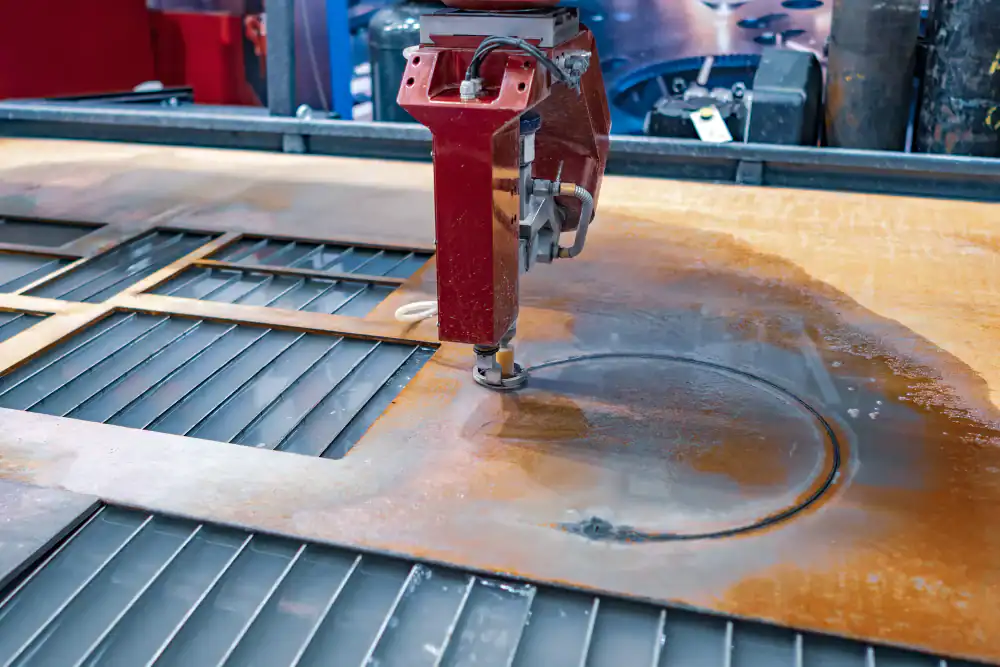
Waterjet cutting works on nearly every metal you’d use in fabrication or manufacturing. Stainless steel, aluminum, titanium, brass, copper, tool steel, Inconel, and hardened alloys all cut cleanly without heat damage or material property changes.
Thickness range is wide too—from thin gauge sheet metal up to 6 inches or more depending on material hardness. The process doesn’t care if your material is soft or hardened, reflective or coated. There’s no risk of melting, warping, or creating a heat-affected zone that weakens the edge or changes the temper.
If you’re working with composites, laminates, or mixed-material assemblies, waterjet handles those as well. The cold-cutting process won’t delaminate layers or cause fraying in fiber-reinforced materials. That versatility means you can consolidate multiple cutting methods into one process, which saves time and reduces the chance of errors when transferring parts between machines.
Waterjet cutting delivers tolerances as tight as ±0.003 inches on most materials, which is more than sufficient for precision fabrication, aerospace components, and custom machinery parts. The CNC control system follows your design file exactly, and because there’s no mechanical force pushing against the material, there’s no deflection or vibration affecting accuracy.
Edge quality is another factor that impacts your final tolerances. Waterjet produces a smooth, square edge with minimal taper, so parts fit together correctly without gaps or interference. You won’t need to account for extra material to compensate for rough cuts or heat distortion like you would with plasma or torch cutting.
For projects where tolerances are critical—medical devices, turbine components, custom tooling—waterjet gives you repeatability across the entire production run. Part one and part one hundred come out identical. That consistency matters when you’re assembling complex systems or when parts need to be interchangeable without custom fitting.
Waterjet cutting doesn’t introduce heat, which means no warping, no hardened edges, and no changes to the material’s structural properties. Plasma and laser both create a heat-affected zone that can cause micro-cracks, temper changes, and dimensional distortion—especially in thicker materials or metals sensitive to thermal stress.
If you’re cutting stainless steel, aluminum, or titanium, heat can also create discoloration and oxidation that requires additional finishing. Waterjet leaves a clean edge that’s often ready to weld or assemble without grinding or secondary processing. That saves time and labor cost on every part.
Waterjet also handles thicker materials more effectively. Plasma and laser lose cut quality and speed as thickness increases, and both struggle with reflective metals like aluminum or copper. Waterjet cuts through thick plate and reflective materials without any loss in edge quality or accuracy. For complex shapes with tight inside corners, waterjet produces sharper detail than thermal cutting methods can achieve.
Turnaround depends on material availability, job complexity, and current shop schedule, but most custom metal waterjet cutting projects in Woodmere, NY are completed within a few days to a week. Simple cuts on standard materials can often be done faster, especially if your design file is ready to go and material is in stock.
Complex parts with intricate geometries or thicker materials take longer to cut because the waterjet stream moves more slowly through dense or hard metals. But even on detailed jobs, waterjet is often faster than traditional machining or multi-step fabrication processes that require tool changes, setups, and secondary finishing.
If you’re on a tight deadline, let us know upfront. We can often prioritize rush jobs or adjust scheduling to meet your project timeline. The key is clear communication from the start—accurate design files, confirmed material specs, and realistic expectations about what you need and when you need it. That’s how we keep projects on track without surprises.
Yes. Waterjet cutting is one of the few processes that handles both single-piece prototypes and high-volume production runs without a drop in quality or efficiency. There’s no tooling cost, no die setup, and no minimum order quantity that makes small runs uneconomical.
For prototyping, that flexibility is critical. You can test a design, make revisions, and cut another version without paying for new tooling or waiting for setup changes. If the design works, you move straight into production using the same process and the same quality standards. There’s no transition period or quality variance between prototype and production parts.
Production runs benefit from the same precision and consistency. CNC programming ensures every part matches your specifications exactly, and because there’s no tool wear or heat buildup affecting cut quality, part one thousand looks identical to part one. Whether you need ten parts or ten thousand, waterjet delivers the same accuracy and edge finish across the entire run.
Waterjet cutting eliminates several cost factors that add up with other methods. There’s no tooling expense, no heat-affected zone requiring secondary finishing, and minimal material waste due to the narrow kerf width and efficient nesting. For custom or low-volume work, those savings are significant.
Material costs are a major concern right now—steel prices have more than doubled in recent years, and aluminum and stainless aren’t far behind. Waterjet maximizes sheet utilization by cutting parts closer together and reducing scrap. The precision also means you’re not ordering oversized blanks to account for distortion or rough edges that need trimming.
Labor cost is another factor. Because waterjet produces clean, accurate cuts without secondary grinding, deburring, or heat treatment, you’re not paying for additional processing time. Parts come off the table ready for assembly or finishing, which speeds up your overall production timeline and reduces handling. For projects where time is money, that efficiency translates directly to cost savings.
Useful Links
Other Services we provide in Woodmere