
Hear from Our Customers

You’re not looking for close enough. You need parts that fit on the first install, edges smooth enough to skip secondary finishing, and cuts so precise you’re using every inch of material you paid for.
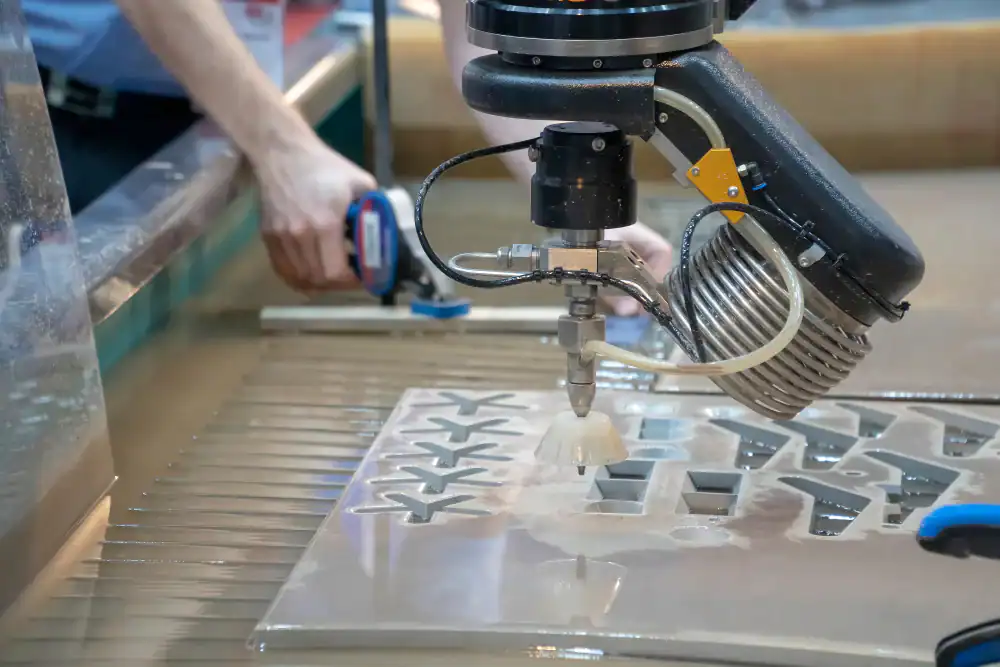
That’s what precision CNC waterjet cutting in Nassau County delivers. Your CAD file drives the machine directly—no manual programming, no operator interpretation between your design and the final piece. The Flow Mach 500 system reads your file and cuts it exactly as drawn, holding tolerances down to ±0.001 inches when the job demands it.
No heat means no warping, no hardening, no burned edges on your expensive materials. The cold-cutting process keeps your metal, stone, or composite exactly as it started—just in the shape you need. You get parts that go straight into assembly or installation without the finishing work that eats into your timeline and budget.
We handle the precision waterjet cutting projects in Nassau County that other shops won’t touch. The intricate inlays where there’s zero room for error. The aerospace components that need tolerances tighter than most fabricators can hold. The complex geometries that traditional cutting methods can’t navigate.
We’re set up in West Islip to serve Nassau County’s manufacturing corridor—the machine shops producing aerospace components, the metal fabricators working on Long Island’s luxury residential builds, the contractors who need custom architectural metalwork that actually fits. When your project demands precision waterjet cutting for tight tolerances in Nassau County, you need equipment and expertise that can deliver it consistently.
You send your design file. We review it for any toolpathing considerations—optimal nesting to minimize material waste, how to structure complex patterns for the cleanest cuts, whether your tolerances match what the application actually needs.
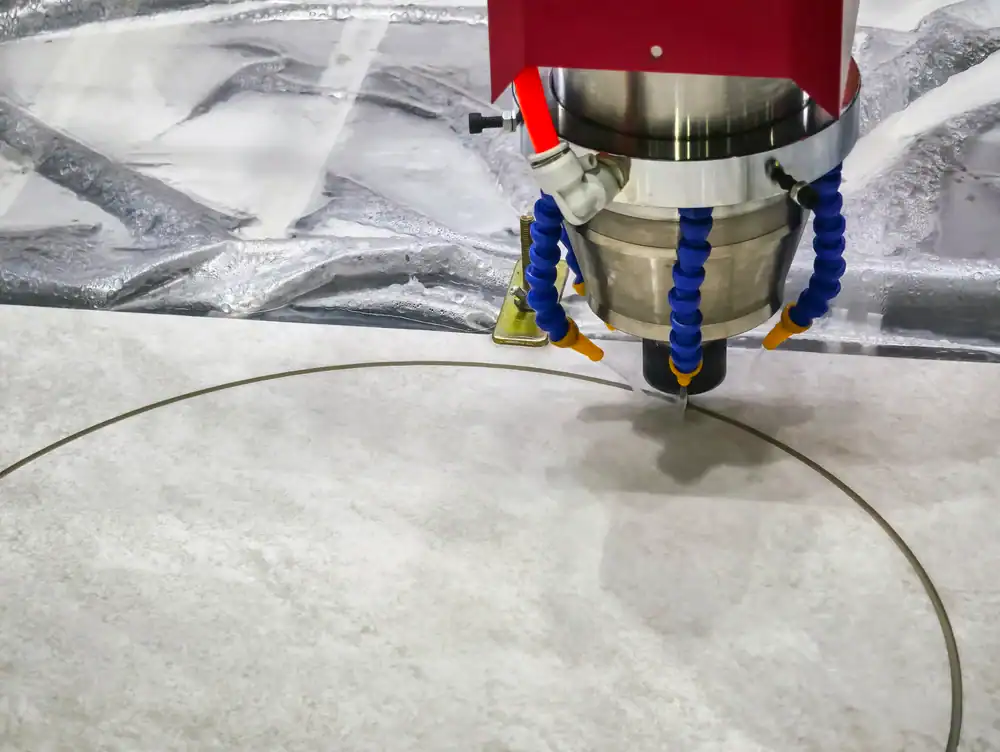
Then your file loads directly into the Flow Mach 500 CNC system. No manual programming. No operator translating your design into machine language. The system reads your CAD file and cuts it exactly as designed, using a high-pressure waterjet mixed with fine abrasive to slice through your material with zero heat generation.
The CNC control means every piece comes out identical. First part matches the last part matches the hundredth part. You get consistency across your entire run, whether that’s a single prototype or a full production batch. The edges come off the machine smooth enough for most applications to skip grinding or finishing—saving you time and the cost of secondary operations.
Ready to get started?
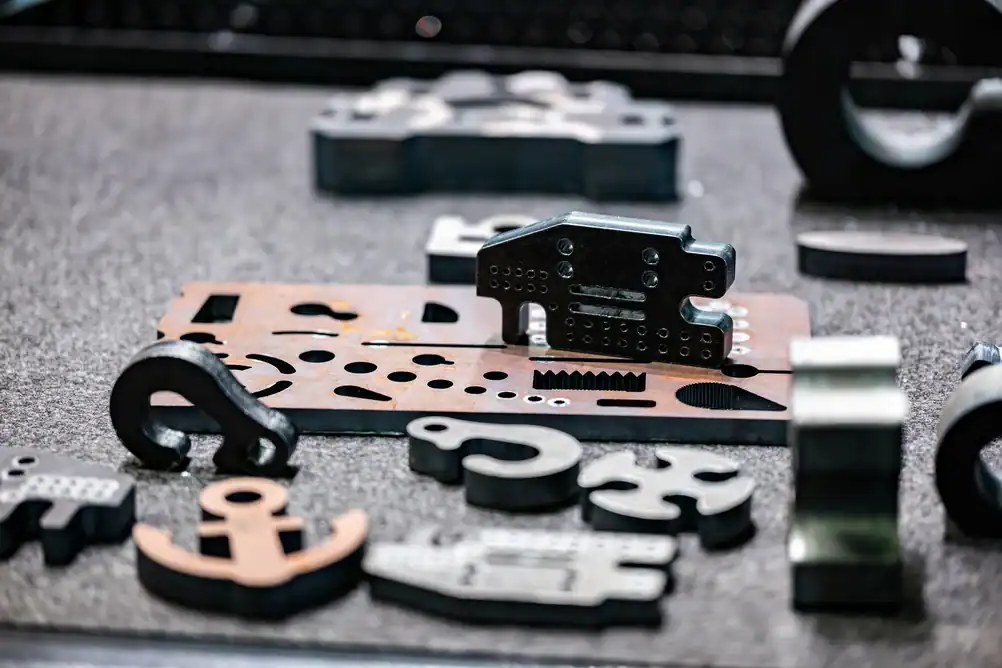
Precision waterjet cutting in Nassau County cuts virtually any material without the limitations of traditional methods. Metals from aluminum and stainless to titanium and Inconel. Stone and tile for architectural applications. Composites and plastics that would melt or crack under heat-based cutting.
Thickness isn’t a limiting factor the way it is with laser or plasma. The waterjet process delivers the same precision and edge quality whether you’re cutting quarter-inch aluminum or four-inch marble. Complex geometries, tight inside corners, intricate patterns—the five-axis capability handles shapes that would require multiple setups or specialized tooling with conventional methods.
Nassau County’s manufacturing sector increasingly demands these capabilities. Aerospace manufacturers here produce components for military and commercial aircraft where tolerances of 0.02mm aren’t just preferred—they’re required. The luxury residential market across Long Island needs custom architectural metalwork with finishes clean enough to install without additional fabrication. You’re working in a market where precision matters, and precision waterjet cutting services in Nassau County give you the accuracy these applications demand.
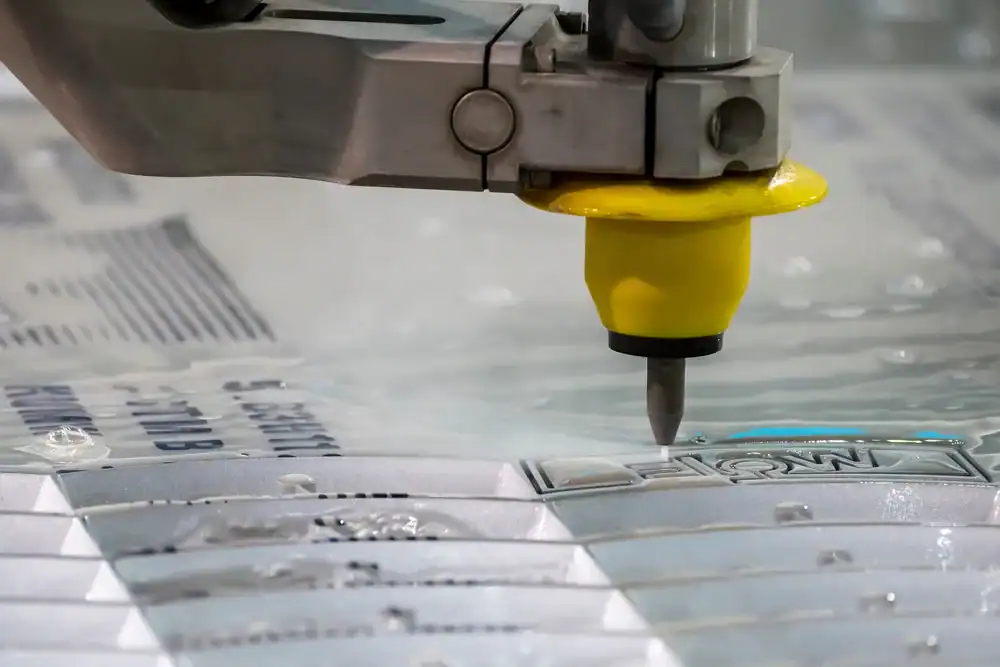
Standard precision waterjet cutting in Nassau County holds tolerances around ±0.002 inches consistently. That’s tight enough for most manufacturing and fabrication applications—parts that need to fit together accurately, components that require precise dimensions for assembly, architectural metalwork where gaps and misalignment aren’t acceptable.
When your application demands tighter control, advanced CNC waterjet systems can hold down to ±0.001 inches. That’s aerospace-grade precision—the tolerance range required for structural aircraft components, precision-machined parts for defense applications, or any project where you’re measuring success in thousandths of an inch.
The key difference from other cutting methods is consistency. CNC control means the machine cuts your entire run to the same tolerance. You’re not dealing with operator variance or heat distortion that throws dimensions off as the material heats up. The waterjet cuts cold, cuts directly from your CAD file, and delivers the same precision on the first piece and the last piece of your production run.
The waterjet process uses high-pressure water mixed with fine abrasive particles to erode material away. There’s no flame, no plasma arc, no laser beam generating heat. The cutting happens through mechanical erosion, not thermal energy, which means your material never experiences the temperature changes that cause problems with traditional cutting methods.
Heat-based cutting alters material structure. Steel hardens along the cut edge. Aluminum can warp as it heats and cools. Composites delaminate or burn. Plastics melt and resolidify with rough, uneven edges. None of that happens with precision CNC waterjet cutting in Nassau County because the material stays at ambient temperature throughout the entire cutting process.
That matters when you’re working with expensive materials or tight tolerances. You’re not dealing with heat-affected zones that need grinding off. No thermal stress that changes how the material behaves after cutting. No warping that throws your dimensions off. The part comes off the waterjet table with the same material properties it had going in—just cut to your exact specifications.
Precision waterjet cutting for tight tolerances in Nassau County handles geometries that would require multiple setups, specialized tooling, or EDM processes with traditional methods. The waterjet stream is thin—typically 0.020 to 0.050 inches in diameter—which allows for tight inside corners and intricate detail work that thicker cutting tools can’t navigate.
Five-axis capability means the cutting head can tilt and rotate while cutting. You can create beveled edges, chamfers, and complex three-dimensional shapes in a single setup. Parts that would need multiple operations on a mill or lathe can often be cut complete on the waterjet table, reducing your setup time and the chance of error from transferring the workpiece between machines.
The CNC control handles the complex toolpathing automatically. Your CAD file defines the geometry, and the system calculates the optimal path to cut it—accounting for material thickness, desired edge quality, and cutting speed. You get accurate reproduction of complex patterns, intricate inlays, and detailed designs that other fabricators turn down because their equipment or expertise can’t handle the precision required.
Turnaround depends on material thickness, complexity, and current shop capacity, but precision waterjet cutting services in Nassau County typically run faster than you’d expect for this level of accuracy. Simple parts in thinner materials can often be cut same-day or next-day. More complex projects or thicker materials might run three to five business days.
The speed advantage comes from minimal setup time. Your CAD file loads directly into the CNC system—no programming, no custom tooling to fabricate, no test cuts to dial in settings. The machine reads your file and starts cutting. For production runs, the waterjet can often nest multiple parts close together on a single sheet, cutting your entire batch in one continuous operation rather than individual setups for each piece.
Lead times across manufacturing have stretched considerably over the past few years. Shops are busier, materials take longer to source, and everyone’s fighting the same capacity constraints. But waterjet cutting eliminates several steps that slow down traditional fabrication—no heat treatment to relieve thermal stress, no secondary finishing for most applications, no rework because the parts didn’t come out to spec the first time. You’re getting precision without the extended timeline that usually comes with it.
Precision CNC waterjet cutting in Nassau County handles single prototypes through full production runs without the tooling costs or setup time that makes low quantities impractical with other methods. You’re not paying for custom dies, specialized cutting tools, or extensive programming that only makes economic sense when amortized across thousands of parts.
For prototyping, that means you can test your design in the actual material you’ll use for production. No compromises, no “close enough” substitutes because the real material is too expensive to cut for a single test piece. The waterjet cuts your prototype with the same precision and edge quality you’ll get in production, so you’re validating the actual part, not an approximation.
When you move to production, the same CAD file that cut your prototype drives the production run. No retooling, no translation errors between prototype and production methods. The CNC system delivers consistent results whether you’re cutting ten parts or ten thousand. And because waterjet cutting allows tight nesting of parts on the material sheet, you’re minimizing waste even on smaller runs—using more of the material you’re paying for instead of losing it to wide kerf widths or inefficient layouts.
Precision waterjet cutting in Nassau County cuts virtually any material without the restrictions you hit with thermal cutting methods. Metals are the most common—aluminum, stainless steel, carbon steel, titanium, Inconel, brass, copper. The process handles hardened tool steels and exotic alloys that would wear out conventional cutting tools or require slow, expensive EDM processes.
Stone and tile cut cleanly for architectural applications—marble, granite, quartz, porcelain. The waterjet doesn’t crack or chip the material the way saw cutting can, and there’s no thickness limitation. Quarter-inch tile or four-inch marble slabs cut with the same process, delivering clean edges regardless of how thick the material is.
Composites, plastics, rubber, foam, and gasket materials all cut without the melting, burning, or delamination you’d see with laser or plasma. That makes waterjet ideal for aerospace composites, plastic fabrication, and any application where heat damage isn’t acceptable. The limitation isn’t the material itself—it’s whether the material can handle the high-pressure water stream. Tempered glass will shatter. Very brittle ceramics might crack. But for the vast majority of materials used in manufacturing and fabrication, precision waterjet cutting for tight tolerances in Nassau County gives you a clean, accurate cut without compromising the material’s properties.
Useful Links
Other Services we provide in Nassau County