
Hear from Our Customers
You’re not dealing with heat-affected zones that warp your material. You’re not paying for secondary finishing to clean up burrs and burn marks. You’re not explaining to your client why the dimensions are off.
Waterjet cutting metal in Nassau County, NY means your parts come out clean the first time. Edges smooth enough to install immediately. Tolerances tight enough for aerospace applications—because that’s exactly what we cut for.
The Flow Mach 500 reads your CAD file and cuts it. Not an operator’s interpretation of it. Not a close-enough version. The actual design, down to thousandths of an inch, in materials that would destroy conventional cutting methods.
Complex geometries that other shops turn down? Tight inside corners on hardened steel? Intricate patterns in titanium? That’s standard work when you’re using a process that doesn’t rely on heat or mechanical force to make the cut.
We operate out of West Islip with one clear focus: precision waterjet cutting for the projects that demand it. We’re the shop fabricators call when their standard methods won’t work—when the geometry is too complex, the material too exotic, or the tolerance too tight.
Nassau County’s aerospace industry didn’t earn its “Cradle of Aviation” reputation by accepting mediocre work. Neither do the architectural firms specifying custom metal components for Long Island’s luxury residential market. You need parts that match the CAD file exactly, and that’s what CNC metal waterjet cutting in Nassau County delivers.
We’ve built our reputation on being straightforward about what works and what doesn’t. Material consultation before you order. Technical guidance on toolpathing. Real answers about lead times when everyone else in the tri-state area is backed up because commercial and residential projects are specifying materials at rates not seen in over a decade.
You send the CAD file. We review it for any toolpathing issues—places where the design might need adjustment for optimal cutting, nesting efficiency, or material usage. If something won’t work, you hear about it before we start, not after.
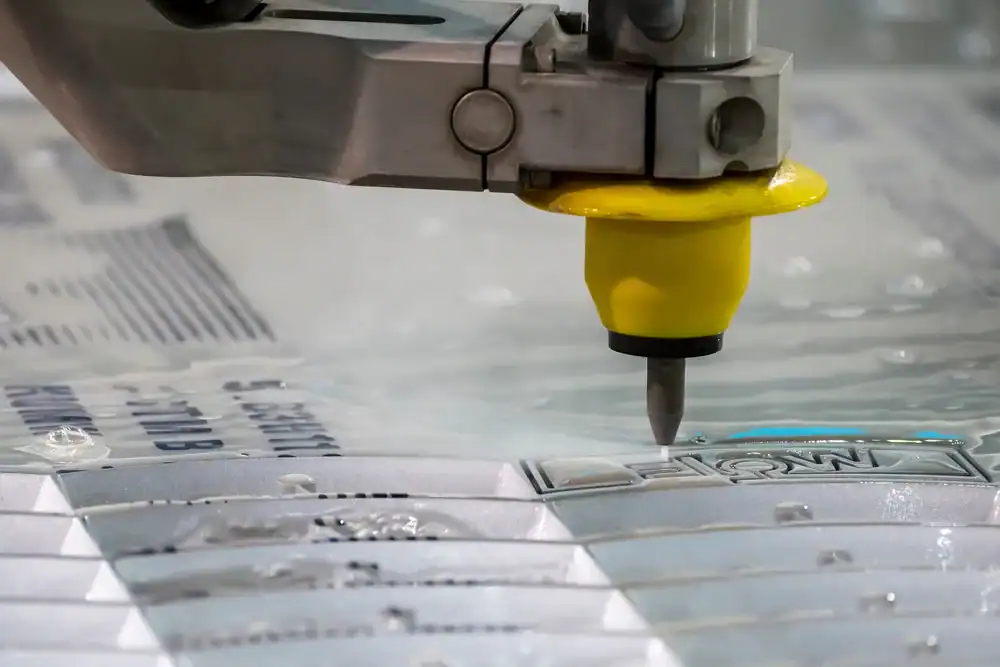
Once the file is dialed in, it goes directly to the Flow Mach 500. The CNC system controls the cutting head, following your design with a stream of water and abrasive that cuts through metal without generating heat. No flames. No melting. No thermal distortion changing your dimensions as the material cools.
The process works on virtually any thickness. There’s no blade depth limiting what you can cut. Aluminum, stainless, hardened tool steel, titanium, exotic alloys—the waterjet handles them all with the same precision.
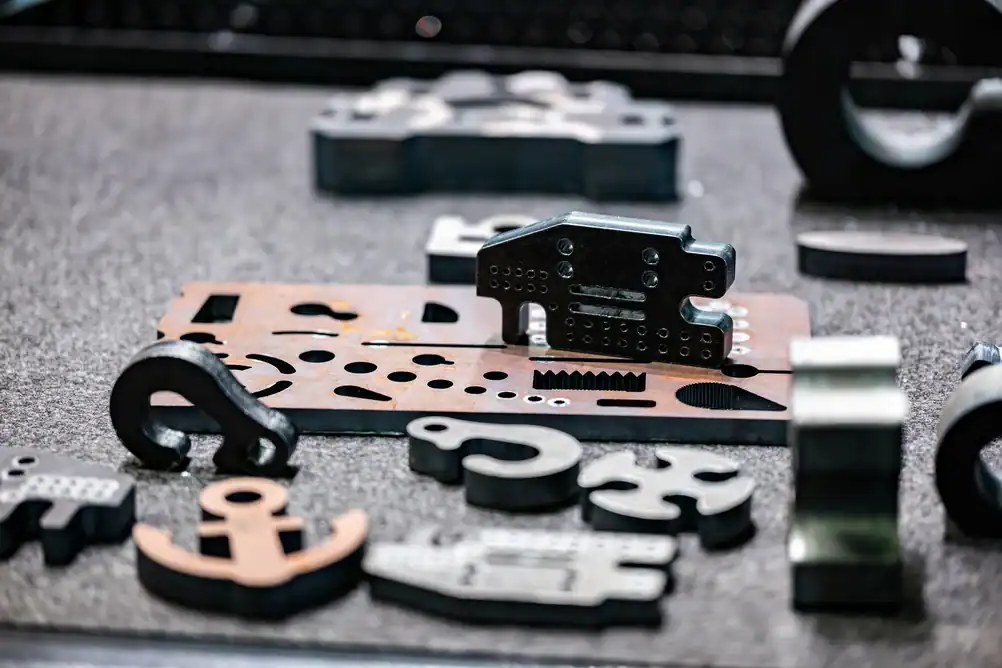
What comes off the table is what you designed. Clean edges. No burrs. No secondary operations unless you specifically want them. Parts that go straight into your assembly or installation, saving you time and the cost of additional finishing work.

Ready to get started?
Material consultation happens upfront. Which alloys work best for your application. How thickness affects both the cut quality and your installation process. What you actually need versus what you think you need—because sometimes there’s a gap, and closing it before you order saves money.
Design support is available when you need it. Technical guidance on toolpathing optimization. Recommendations for nesting multiple parts to reduce waste. Answers about tolerances, edge quality, and how waterjet cutting metal in Nassau County, NY compares to laser, plasma, or saw cutting for your specific project.
The cutting itself is CNC-controlled from your CAD file. You get dimensional accuracy that meets aerospace standards—the same precision required for components going into aircraft built right here on Long Island. Complex shapes, intricate patterns, tight inside corners that traditional methods can’t touch.
Turnaround times are realistic. Nassau County’s manufacturing sector is busy—Northrop Grumman and scores of aviation-related companies keep the supply chain moving. We’re honest about lead times and we hit them. Rush jobs get handled when possible, but you’ll know upfront what’s achievable and what isn’t.
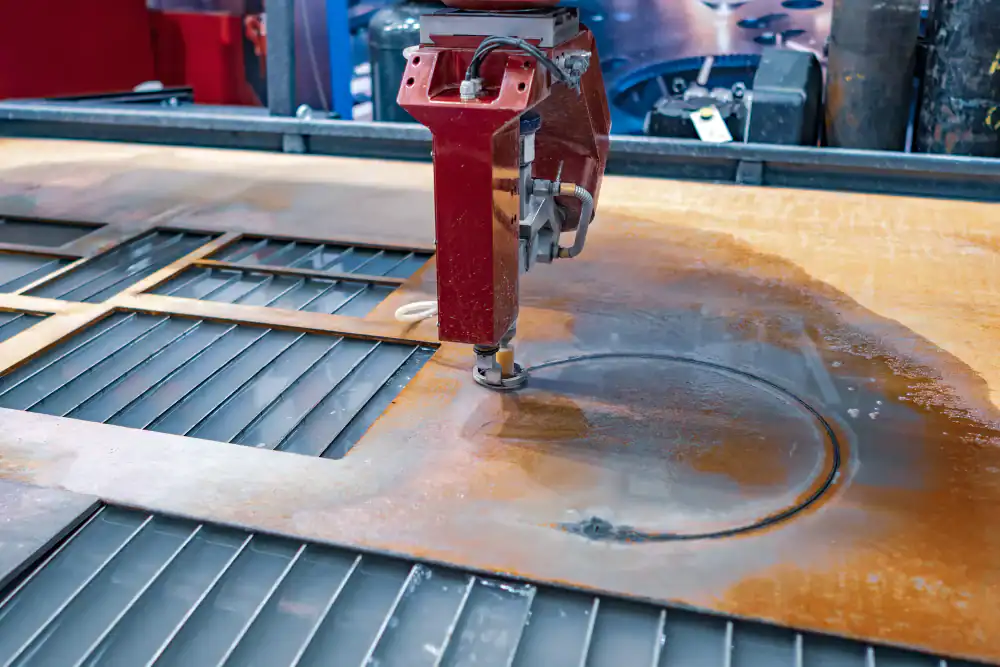
Virtually any metal you’re working with. Aluminum, stainless steel, carbon steel, hardened tool steel, titanium, brass, copper, exotic alloys—the waterjet process isn’t limited by material hardness the way mechanical cutting is.
The cutting happens through erosion, not force or heat. A high-pressure stream of water mixed with abrasive garnet wears through the material. That means metals that would destroy saw blades, dull router bits, or create heat problems with laser cutting get handled without issue.
Thickness isn’t a limiting factor either. We’ve cut everything from thin gauge sheet metal to several inches thick plate. There’s no blade depth to worry about, no maximum thickness where the process stops working. If you can get the material to the table, we can cut it.
The biggest difference is heat. Laser cutting uses focused light energy that melts through metal—which means you’re dealing with heat-affected zones, potential warping, and hardened edges that sometimes need secondary finishing.
Waterjet cutting metal in Nassau County, NY uses cold water and abrasive. No heat means no thermal distortion, no change to the metal’s structure, and no hardened edges that affect your next operation. The part that comes off the table has the same properties as the material you started with.
Laser works well for thinner materials and can be faster on simple shapes. But when you’re cutting thicker stock, working with reflective metals like aluminum or copper, or need to avoid any heat input, waterjet is the better process. You also get tighter inside corners and more complex geometries because there’s no kerf width limitation from beam diameter.
That’s exactly what it’s designed for. The Flow Mach 500 CNC system cuts directly from CAD files, which means complex curves, intricate patterns, and tight inside corners get reproduced exactly as designed. No operator interpretation, no manual programming that introduces variation.
Tolerances hit aerospace standards—we’re talking thousandths of an inch repeatability. The same precision required for aircraft components manufactured right here in Nassau County’s aviation industry. If your project demands dimensional accuracy, waterjet delivers it consistently across production runs.
Complex geometries that would require multiple setups or specialized tooling with conventional methods? Single setup with waterjet. The cutting head follows the programmed path regardless of how intricate the shape is. That’s why architectural firms specify it for custom metal components and fabricators use it for parts that other processes can’t handle.
Usually not. The edge quality coming off a waterjet is clean enough for most applications to use immediately. No burrs to grind down. No heat-affected zones to machine away. No rough edges that need deburring before you can handle the part safely.
You get a slightly striated finish from the abrasive cutting action—that’s normal and expected. For applications where that edge texture is fine, you’re done. The part goes straight into assembly or installation.
If you need a polished edge or specific surface finish for aesthetic reasons, secondary finishing is an option. But you’re not doing it because the cutting process left a mess—you’re doing it because your application requires it. That’s a big difference from other cutting methods where secondary work is mandatory just to get a usable part.
It depends on your project complexity, material availability, and our current queue. Simple cuts on standard materials might turn around in a few days. Complex parts requiring special material or extensive machine time take longer.
Right now, lead times across Long Island are longer than usual. The luxury residential market completed over 300,000 premium units last year, and commercial projects are specifying materials at rates not seen in a decade. That affects everyone in the supply chain, including custom metal waterjet cutting services in Nassau County.
We’re upfront about realistic timelines. When you submit your CAD file, you get an honest assessment of when the parts will be ready—not an optimistic guess that falls apart later. Rush jobs get accommodated when possible, but you’ll know immediately if your deadline is achievable or if you need to adjust expectations.
Significantly less than conventional cutting methods. The kerf width—the amount of material removed by the cutting stream—is narrow, usually around 0.030 to 0.040 inches. That precision means more parts per sheet and less scrap.
The CNC system optimizes nesting automatically, arranging multiple parts to maximize material usage. You’re not paying for large sections of plate that become scrap because of inefficient layouts. Every inch you purchase gets used as effectively as possible.
For expensive metals and specialty alloys, that waste reduction adds up quickly. Titanium, exotic stainless grades, hardened tool steels—when you’re paying premium prices per pound, cutting efficiency directly impacts your project budget. Waterjet cutting metal in Nassau County, NY means you’re using the material you paid for, not watching it become scrap.
Useful Links
Other Services we provide in Nassau County