Not sure if waterjet cutting fits your project? Here's what you actually need to know before you decide — straight answers, no fluff.
You’ve got a cutting job. Maybe you’ve used laser before, maybe plasma, maybe you’re just starting to shop around. And somewhere along the way, waterjet cutting came up — but you’re not entirely sure if it’s the right call for your material, your tolerances, or your timeline.
That’s a fair place to be. We’ve been cutting parts for Long Island manufacturers, fabricators, and builders since 1981, and these are the questions we get asked most. Not marketing fluff — actual questions from people who need real answers before they make a decision. Here’s what we tell them.
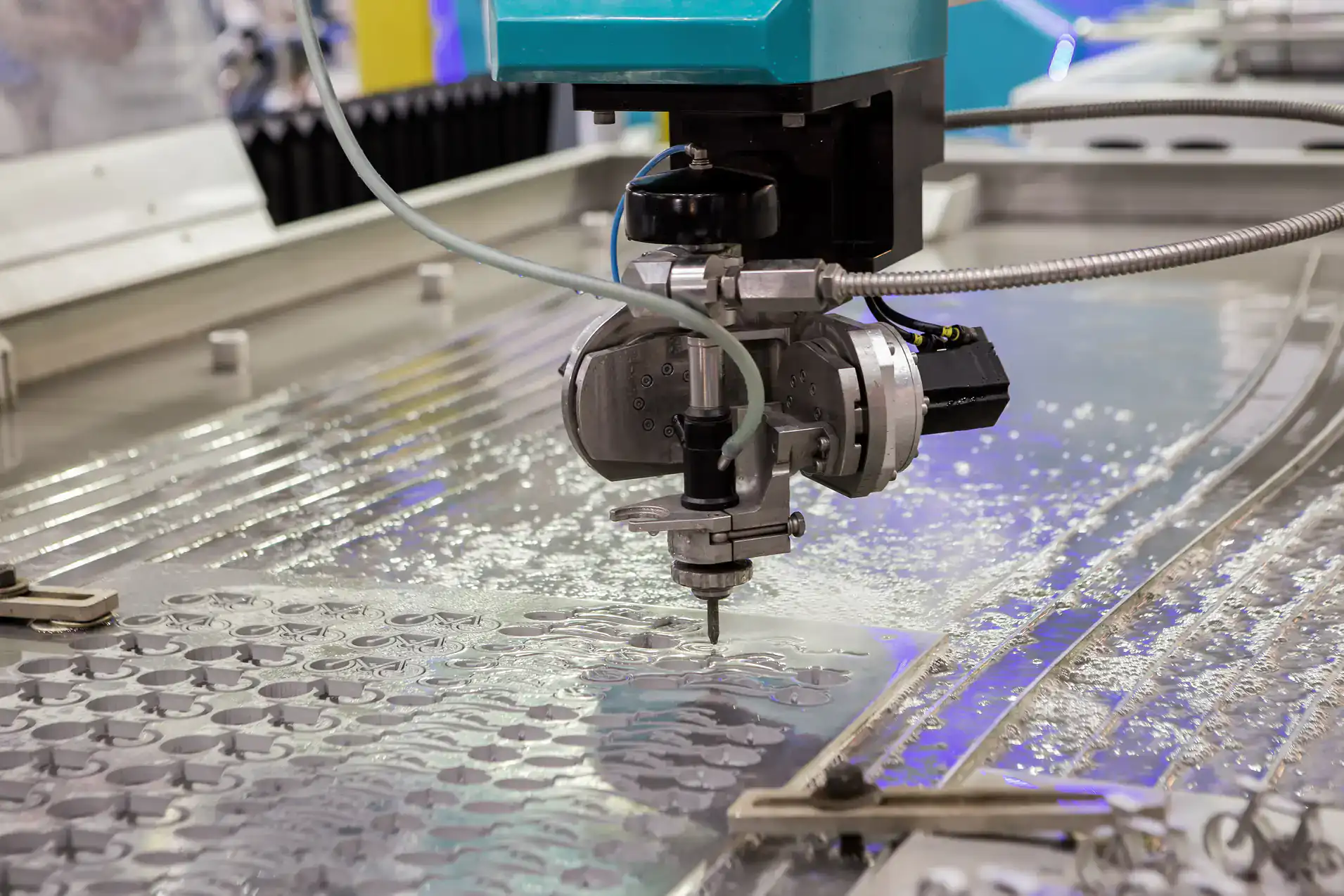
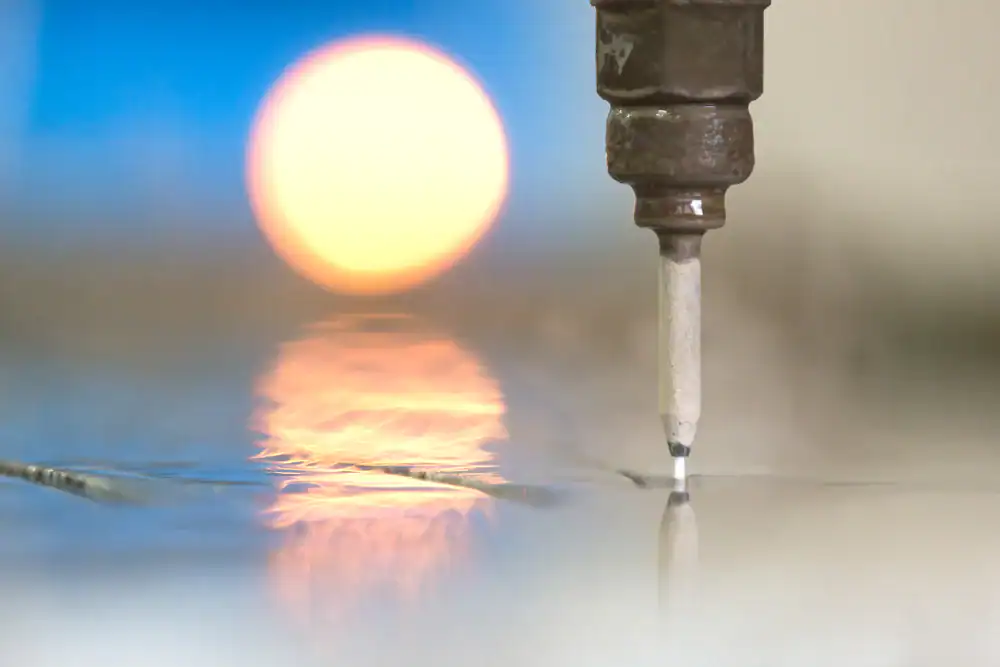
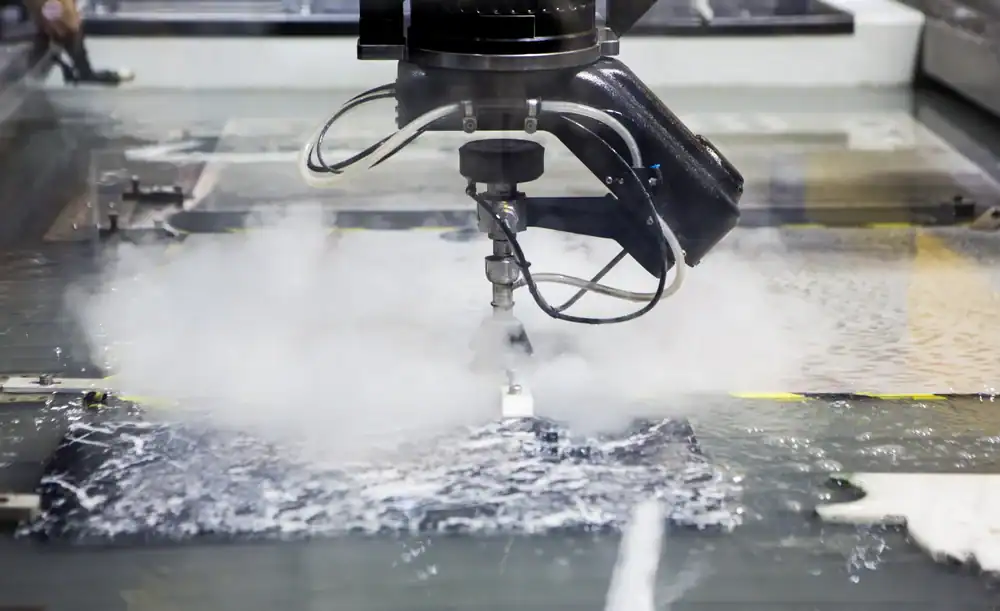
Waterjet cutting uses a high-pressure stream of water — mixed with abrasive garnet — to cut through virtually any material with precision and no heat. The stream moves along a CNC-controlled path derived directly from your CAD file, cutting the shape you designed down to tolerances as tight as ±0.001 inches.
What makes it different from laser or plasma is that there’s no heat involved at any point. The cut happens cold, which means your material comes off the machine with the same properties it had going in — no warped edges, no hardened zones, no burned resin in composites. Just the shape you asked for, clean and ready to use.
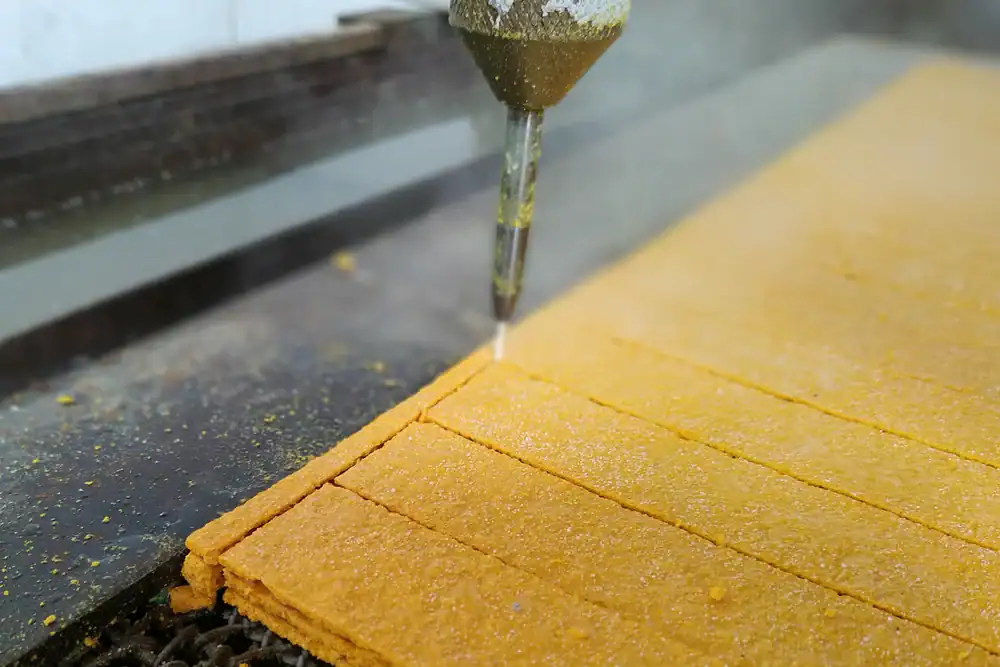
This is usually the first question, and the honest answer is: almost anything. Stainless steel, aluminum, titanium, brass, copper, tool steel, carbon fiber, fiberglass, granite, marble, quartz, glass, acrylic, polycarbonate, rubber, foam, hardwood — the list is long. We regularly cut materials that other local shops turn away, including aerospace-grade alloys and carbon fiber composites where delamination is a real risk with the wrong process.
The reason we handle such a wide range comes down to the cold-cutting process. Materials that can’t tolerate heat — like tempered glass, thin aluminum sheet, or heat-treated steel — can be cut without compromising anything. A laser would warp the aluminum. Plasma would leave an edge that needs grinding. Waterjet leaves a clean, burr-free cut that’s ready for whatever comes next.
For Long Island manufacturers working with exotic materials — whether that’s for aerospace work in Bethpage, marine fabrication along the coast, or precision components headed into the Hauppauge Industrial Park — having a local shop that can handle those materials without a cross-state shipment makes a real difference. Lead time is already tight enough without adding logistics into the equation.
One thing worth knowing: there are two types of waterjet systems. Pure waterjet (water only) handles soft materials like foam, rubber, and certain plastics. Abrasive waterjet — which is what we run — adds garnet to the stream and handles hard materials like metal, stone, and glass. Abrasive systems make up the overwhelming majority of industrial waterjet use, and it’s what most people mean when they ask about waterjet cutting for fabrication work.
Tolerances range from ±0.005 inches for standard fabrication work down to ±0.001 inches for tighter applications. For most assembly, welding, and installation work, ±0.005 inches is more than sufficient. For precision instruments, aerospace components, or close-fit mechanical parts, tighter tolerances are achievable depending on the material and part geometry.
One thing that affects accuracy — and that a lot of buyers don’t know to ask about — is taper. When a waterjet cuts through thick material, the stream naturally produces a slight V-shape in the cut wall rather than a perfectly vertical edge. On thin sheet, it’s negligible. On thicker stock, it can matter. We run the Flow Mach 500 with taper compensation, which corrects this in real time. Your walls come out vertical, not angled — which means parts that are supposed to mate with other components actually do.
We also review every file before cutting starts. That’s not a small thing. Tight inside corners that can’t be physically cut, scaling errors that would produce the wrong part size, nesting opportunities that could save you material cost — these are all things we catch before a single drop of water hits your stock. By the time we’re cutting, the file has already been vetted. That step alone prevents the most common and most expensive mistake in custom cutting: finding out something was wrong after the material is already gone.
If you’re coming from a shop that loaded your file and cut without any review, you’ve probably experienced what happens when that step gets skipped. A part that doesn’t fit, a dimension that’s off, material that can’t be recovered. It’s a frustrating and avoidable problem.
Want live answers?
Connect with a Tri-State Waterjet expert for fast, friendly support.
Beyond the technical basics, there are questions that come up specifically because of the kind of work being done here on Long Island — the industries, the materials, the timelines, and the expectations that come with working in one of the most active manufacturing and construction markets on the East Coast.
These are the questions we hear most often from local customers, and the answers that actually help them make a decision.
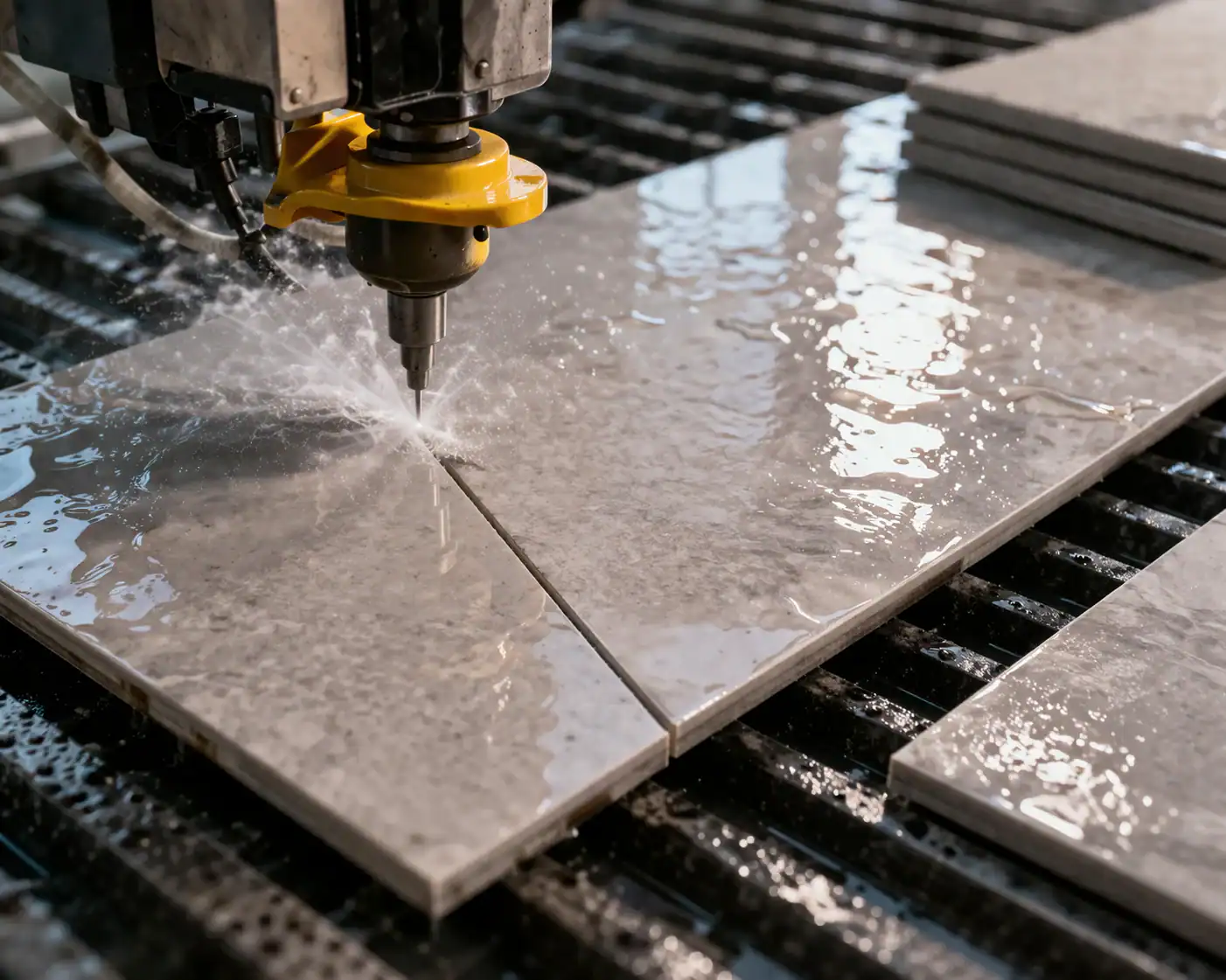
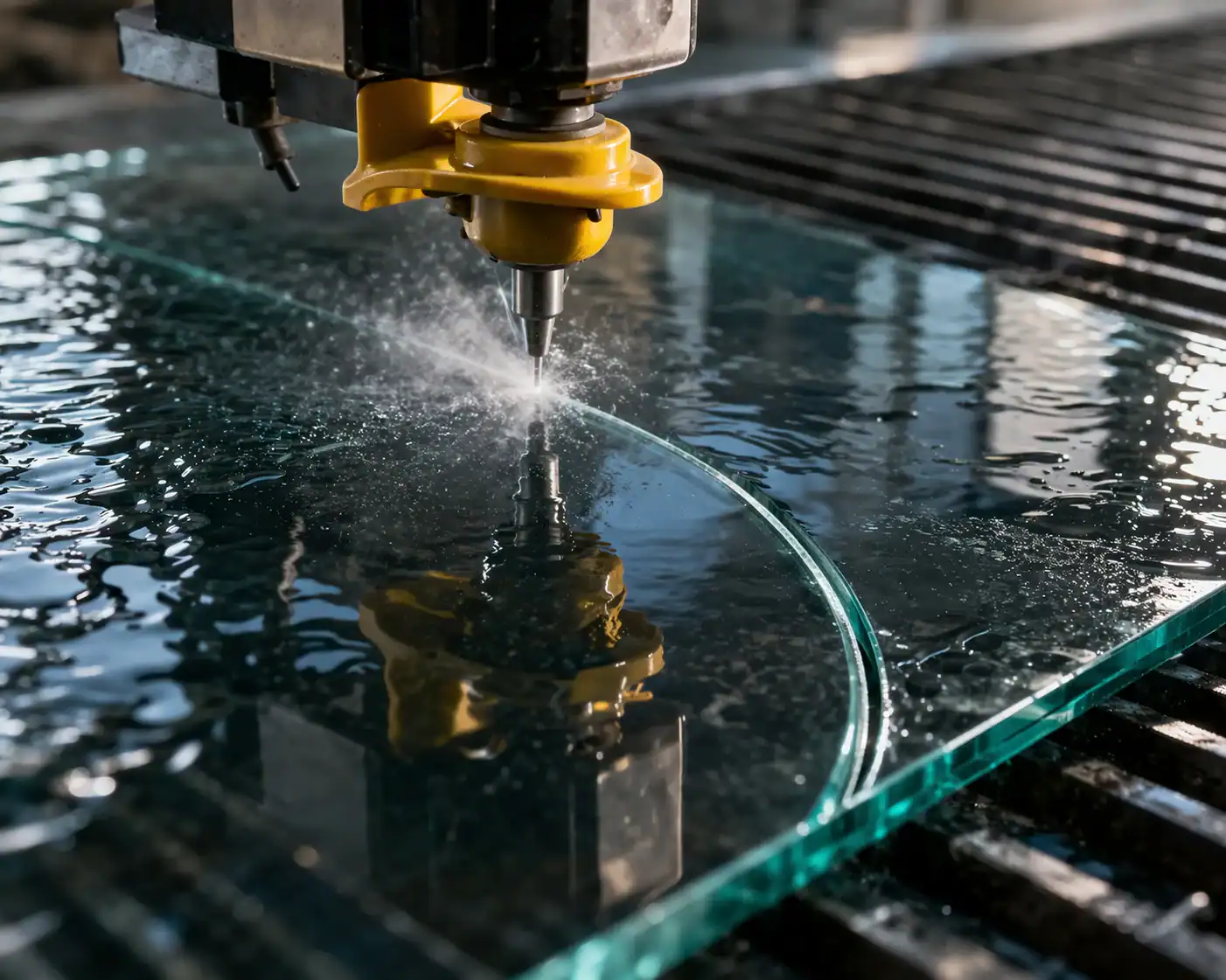
Yes — and for these materials in particular, it’s often the only process that makes sense. Glass shatters under heat. Marble chips and cracks under mechanical stress if the approach is wrong. Waterjet handles both without the risks that come with alternative methods, and the edge quality on stone and glass is clean enough for architectural and decorative applications where finish matters.
We cut a significant amount of marble, granite, quartz, and glass for Long Island’s residential renovation market. Custom kitchen and bathroom inlays, decorative floor medallions, countertop cutouts, architectural panels — these are common jobs for us, especially in the North Shore and Hamptons communities where custom finishes are the expectation, not the exception. When a contractor or designer needs a marble inlay cut to a specific pattern and it has to look right, waterjet is the process that delivers that without risk of cracking or chipping along the cut edge.
For glass specifically, buyers often worry that the water pressure will shatter the piece. In practice, the cutting parameters are dialed for the material — the pressure and speed are set appropriately, and the result is a clean cut with no fracture lines. Tempered glass behaves differently and has its own considerations, but standard architectural and decorative glass cuts reliably.
Stone and marble waterjet cutting also eliminates the dust and grinding that come with blade-based cutting. The cut is made in a single pass, the edge is finished, and the piece is ready. For contractors working on tight renovation schedules — and Long Island renovation timelines are rarely forgiving — that matters.
Standard jobs turn around in one to three business days. Simple parts from material we have in stock can often be cut same-day or next-day. Complex jobs with tighter tolerances or multi-step setups typically run three to five days. We handle rush services when the deadline is real.
The reason turnaround is fast compared to some other custom fabrication processes is that waterjet cutting has no tooling. There’s no die to build, no fixture to set up, no physical tool that wears out and needs replacing between jobs. Your CAD file goes directly to the machine. From upload to cut, the only lead time is scheduling and material availability.
For Long Island manufacturers and contractors, that speed matters in a specific way. If you’re running a production line in Ronkonkoma and a component needs to be replaced, or you’re a contractor in Suffolk County who needs architectural steel cut before a scheduled install, waiting weeks for a replacement part isn’t an option. The pace of work here doesn’t accommodate that kind of delay.
We’ve been part of Long Island’s manufacturing and fabrication community since 1981, and one thing that’s stayed consistent over four decades is that local customers need local accountability. Not a shop two states away that ships when it’s convenient. Not an online platform where your file goes into a queue and you hope for the best. A shop that knows your industry, reviews your file before cutting, and can tell you honestly when your parts will be ready — and then actually delivers on that.
That’s what working with a local waterjet shop should feel like. And if your current vendor isn’t operating that way, it might be worth having a conversation about what else is available on Long Island.
For most precision cutting jobs — especially anything involving heat-sensitive materials, tight tolerances, intricate shapes, or materials that other shops won’t touch — waterjet cutting is worth a serious look. It’s not always the fastest process on thin sheet metal, but it’s the one that delivers clean, accurate parts without compromising your material in the process.
The right answer depends on your specific job: what you’re cutting, how thick it is, what tolerances you need, and what the finished part has to do. Those are questions worth talking through before you commit to a process.
If you’re on Long Island and you want a straight answer about whether waterjet cutting makes sense for your project, reach out to us at Tri-State Waterjet. We’ve been having that conversation with local manufacturers, fabricators, contractors, and architects for over 40 years — and we’ll tell you honestly whether it’s the right fit.
Summary:
Article details:
Share: