Not all cutting methods are created equal. Here's what actually separates waterjet cutting from traditional approaches — and why it matters for your next project.
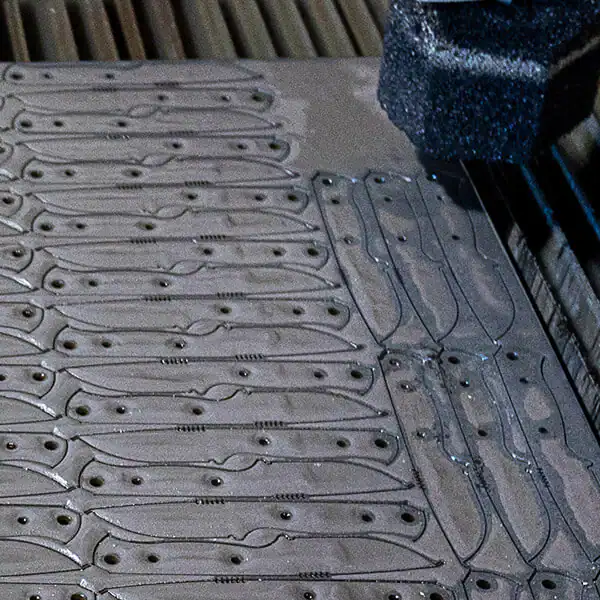
You’ve probably been there — parts come back from cutting, you go to assemble them, and something’s off. The edges are rough. A dimension is slightly out. Or the material looks fine until you’re under load and realize the cut compromised more than you expected. It’s frustrating, and it costs real money in rework, delays, and scrapped material.
The cutting method you choose has more downstream consequences than most buyers factor in upfront. We’ve broken down how metal waterjet cutting compares to the traditional approaches — plasma, laser, saw, and torch — so you can make a more informed call before the next job goes to the shop floor.
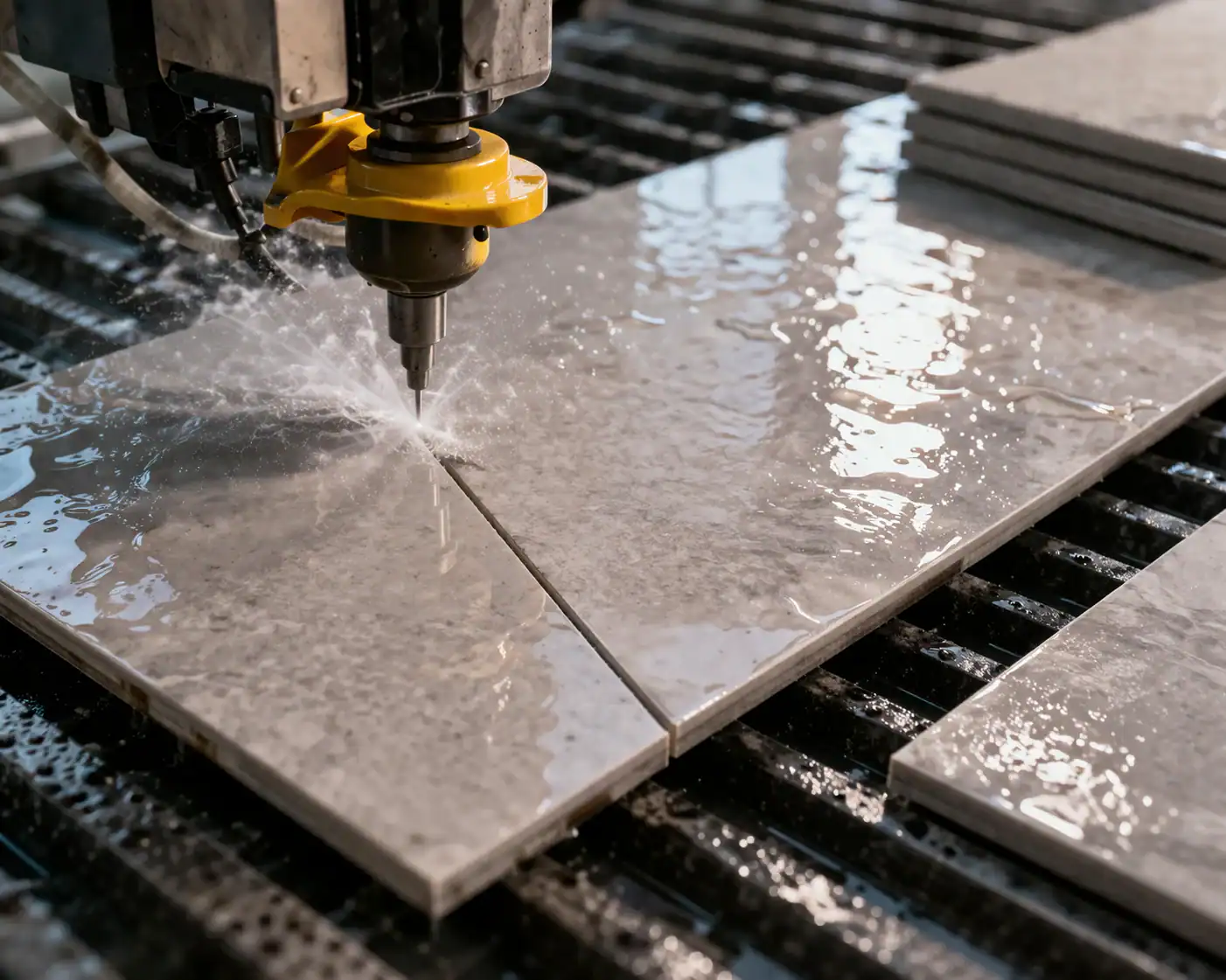
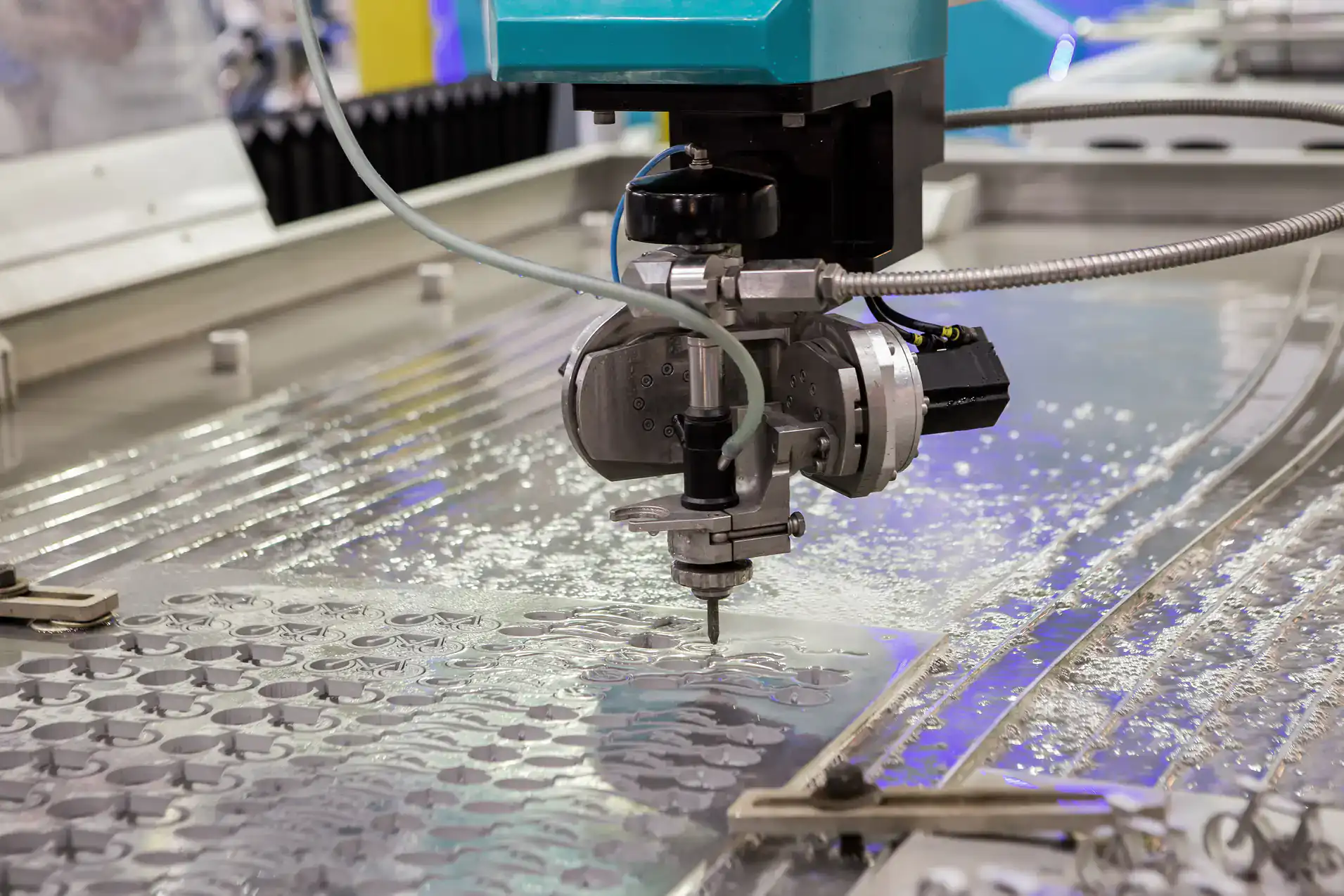
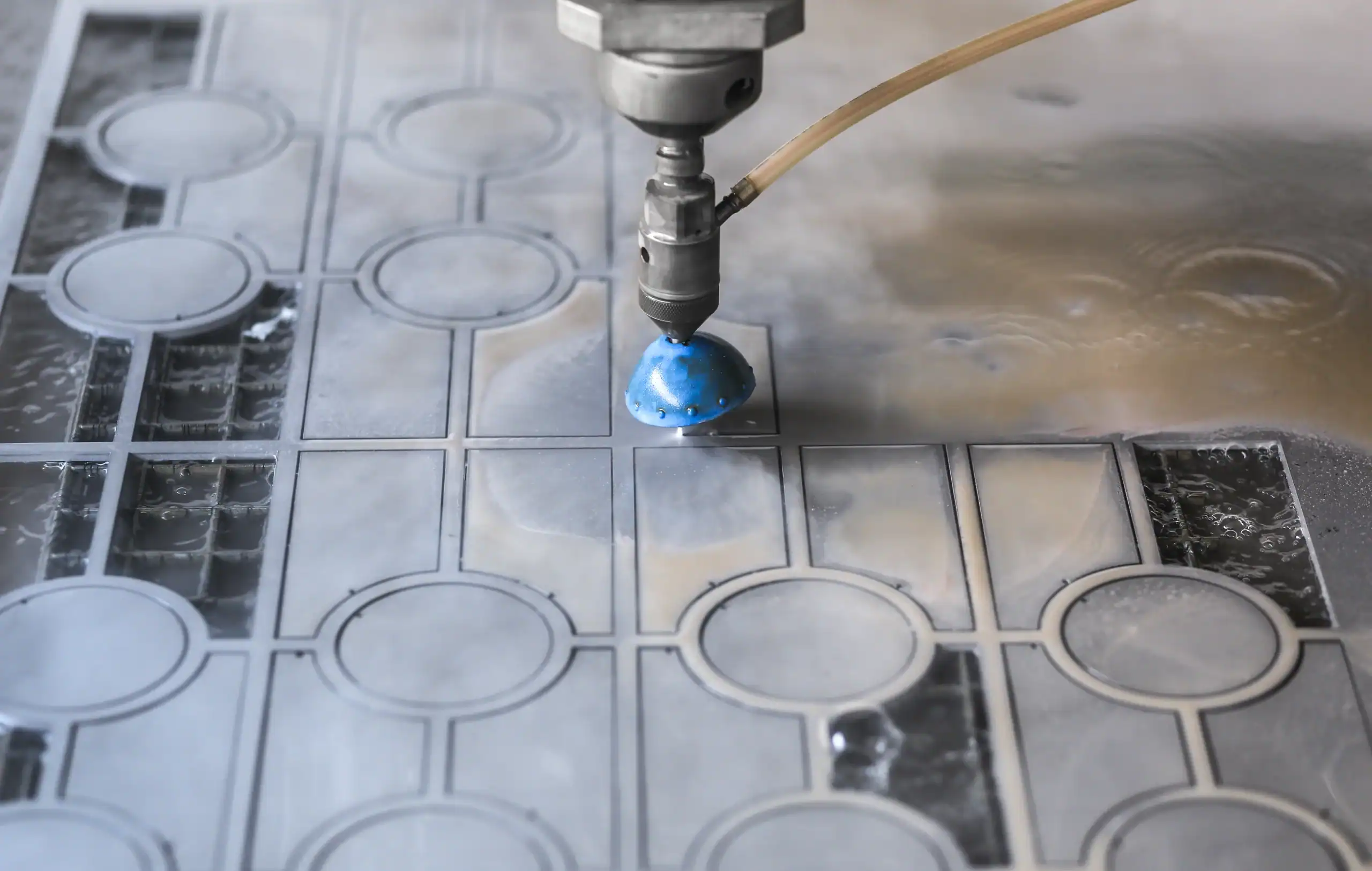
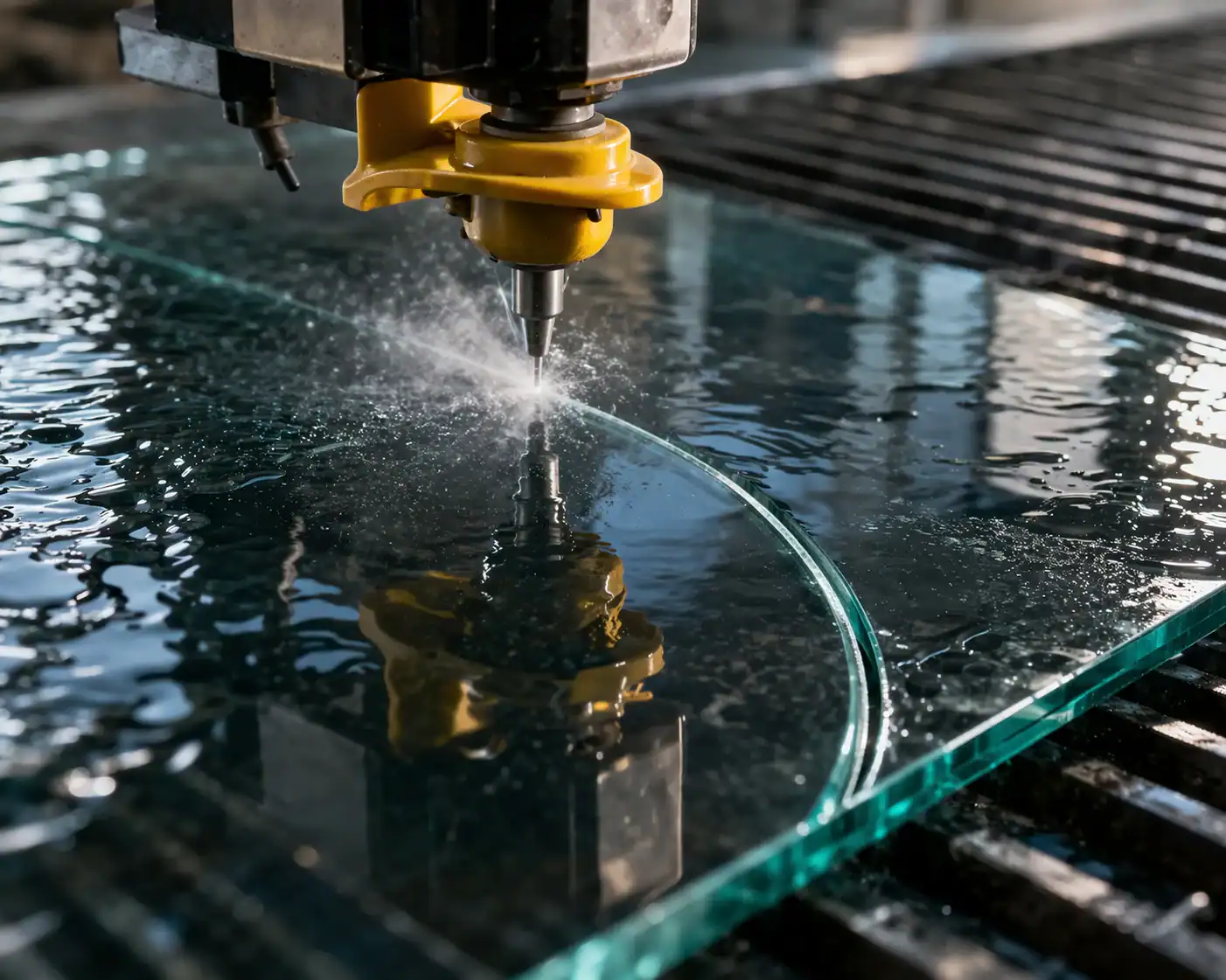
Abrasive waterjet cutting uses a high-pressure stream of water — up to 60,000 PSI — mixed with fine garnet particles to cut through metal. There’s no heat involved. The material isn’t burned, melted, or mechanically stressed. It’s eroded by the abrasive stream, which is why the process works equally well on stainless steel, aluminum, titanium, hardened tool steel, and dozens of other materials.
The cutting stream itself is narrow — roughly 0.030″ to 0.040″ wide — which allows for tight part nesting on a sheet and minimal material waste. Our Flow Mach 500 CNC system translates your CAD file into a precise cutting path, holding tolerances between ±0.001″ and ±0.005″ depending on material and geometry. That level of accuracy isn’t a claim — it’s what the machine is built to deliver, consistently, run after run.
Here’s the part that trips up a lot of buyers: a cut can look clean and still be compromised. When plasma or laser cutting generates heat, it creates what’s called a heat-affected zone — the area of material adjacent to the cut that gets altered by thermal exposure. You can’t always see it. But the microstructure of the metal has changed.
Hardness shifts. Corrosion resistance in stainless steel can be reduced. In aluminum, you can get warping that only becomes apparent at assembly. For everyday fabrication work, this might not matter much. But if you’re cutting stainless steel for a marine application where corrosion resistance is the whole point, or aluminum components for an aerospace assembly where dimensional accuracy is non-negotiable, a heat-affected zone is a hidden defect.
Waterjet eliminates this entirely. Because the process generates no heat, the material comes off the machine with its original properties intact. Stainless steel keeps its corrosion resistance. Hardened tool steel doesn’t develop soft spots near the cut edge. Titanium — notoriously sensitive to heat — can be cut without altering its mechanical properties at all.
What goes in is what comes out, just shaped differently. This is also why waterjet-cut parts typically require no secondary finishing. No deburring. No grinding oxidized edges. No straightening warped plate. The edge comes off the machine clean and ready to use. For shops across Long Island, NY that are running tight schedules and don’t have time to add a finishing operation to every batch, that matters. The time you save on secondary work often more than offsets any difference in cutting time.
We also run Mitsubishi waterjet machines with automatic taper control, which keeps the nozzle at optimal standoff throughout the cut — particularly useful on thicker materials where taper can become an issue with less precise equipment.
Plasma cutting is fast and relatively inexpensive per hour, which is why it’s still widely used for structural steel and heavy fabrication where edge quality and tight tolerances aren’t the priority. But plasma generates significant heat, leaves rough oxidized edges, and can’t hold the kind of tolerances that precision work demands. The minimum hole diameter you can burn with plasma is roughly 75% of the plate thickness. With waterjet, that number drops to around 20% of the plate thickness — a meaningful difference when you’re cutting intricate geometry or tight internal features.
Laser cutting is often positioned as the precision alternative to plasma, and for thin sheet metal it can be very fast and accurate. But laser has its limits. It introduces heat — less than plasma, but enough to create a heat-affected zone on many materials. It also struggles with reflective metals like copper and brass, can’t handle most non-metals, and loses accuracy as material thickness increases. On anything above roughly a quarter inch, waterjet starts to outperform laser on dimensional consistency. We cut materials up to 12 inches thick with full-depth accuracy, which no laser system can match.
Saw cutting and oxy-fuel torch cutting are generally used for rougher work — structural cuts, demolition, or situations where edge quality is a secondary concern. They’re not realistic alternatives for precision fabrication.
The honest answer to “which method is right for my job” depends on what you’re cutting, how thick it is, what tolerances you need, and what the part will be used for. For thin sheet metal in high volume where a few thousandths of variance is acceptable, laser may be the right call. For anything thicker, harder, more heat-sensitive, or more geometrically complex — waterjet almost always delivers better results when you account for the full cost, including secondary operations and rework.
Want live answers?
Connect with a Tri-State Waterjet expert for fast, friendly support.
Long Island, NY has a dense concentration of manufacturers, fabricators, and custom shops — from the aerospace and defense supply chain anchored in central Suffolk County to the marine fabricators along the South Shore and the commercial construction trades active across Nassau and Suffolk year-round. These aren’t businesses that can afford to run a part twice.
The demand for precision cutting that meets documented quality standards has grown alongside the region’s aerospace and defense sector. When your customer is building components for aircraft or defense systems, they need a cutting vendor who can provide material traceability, first-article inspection, and certified quality processes — not just a shop that owns a machine.
Certifications get thrown around a lot in manufacturing, so it’s worth being specific about what they actually mean in practice. ISO 9001:2015 is the international quality management standard. It requires documented processes, calibration schedules for equipment, first-article inspection, material traceability, and controls for discrepant product — meaning a certified shop has a formal system for catching and addressing problems before parts leave the building. It’s not a marketing badge. It’s a supply chain qualification.
AS9100D goes further. It’s the aerospace-specific quality management standard, built on ISO 9001 with additional requirements for aviation, space, and defense manufacturing. If you’re supplying into an aerospace or defense program — and Long Island, NY has a substantial number of companies that are, from firms supporting the F-35 supply chain to companies building structural assemblies for commercial aircraft — your cutting vendor needs to be AS9100D certified or you can’t use them.
We hold both. That’s not common among local waterjet shops, and it matters directly to a significant portion of Long Island’s industrial base. Beyond certifications, our process includes a CAD file review before every cut. We look at your file before programming the cutting path — checking dimensions, flagging potential issues, confirming material specs. It sounds straightforward, but it’s the step that most shops skip, and it’s the step that prevents the most expensive mistakes. A file with an error that goes straight to the machine becomes a batch of wrong parts. A file that gets reviewed first becomes a conversation before anything gets cut.
The range of work we see reflects how diverse Long Island’s industrial base actually is. Marine fabricators in West Islip, NY and along the South Shore need stainless steel and aluminum parts that hold up in corrosive environments — which is exactly the application where waterjet’s cold-cutting advantage is most important, since heat from plasma or laser can compromise the corrosion resistance of stainless steel at the cut edge. Architectural firms and contractors working on commercial and residential projects across Nassau and Suffolk need custom metal panels, decorative screens, and stone inlays cut to precise dimensions. Manufacturers in the Hauppauge Industrial Park — one of the largest industrial parks on the East Coast — need reliable cutting capacity for production runs without the overhead of owning and maintaining their own waterjet equipment.
The common thread across all of it is accuracy. Parts need to fit. Edges need to be clean. Materials need to come back with their properties intact. Whether you’re ordering a single prototype or a production run, the tolerance requirements don’t change.
Our West Islip, NY location puts us at the center of this demand. Simple parts from standard materials often ship within a few days of file approval — no waiting on cross-state freight, no lag between a design question and an answer. Rush services are available when timelines compress. We accept DXF, DWG, and STEP files, and if your design isn’t production-ready, our team can help get it there before anything goes to the machine.
Abrasive waterjet cutting is the right tool for a wide range of common materials, not just exotic alloys. Standard aluminum plate, stainless steel sheet, carbon steel — the cold-cutting advantage applies to all of it, and the precision is consistent regardless of whether the job is a one-off custom part or a repeating production order.
The short answer: it depends on what you’re cutting and what you need the part to do. But if precision, clean edges, and material integrity matter — and for most industrial and custom fabrication work on Long Island, NY, they do — waterjet cutting delivers results that traditional methods simply can’t match once you account for the full picture, including finishing time, rework, and the cost of parts that don’t fit.
The longer answer is a conversation. Every job has its own material, thickness, tolerance requirement, and deadline. The right way to figure out whether waterjet is the right call for your specific application is to talk through it with someone who’s actually cut the material before.
If you’re working on a project and want a straight answer about whether waterjet cutting makes sense for it, reach out to Tri-State Waterjet. Send us your file, tell us what you’re working with, and we’ll give you an honest assessment — no pressure, no guesswork.
Summary:
Article details:
Share: