Got a medallion or curved border your tile setter says can't be cut cleanly? Here's how waterjet tile cutting works, from sketch to finished pieces.
You have the design. Maybe it’s a round medallion for the front entry, a scalloped border around a shower niche, or a brass accent running through a kitchen backsplash. Then your tile setter looks at the sketch and says a wet saw can’t make those curves without ragged joints.
That’s usually when people on Long Island start searching for waterjet tile cutting, and they find out-of-state shops or prefab mosaics for sale. Neither helps if you want your own design cut from the tile you picked. Here’s how the process works, what to have ready, and how our West Islip shop can help.
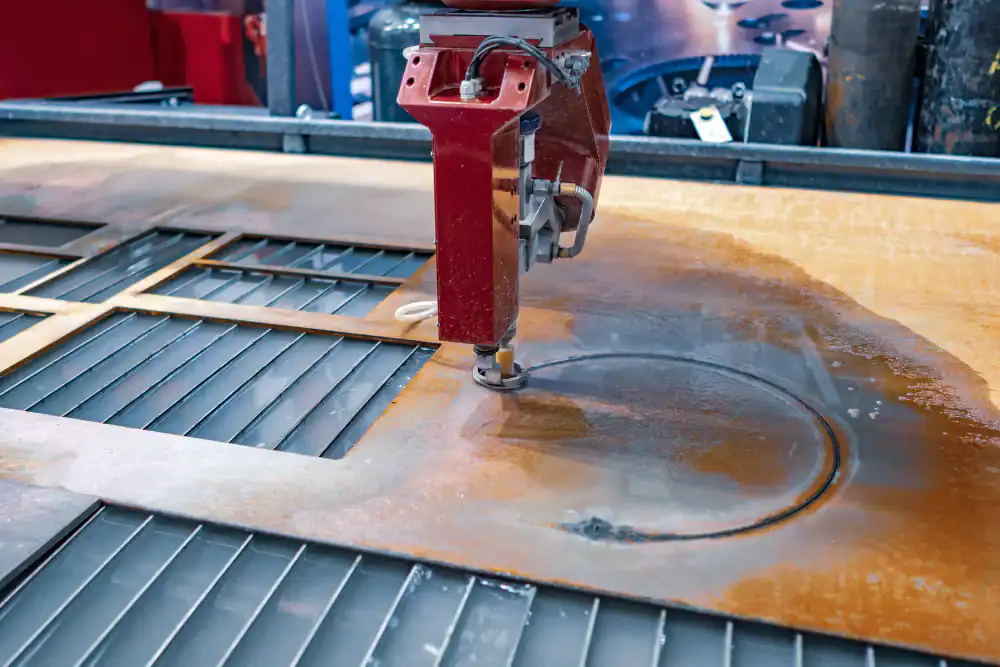
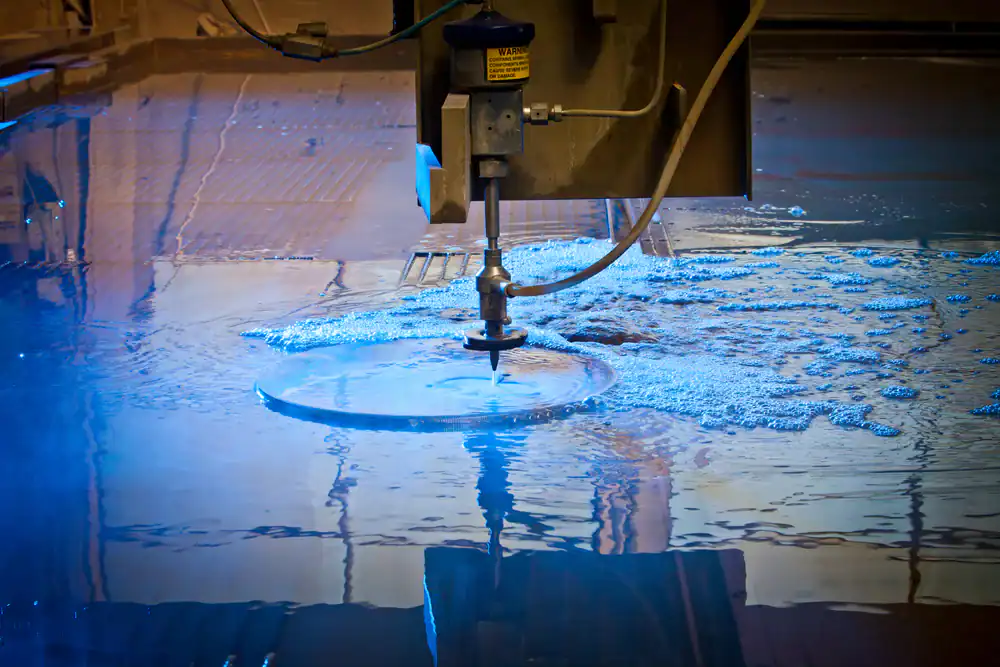
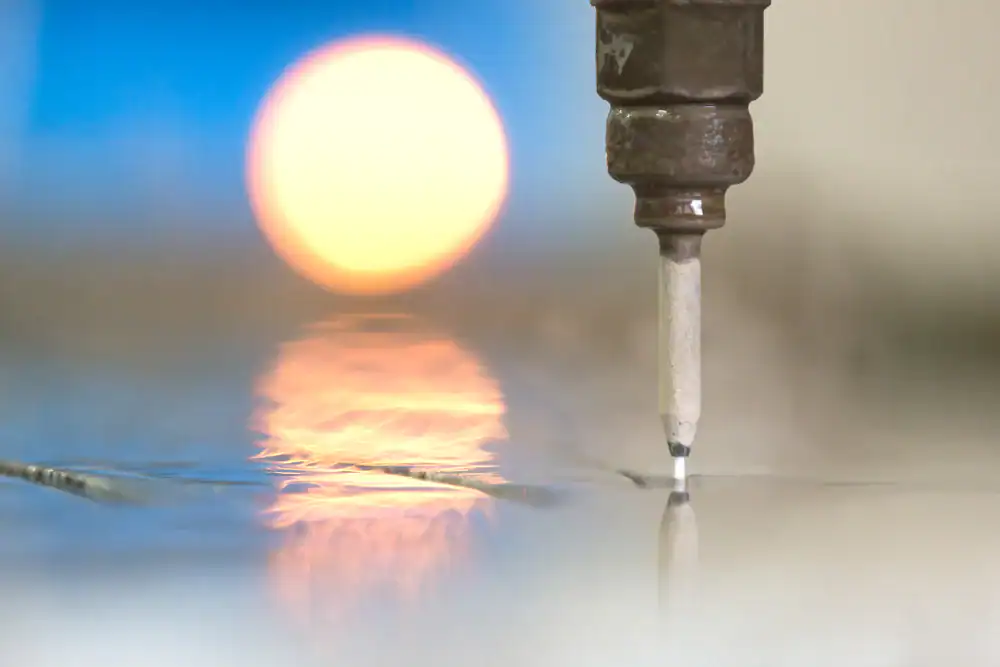
A waterjet pushes water at up to about 60,000 PSI, mixed with fine garnet abrasive, through the tile. A computer follows your design file, so the shape is limited by the drawing and not by a spinning blade. That’s why circles, octagons, scallops and tight inside corners are fair game.
The stream is only about 0.03 to 0.05 inches wide, so pieces can fit together closely. We run a Flow Mach 500 at our West Islip shop, and we cut ceramic, porcelain, natural stone, glass tile, quartz and mixed-material mosaics.
We’ll also tell you when you don’t need us. If you’re setting basic subway tile with nothing but straight cuts, a tile saw is the simpler choice. Waterjet earns its place on complex shapes, large-format tile and expensive material.
Yes, and this is where most homeowners and plenty of contractors on Long Island get stuck. A sketch on graph paper is a real starting point. We can help turn it into a production-ready file, so you don’t need to learn drawing software before you call.
Every file gets reviewed by our design team before we program the machine. We look for the things that cause trouble later: lines that overlap, shapes that don’t close, and geometry the material won’t tolerate. It’s much cheaper to catch those at the desk than after a tile has been cut.
Joint width matters more than most people expect. Because the cut itself takes out a small strip of tile, the design should be drawn with the grout joint in mind. If you want a mosaic or inlay to sit tight, say so early and we’ll plan around it. The same goes for limits. Very small pieces and very thin or fragile tile can restrict what’s practical, and we’ll tell you straight if a detail is asking too much.
When you come in, bring your sketch with rough dimensions, a sample or the actual tile, and a note on where it’s going. A floor medallion and a vertical backsplash inlay have different needs. Because we’re located in West Islip, you can sit down with someone and go over the file in person instead of trading emails with a shop in another state. We’re an easy trip from Babylon, North Babylon, Islip and Smithtown, and we’re close to Holtsville and Farmingville too.
It starts with the file. Once the design is checked, it goes into the machine’s software, and the waterjet traces every line. A medallion might be a circle with an octagon inside it and a border ring around that. Each shape comes out as its own piece, ready to be laid out like a puzzle.
Because every piece in a program is cut from the same instructions, repeated shapes come out identical. That helps with a border that runs the length of a hallway, where small differences would show up as uneven grout lines. Most porcelain tile is about 3/8 inch thick, so a medallion made from it sits flush with the field tile around it.
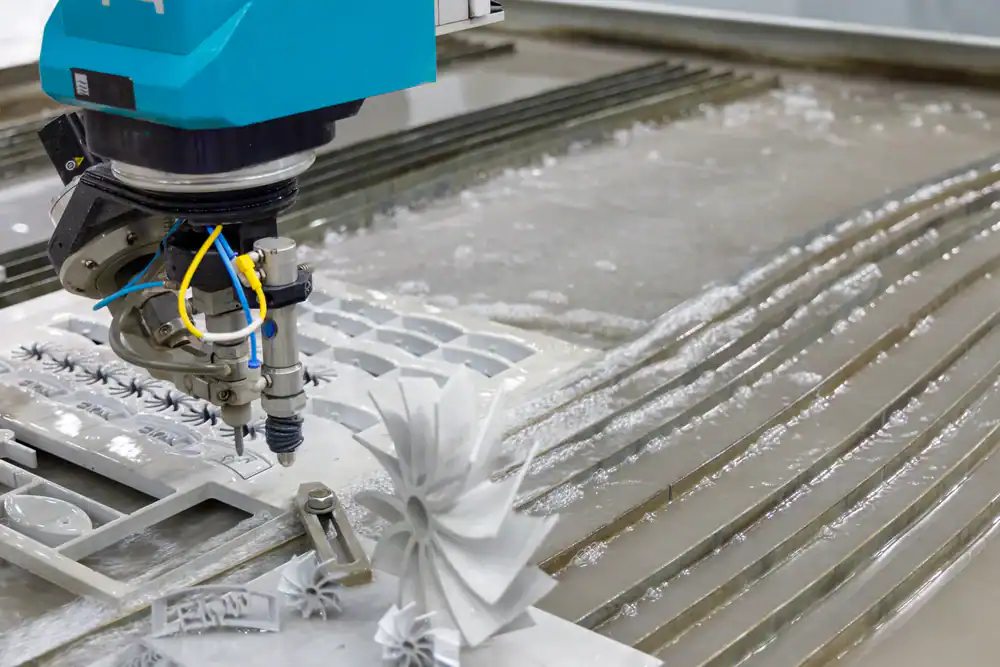
Mosaics are where waterjet gets interesting. You can combine stone, glass, porcelain and brass in one pattern, since the same process handles all of them. A marble and brass inlay for a kitchen backsplash, a glass accent band in a bathroom, or a large floor medallion for a commercial lobby all start the same way.
Lay everything out dry before anything gets set. Check the fit, check the pattern direction, and bring your installer into the conversation early. A cut piece that looks right on the table can still be wrong for the layout, and it’s far easier to fix that before mortar is involved. The best results we see come from jobs where the designer, the contractor and the tile setter all saw the file before the cut.
Want live answers?
Connect with a Tri-State Waterjet expert for fast, friendly support.
Cutting tile you can easily buy again is low stakes. Cutting large-format porcelain, imported stone or a backordered glass tile is a different matter. One bad cut can mean weeks of waiting and a delay for everyone else on the job.
That’s the real reason people bring complex work to us. It isn’t about chasing the finest number on a spec sheet. It’s about getting one clean pass through tile you only have so much of.
Porcelain and ceramic are standard materials for us, not specialty requests. Dense porcelain takes more skill than soft ceramic, and glazed tile behaves differently from tile that’s the same color all the way through. We’ll talk through your material before the first cut.
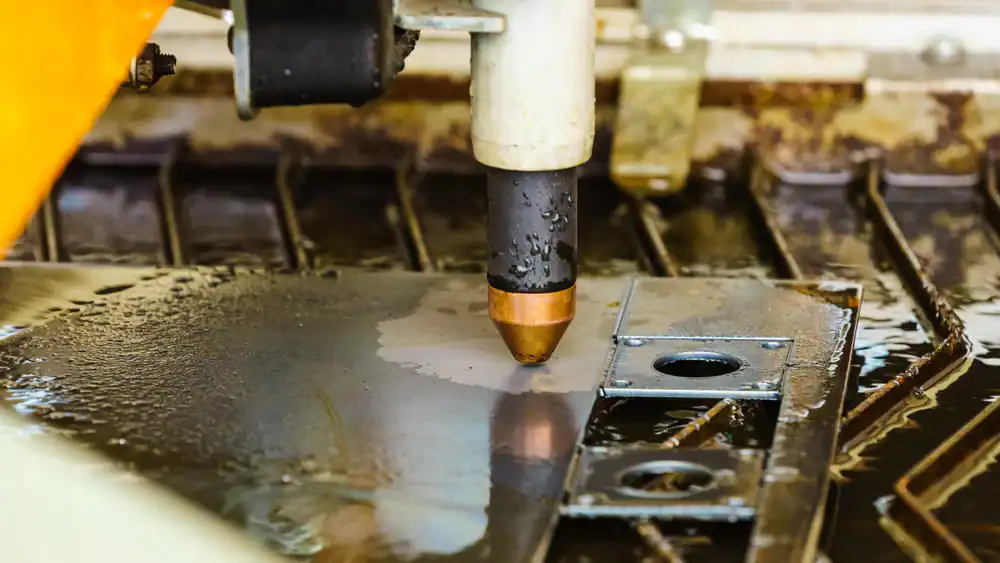
Be skeptical of any shop that says tile never chips. The point where the water first pierces the tile is the most vulnerable spot, especially on thin, brittle or glazed pieces. A waterjet doesn’t heat the tile or put a blade through it, which helps, but technique still decides the outcome.
What prevents chipping is setup. That means solid support under the tile, careful control of how the cut starts, and a test piece when the material is hard to replace. Those are the things we want to talk through with you before cutting your tile, particularly if it’s a one-of-a-kind or long-lead item.
Thickness is rarely the obstacle. Waterjets can cut anything from thin renovation panels of around 3mm up to slabs of 20mm or more, with the pressure and abrasive adjusted to suit. Large format is another common reason people call. One example from our own work is ripping 3×18 planks out of 12×24 tile, which is hard to do cleanly with a saw and costly to get wrong.
Long Island has a lot of renovation work where this matters. Whether you’re redoing a South Shore kitchen or finishing a high-end house out east, the tile is often the most expensive and most visible part of the room. Handing it to someone who will review your file and talk about edge quality first is a sensible way to protect it.
We quote each job individually and don’t publish a price list, because two projects that sound similar can be very different once you look at the file. A quote request is the way to get a real number.
What moves the price is fairly predictable. The number of pieces and the complexity of the shapes matter most. After that come the material and its thickness, how many of each piece you need, and how ready your file is. A clean, checked drawing saves time, and time is what you pay for.
For simple straight cuts, waterjet will cost more than a tile saw, and you should use the saw. For intricate work on expensive tile, the math often changes, because you’re protecting material that is costly and slow to replace. Cutting is also only one part of your timeline. Design, ordering tile and dry-fitting all add time, so ask about scheduling when you request your quote.
People also ask whether a matching piece can be cut later if something gets damaged. Ask us about that when you’re planning, so you know your options before the job starts.
If a wet saw can’t give you the shape you drew, waterjet tile cutting probably can. The steps are straightforward: start with a sketch or file, have it reviewed, plan the joints, lay it out dry, and cut it once. Complex shapes, mixed materials and expensive tile are where it pays off. Simple straight cuts are better left to a saw.
If you’re still working out whether your design is possible, that’s a fine time to call. Tri-State Waterjet is at 217 Union Blvd in West Islip, NY, and you can reach us at 631-422-0888 to talk through your sketch, your tile and your timeline. We’re open Monday through Friday, 7:30am to 5pm. Bring what you have, and we’ll tell you honestly what will work.
Summary:
Article details:
Share: