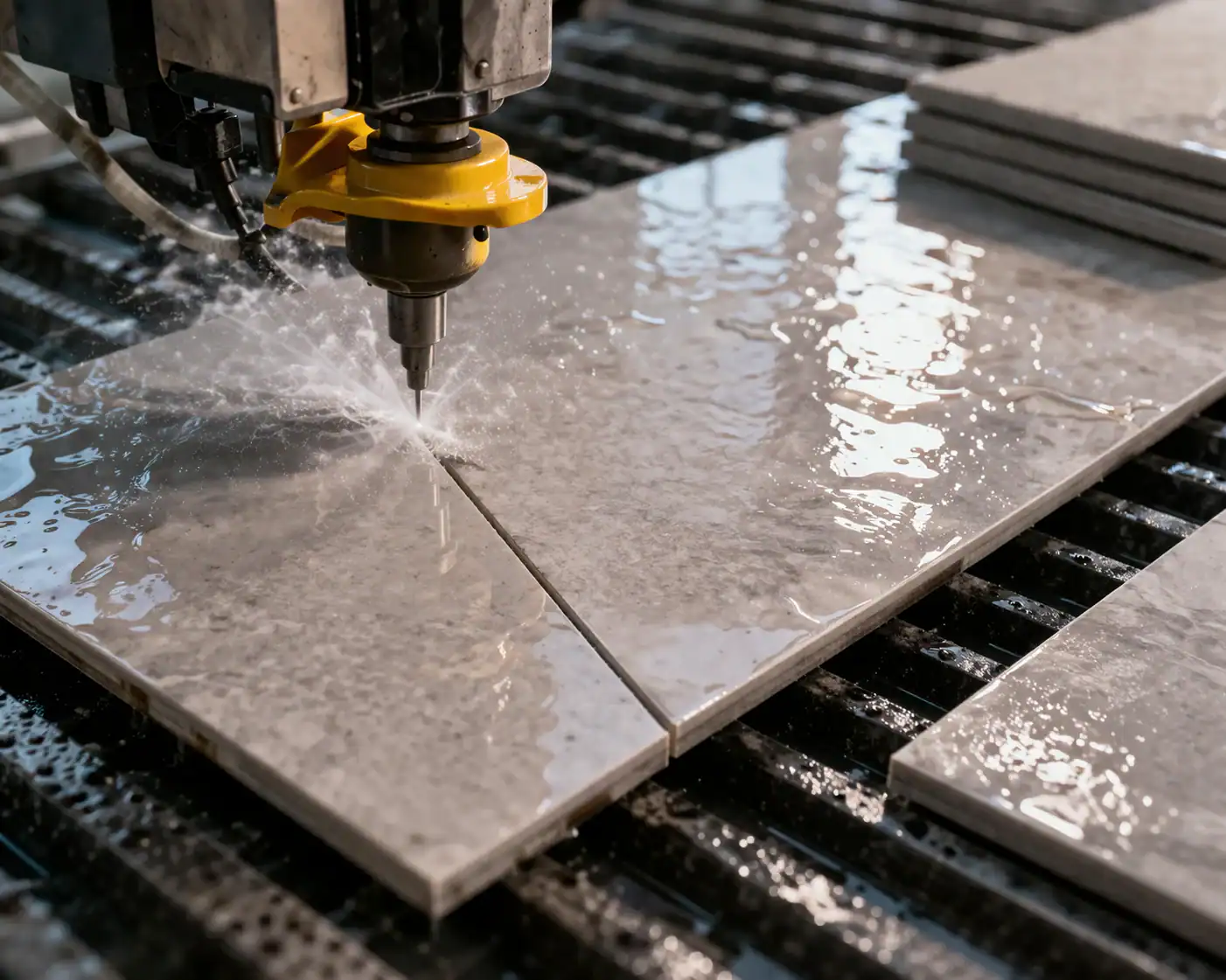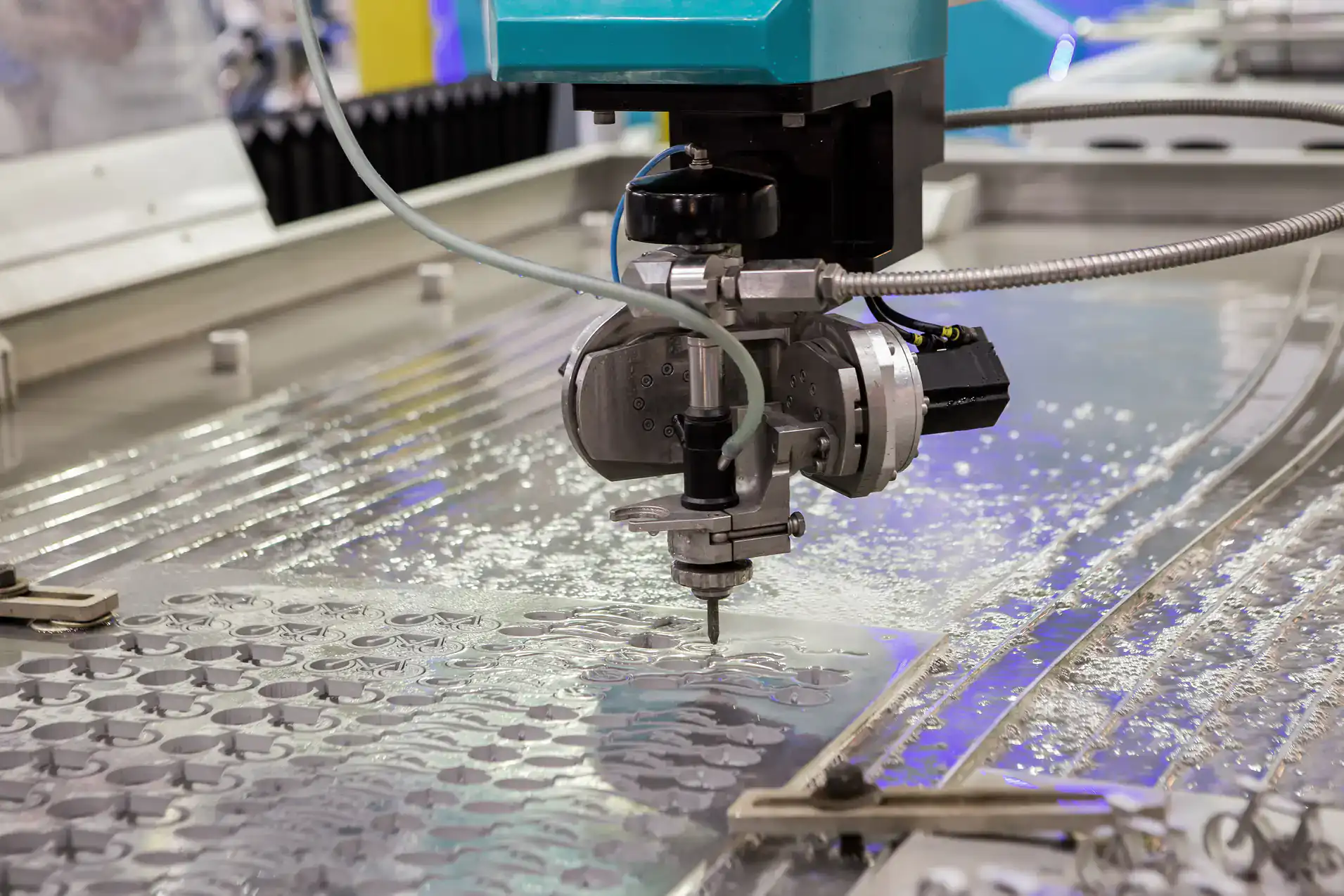
Metal waterjet cutting isn't just precise — it's one of the cleanest cutting processes available. Here's what that means for Long Island manufacturers focused on reducing waste.
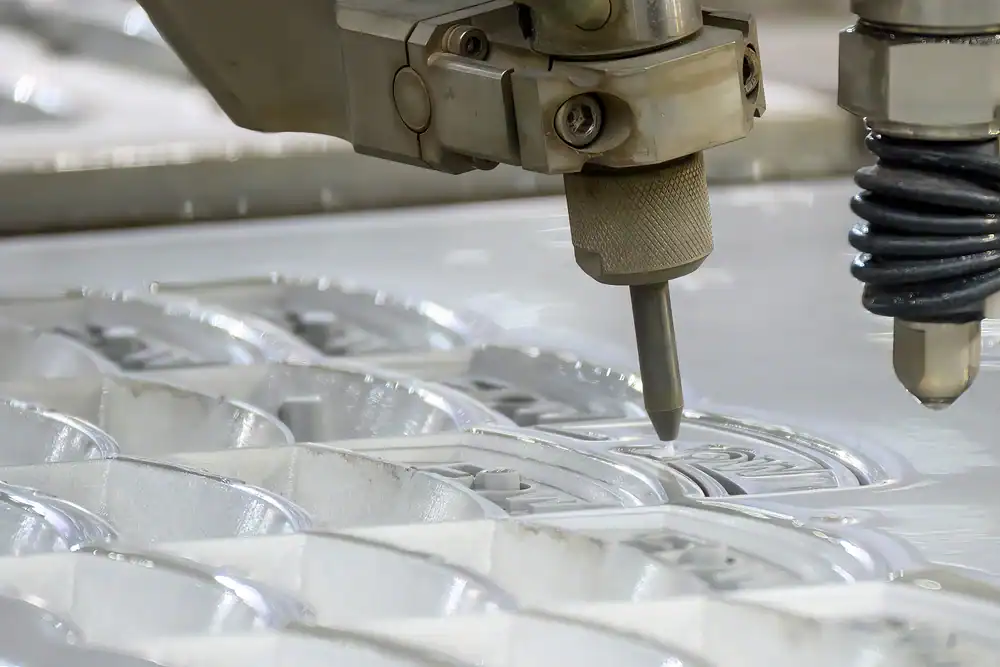
If you’re running a shop on Long Island and someone’s asking about your environmental footprint — a customer, a prime contractor, a state program — you need a real answer, not a vague one. More manufacturers here are facing that conversation, and the fabrication choices you make directly affect what you can say. Metal waterjet cutting is one of those choices that holds up under scrutiny. It reduces scrap, uses water responsibly, produces no toxic emissions, and preserves material integrity from the first cut to the last. This page explains how it all works and why it matters in this market specifically.
The EPA defines sustainable manufacturing as creating products through processes that minimize negative environmental impacts while conserving energy and natural resources. Waterjet cutting fits that definition better than most alternatives — not because of marketing language, but because of how the physics of the process actually work.
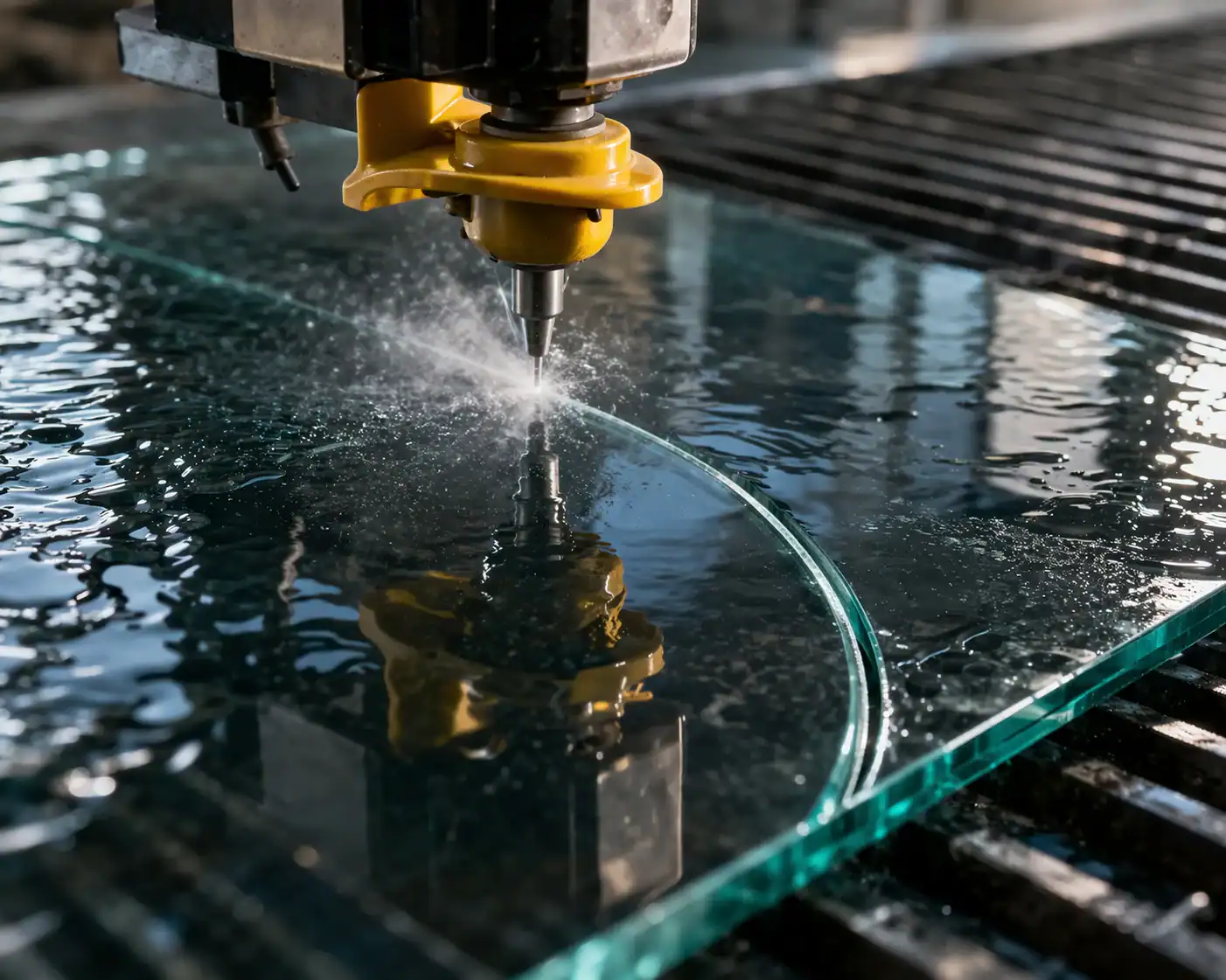
There’s no heat. No combustion. No toxic fumes. The cutting is done entirely by high-pressure water mixed with a natural abrasive mineral called garnet, which means the process doesn’t generate the hazardous byproducts that plasma and laser cutting do. What comes out the other end is a clean part, inert abrasive waste, and water that can be filtered and reused.
For manufacturers on Long Island who need to document their environmental practices — whether for a government contract, an ESG report, or a customer requirement — waterjet cutting gives you something concrete to point to.
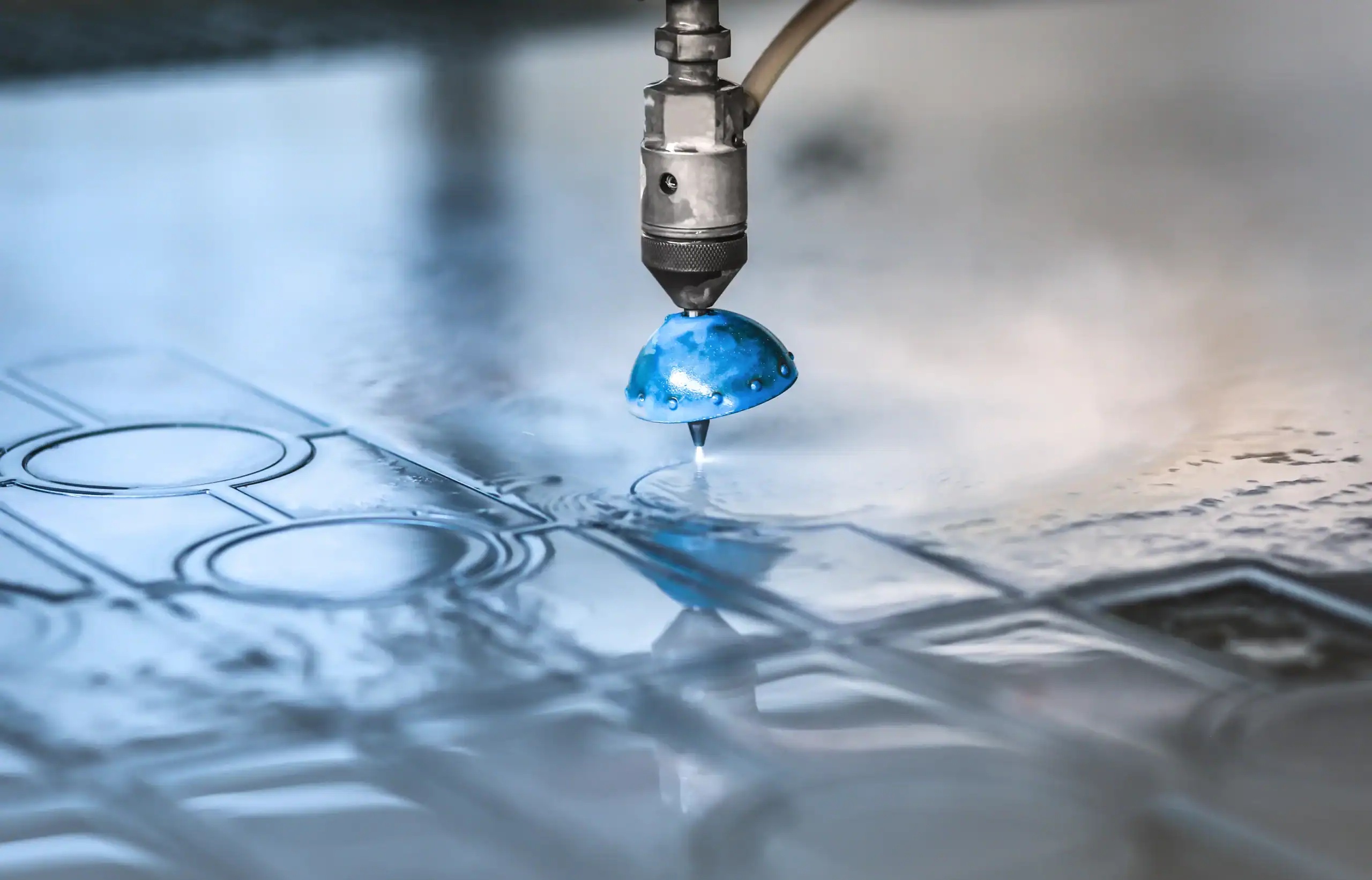
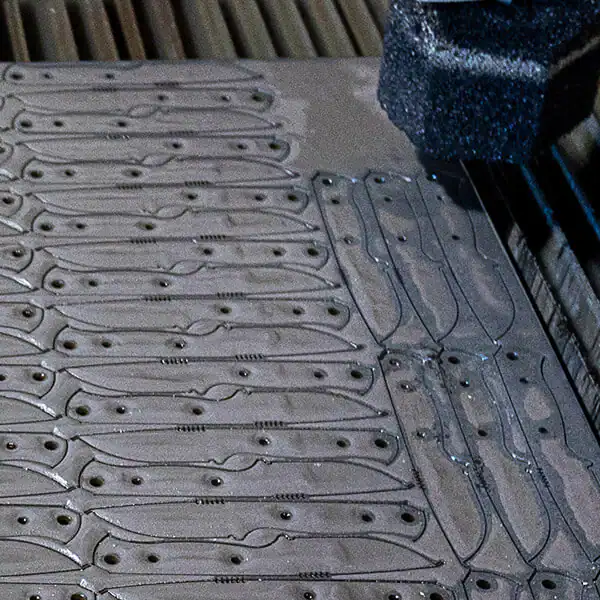
One of the biggest sources of waste in any cutting operation is poor material utilization — buying a full sheet of stainless or titanium and walking away with 30% of it on the floor as scrap. Nesting software addresses this directly by calculating how to pack parts as tightly as possible onto each sheet before a single cut is made.
With advanced nesting, material utilization improves by 15% to 30% compared to traditional cutting layouts. On complex jobs with irregular part geometries, some shops see savings closer to that upper end. When you’re working with expensive alloys, that difference isn’t cosmetic — it shows up in your material costs and your scrap disposal volume.
The waterjet process reinforces this advantage in a way thermal cutting can’t match. The kerf — the width of material removed with each pass — is extremely narrow. Less material disappears with every cut, which means more usable material stays on the sheet. Multiply that across a production run of hundreds or thousands of parts, and the cumulative savings are real.
There’s also a secondary benefit that doesn’t get talked about enough: fewer rejected parts. When parts come out right the first time — holding tolerances within ±0.001 to ±0.005 inches — you’re not generating rework scrap. Every part that gets cut twice, ground down, or thrown out because it didn’t meet spec is material waste. Precision cuts directly into that number.
We review every CAD file before cutting starts — DXF, DWG, and STEP formats — specifically to catch design issues before material is committed. That step alone prevents a category of waste that most shops never track: the expensive plate that gets scrapped because someone missed a dimension in the file.
This is the question most people have when they first look at waterjet cutting from a sustainability angle. The process uses water — a lot of it, at very high pressure — so it’s fair to ask where it goes and whether the system is actually as clean as it sounds.
Modern waterjet systems use closed-loop filtration technology that reclaims approximately 85% of the water used during cutting. The water is filtered, cleaned of suspended particles, and returned to the high-pressure pump for reuse. It doesn’t drain to the floor or discharge into the sewer system — it circulates. For a 50-horsepower pump system, a closed-loop chiller alone saves roughly 4 gallons per minute of water that would otherwise be consumed. That adds up quickly over a full production shift.
The abrasive is the other piece of the equation. Garnet is a naturally occurring mineral — it’s not synthetic, it’s not chemically treated, and spent garnet is classified as inert waste in most jurisdictions, including New York. It doesn’t require special handling as hazardous material, and it can be disposed of in standard landfills or recovered for reuse. Many facilities recycle up to 70% of their abrasive. When you factor in both water and abrasive recovery, a single waterjet installation can divert approximately 12 tons of material from landfill disposal every year.
Compare that to plasma cutting, which generates dross, fumes, and metal particulate that require proper filtration and disposal. Or laser cutting, which emits gases that demand ventilation infrastructure and ongoing compliance management. Waterjet sidesteps all of that. The shop floor stays cleaner, the air stays cleaner, and the compliance burden stays lower — which matters when you’re operating under New York State’s environmental regulations.
Want live answers?
Connect with a Tri-State Waterjet expert for fast, friendly support.
Sustainability requirements aren’t abstract for manufacturers in this market. New York State’s Department of Environmental Conservation runs active programs to help businesses reduce their environmental footprint, and the pressure from customers — especially those serving New York City architecture firms, government agencies, or aerospace primes — is real and growing.
For Long Island shops, that pressure is immediate and specific. Choosing a fabrication process that produces no toxic emissions, recycles its water, generates inert waste, and reduces scrap isn’t just good practice. It’s a documentable decision that can be included in ESG disclosures, RFP responses, and supplier sustainability questionnaires. That’s a different kind of value than just cutting a good part — and it’s one that’s becoming harder to ignore.

Heat-affected zones are one of the most underappreciated sources of waste in metal fabrication. When plasma or laser cutting applies intense heat to a metal, the area immediately surrounding the cut changes — edges harden, material warps, microstructure shifts. Sometimes those effects are visible. Sometimes they’re not, and the part passes initial inspection only to fail later in service or at the assembly stage.
Either way, you’re generating scrap. Either the part gets rejected upfront and re-cut, or it fails downstream and the cost multiplies. For manufacturers working with aerospace-grade aluminum, marine stainless steel, titanium, or hardened tool steel, this isn’t a theoretical concern — it’s a regular operational problem.
Waterjet cutting eliminates heat-affected zones entirely because there is no heat involved in the process. The cold cutting method preserves the material’s original properties — its hardness, its corrosion resistance, its structural integrity — from the moment it enters the machine to the moment the finished part comes out. For Long Island’s marine fabricators working with salt-air-exposed stainless and aluminum, that matters especially. Thermal damage to those materials doesn’t just create scrap — it creates parts that will fail prematurely in a coastal environment.
The edge quality from a waterjet cut is also finish-ready in most applications. There’s no dross to grind off, no hardened edge to soften, no secondary operation required before the part can be used. That eliminates a category of labor and material handling that adds up across a production run, and it reduces the chance of a part being damaged or dimensionally altered during secondary finishing.
From a material yield standpoint, the combination of no HAZ, narrow kerf, and precision tolerances shifts the math significantly. One lifecycle analysis found that combining abrasive waterjet cutting with CNC processes raises material yield from roughly 65% — typical for saw-plus-CNC workflows — to over 85%. That’s not a marginal improvement. It’s a structural change in how much of the material you pay for actually ends up in the finished part.
Energy costs on Long Island are among the highest in the country. PSEG Long Island rates consistently run above the national average, which means the energy efficiency of your fabrication process has a direct effect on your operating costs — not just your carbon footprint.
Plasma cutting machines consume more than twice the energy of waterjet systems. A 300-amp plasma machine draws approximately 55 kilowatts of electrical power. A comparable waterjet system runs between 22 and 35 kilowatts. That gap is significant when you’re running machines for eight or ten hours a day, and it compounds across a full year of production. Lower energy draw means lower utility bills and a smaller carbon footprint per part — both of which are increasingly relevant for manufacturers pursuing sustainability certifications or responding to customer ESG requirements.
This matters in a specific way for companies in the Hauppauge Industrial Park and the broader Suffolk County industrial corridor. The park is home to roughly 1,300 companies employing more than 55,000 workers, and a growing number of those businesses are facing sustainability questions from customers, investors, and state programs. The New York City Economic Development Corporation is building a $4 billion offshore wind supply chain that will require precision-fabricated metal components — and the offshore wind industry has strong sustainability requirements baked into its procurement standards. Fabricators who can demonstrate clean, energy-efficient processes have a real advantage in that supply chain.
The broader point is that waterjet cutting’s environmental advantages aren’t just a feel-good story. They’re measurable, documentable, and increasingly tied to business outcomes — contract eligibility, supplier qualification, ESG reporting, and the ability to serve clients who take their own sustainability commitments seriously. For a Long Island manufacturer trying to compete in aerospace, marine, architectural, or renewable energy markets, that’s not a peripheral consideration. It’s a competitive factor.
If reducing material waste, lowering your environmental footprint, and producing cleaner parts are priorities — waterjet cutting delivers on all three in ways that are measurable, not just marketable. The combination of nesting optimization, zero heat-affected zones, closed-loop water recycling, and inert abrasive waste makes it one of the most defensible fabrication choices you can make from a sustainability standpoint.
For manufacturers in Suffolk County and across Long Island’s industrial base, those advantages connect directly to real business pressures: high material costs, strict state environmental regulations, growing customer sustainability requirements, and emerging supply chain opportunities in offshore wind and aerospace.
If you’re evaluating whether waterjet cutting makes sense for your operation — or you have a specific job in mind — we’re worth a conversation. Send over a file, ask a question, or just describe what you’re working with. The answers won’t be vague.
Summary:
Article details:
Share: