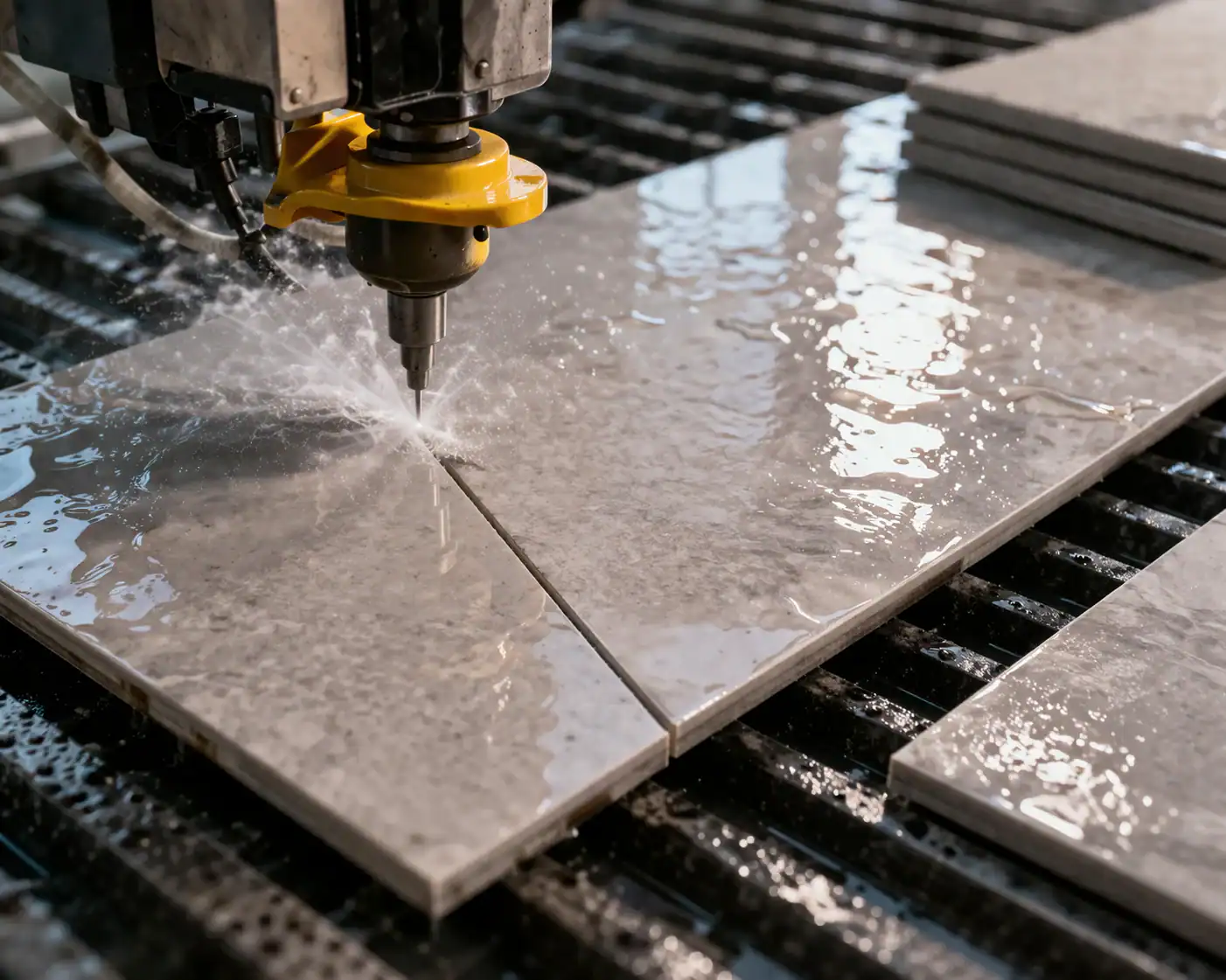
Waterjet cutting lets you achieve intricate marble designs — medallions, inlays, complex mosaics — without the cracking and chipping that traditional methods risk.
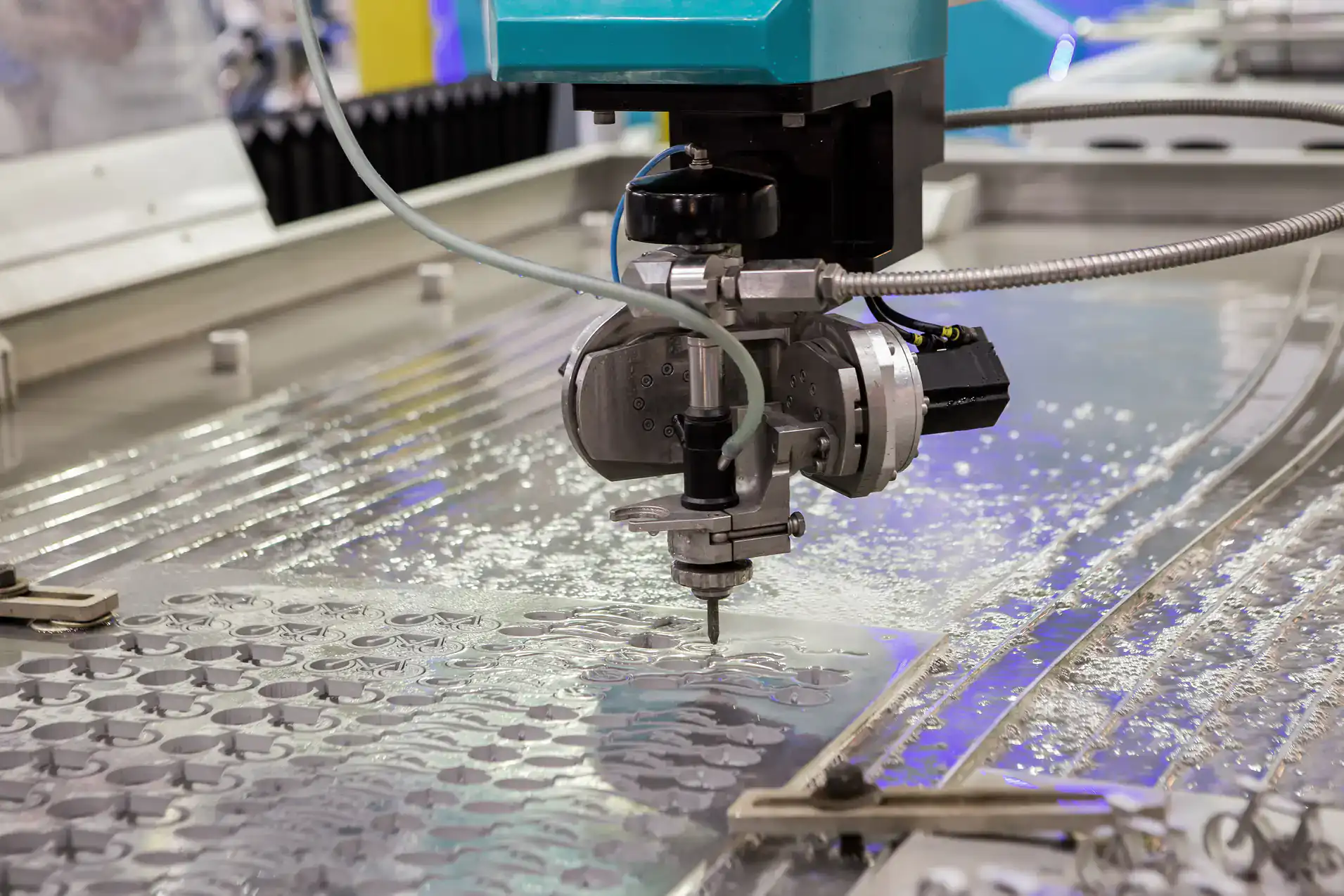
Marble has a way of making a space feel finished. It’s also one of the most unforgiving materials to work with — one wrong cut, one blade that catches, one moment of excessive heat, and a slab that cost hundreds or thousands of dollars is ruined. That’s the reality contractors and designers across Long Island deal with every time a project calls for custom stone work. Waterjet cutting was built for exactly this problem. It handles the precision that marble demands without the risks that traditional cutting methods introduce. Here’s what you actually need to know about how it works and what it makes possible.
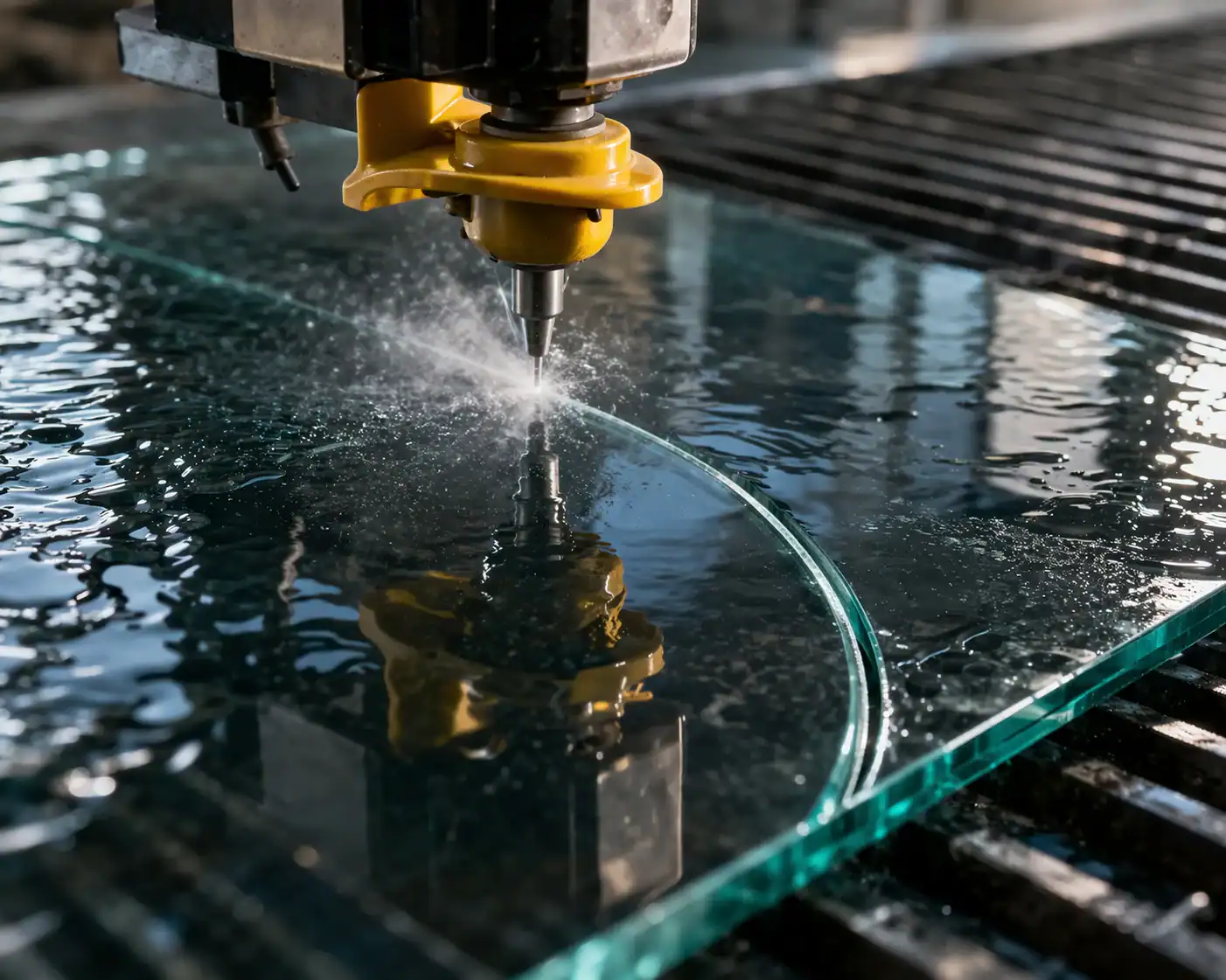
A waterjet system cuts by forcing water through a tiny nozzle at nearly 60,000 PSI, mixing it with garnet abrasive, and directing that stream at the stone. The stream erodes material along a programmed path — no blade contact, no heat, no mechanical impact. The entire process is cold from start to finish.
Because the cut follows a CNC-programmed path directly from a CAD file, the machine can navigate any geometry: tight curves, interior cutouts, acute angles, multi-piece patterns where every piece has to fit the next one with near-zero gap. The kerf — the width of material removed by the cut — is only about 0.03 to 0.04 inches, roughly one-third the width of a traditional saw blade. On expensive marble, that difference adds up fast.
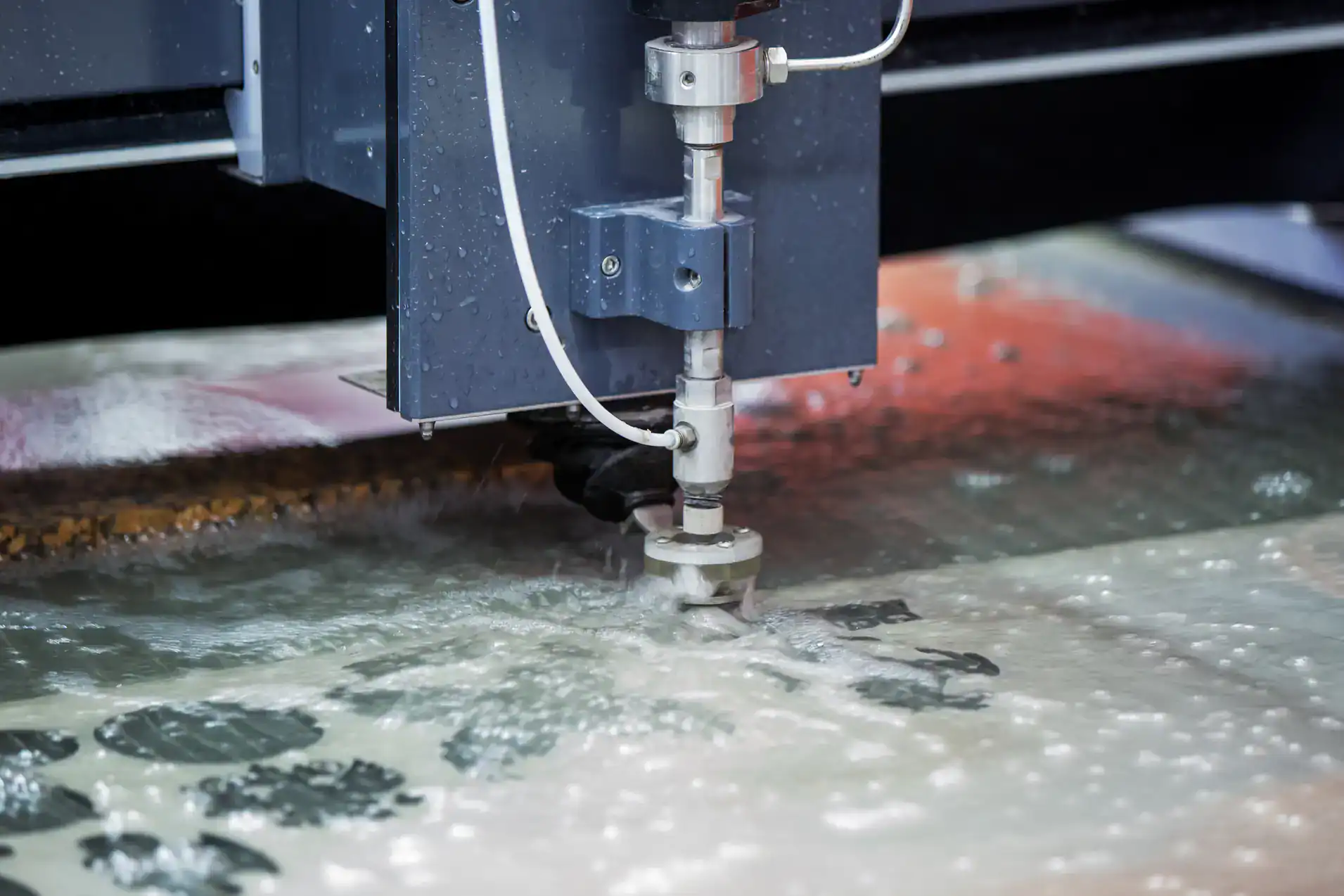
Marble looks dense and solid, but it reacts badly to heat and mechanical shock. Diamond saws generate friction heat as they cut, and that heat creates microfractures within the stone — tiny cracks that may not be visible right away but can spread under foot traffic or temperature change after installation. An angle grinder is even worse. The vibration alone can cause chipping at corners and along veining lines where the stone is naturally weaker.
There’s also the silica dust problem. Dry-cutting marble generates airborne silica particles — a serious respiratory hazard that OSHA regulates strictly. For contractors working in occupied homes or near-complete commercial spaces on Long Island, that dust doesn’t just create a health risk; it contaminates adjacent finished surfaces and triggers cleanup and containment requirements that slow the job down. Waterjet contains all the debris in the water stream. No airborne dust, no contamination, no respiratory protection requirement on-site.
Then there’s the geometry problem. A diamond saw cuts in straight lines. Curves require hand-grinding, which is slow, imprecise, and introduces the same vibration and chipping risks. Tight inside corners are essentially impossible with a blade without making multiple intersecting cuts that leave visible seams. For any design that goes beyond a straight-edged slab — a medallion, a mosaic, a countertop with a curved sink cutout — traditional methods hit a wall fast.
Waterjet sidesteps all of it. The cold, non-contact process eliminates thermal damage. The contained water stream handles the dust. And the CNC control means curves and complex geometries aren’t harder to cut — they’re just programmed differently.
Tolerances matter most when multiple pieces have to fit together. A floor medallion with eight or twelve individual marble sections, a brass inlay set flush into a Carrara marble floor, a mosaic backsplash where the grout lines are supposed to be hairline-thin — in all of these cases, if the cuts are off by even a fraction, the design looks wrong. The grout lines get fat and uneven. The metal inlay sits proud of the surface instead of flush. The medallion looks like it was assembled from pieces that almost fit.
Our Flow Mach 500 system holds tolerances within ±0.003 to ±0.005 inches. To put that in perspective, a human hair is approximately 0.003 inches thick. That level of precision is what makes intricate multi-piece designs actually work — not just in theory, but on the installation day when all the pieces come together.
For Long Island projects where the design is the point — a grand foyer in a Dix Hills estate, a feature floor in a Hamptons property, a lobby installation in a Nassau County commercial building — that precision is the difference between a design that looks intentional and one that looks like it fell short of what was planned. We’ve been cutting marble and stone from our West Islip shop since 1981, and what we hear most often from architects and contractors is that they need pieces that fit exactly, not approximately. That’s what the tolerances are for.
Want live answers?
Connect with a Tri-State Waterjet expert for fast, friendly support.
The most common thing we hear from designers who are new to waterjet is some version of: “I didn’t know you could do that.” The technology doesn’t just protect the marble — it unlocks designs that traditional methods can’t produce at all.
Floor medallions with concentric rings and geometric insets. Multi-piece mosaics where each tile is a custom shape. Countertops with precise sink and fixture cutouts that follow the exact curve of the fixture. Architectural panels with repeating geometric patterns. Brass or copper inlays set into white Carrara marble with no visible gap at the seam. If the design exists in a CAD file — DXF, DWG, or STEP — we can cut it.
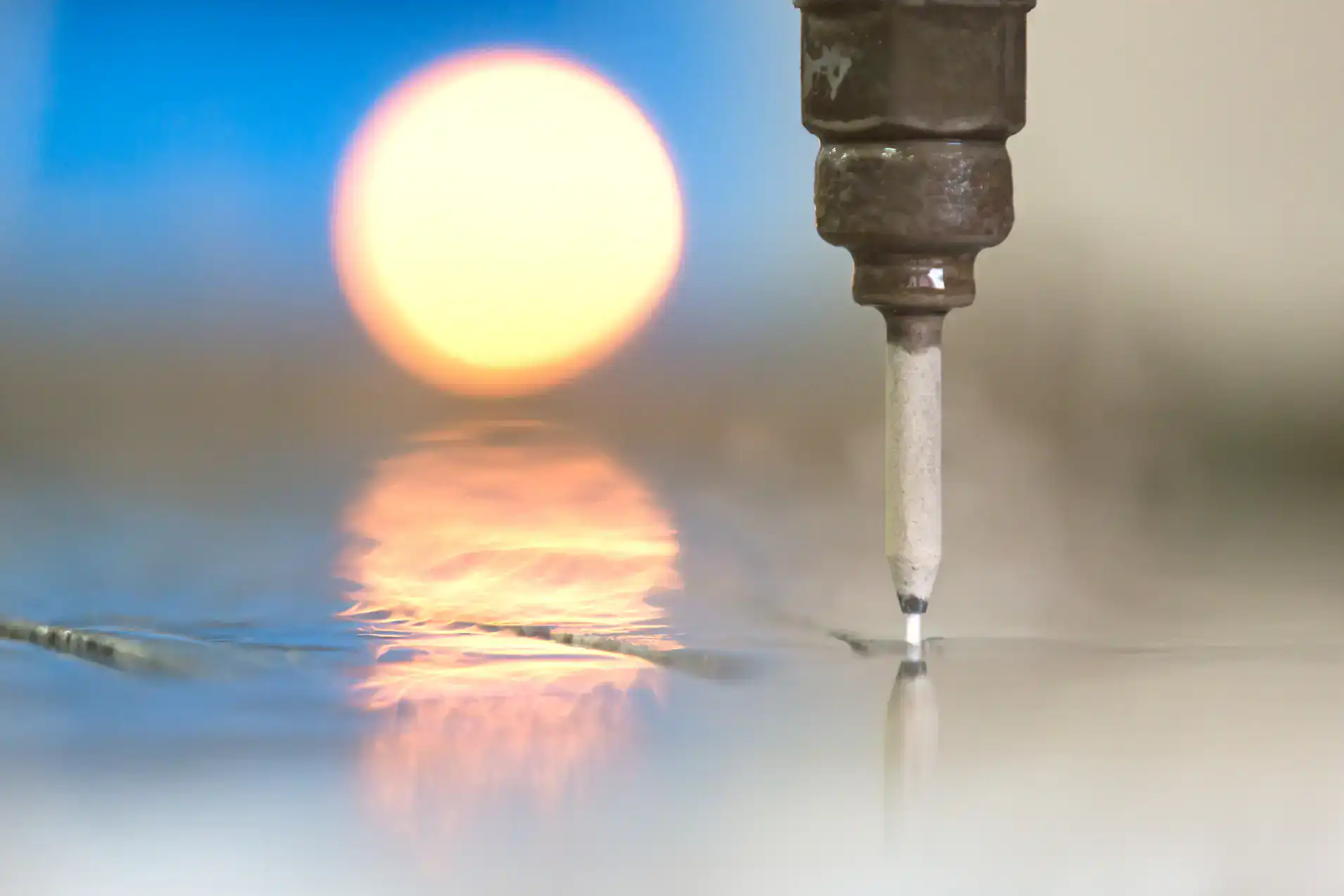
This comes up more and more on Long Island, particularly in Hamptons renovation projects and high-end Nassau County homes where brass-and-marble inlay floors have become one of the defining looks of the current luxury market. The design calls for brass strips or geometric shapes set flush into a white marble field — which means the brass and the marble both need to be cut to matching tolerances so the metal sits perfectly level with the stone surface.
The problem most contractors run into is that stone fabricators don’t cut metal, and metal cutting shops don’t cut stone. You end up managing two separate vendors on two separate timelines, and on installation day you find out whether the tolerances actually matched. Often they don’t — not because either shop did bad work, but because they were working to different standards with different equipment.
We cut both on the same Flow Mach 500 system. Marble, granite, brass, stainless steel, copper — all held to the same ±0.003 to ±0.005 inch tolerances. That means the brass inlay and the marble surround are cut as a matched set, not as two separate jobs that have to line up by luck. For architects and contractors coordinating complex stone-and-metal installations across Long Island, eliminating that coordination problem is worth a lot more than it might seem on paper.
We also review every file before cutting starts. Geometry errors, tolerance issues, material compatibility questions — those get caught before any stone is touched, not after a slab has already been cut wrong. It’s a step that not every shop takes, and it’s one that protects your material investment when you’re working with marble that can’t easily be replaced.
The question we get most often is some version of: “Will the waterjet crack my marble?” The honest answer is no — not when it’s done correctly. The risk with marble isn’t the pressure of the water stream; it’s heat and mechanical shock, neither of which waterjet introduces. The cold-cutting process leaves the stone’s structural integrity intact. The most common cause of cracking during waterjet cutting is inadequate slab support or piercing at full pressure on interior cuts — both of which are process issues, not technology issues, and both of which we account for on every job we run from our West Islip facility.
Another question we hear from Long Island contractors is whether waterjet-cut edges will need a lot of secondary finishing. For most applications, no. The edges that come off our system are clean and smooth enough for direct installation. Polishing is sometimes desired on exposed decorative edges for aesthetic reasons, but it’s not required to fix cutting damage — which is a meaningful distinction when you’re working on a tight project timeline.
People also ask about material thickness. We cut marble up to 12 inches thick, which covers the full range of architectural stone work — from standard countertop slabs to thick architectural elements and feature installations. Most residential and commercial projects across Long Island fall well within that range.
And for those wondering about file formats: we accept DXF, DWG, and STEP files directly. If you have a design but aren’t sure whether the file is ready to cut, send it over. Our team reviews every file before the machine runs, and if there’s anything that needs adjustment — tolerances, geometry, material considerations — we’ll flag it before any material is committed.
Marble is one of those materials where the fabrication either honors the design or undermines it. The right cutting method protects the stone, holds the tolerances, and makes complex designs achievable — not just on paper but in the finished space. The wrong method turns an expensive slab into an expensive mistake.
Waterjet cutting exists at the intersection of precision and material protection. No heat, no mechanical impact, no airborne silica, and tolerances tight enough to make multi-piece designs work exactly as drawn. For Long Island architects, designers, and contractors working on projects where the stone is a centerpiece — not an afterthought — that combination matters.
If you have a marble project in the works, from a single countertop cutout to a full estate floor medallion, Tri-State Waterjet is worth a conversation. We’ve been doing this work from West Islip for decades, and we’re straightforward about what we can do and how long it takes.
Summary:
Article details:
Share: