Five practical tips that help Long Island fabricators, contractors, and manufacturers get better results from metal waterjet cutting — before the first drop of water falls.
Precision metal cutting sounds straightforward until you’re holding a part that doesn’t fit, staring at a sheet of expensive aluminum that can’t be uncut. On Long Island, where tight project timelines and high material costs leave almost no margin for error, getting waterjet cutting right the first time isn’t just a preference — it’s a financial necessity. The good news is that most mistakes are preventable. They happen before the machine ever starts, not during the cut itself. Here’s what we know from years of working with Long Island fabricators, contractors, and manufacturers.
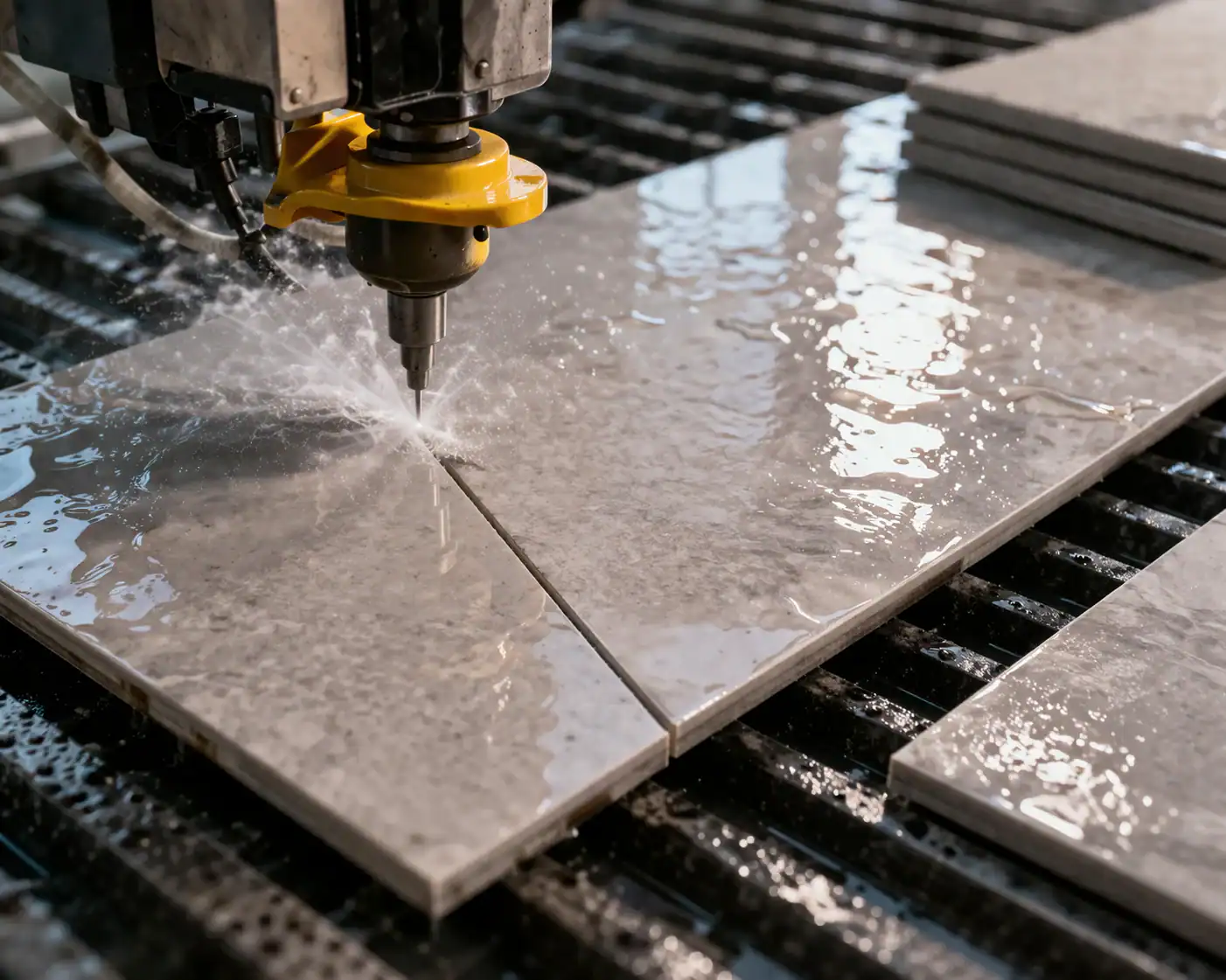
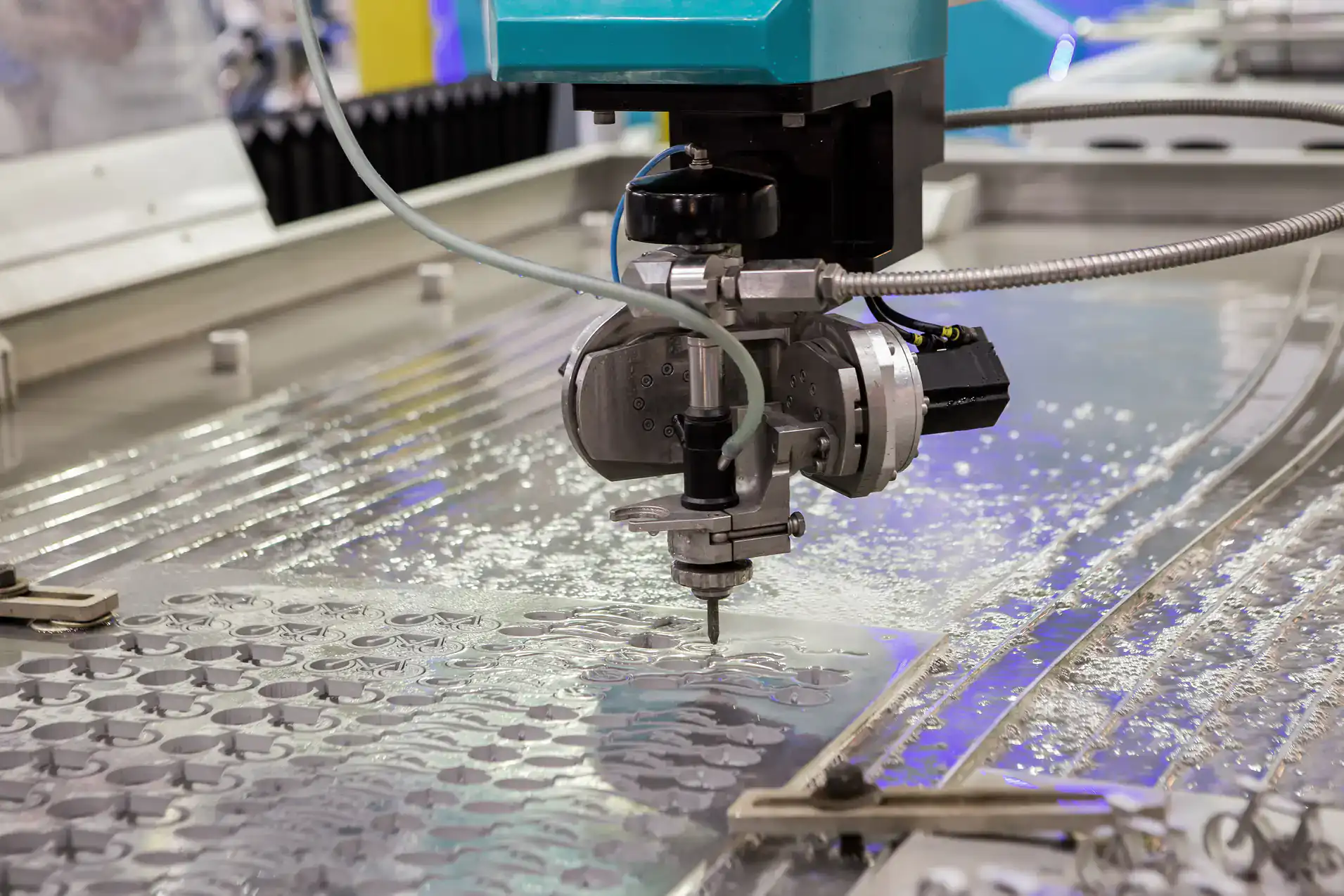
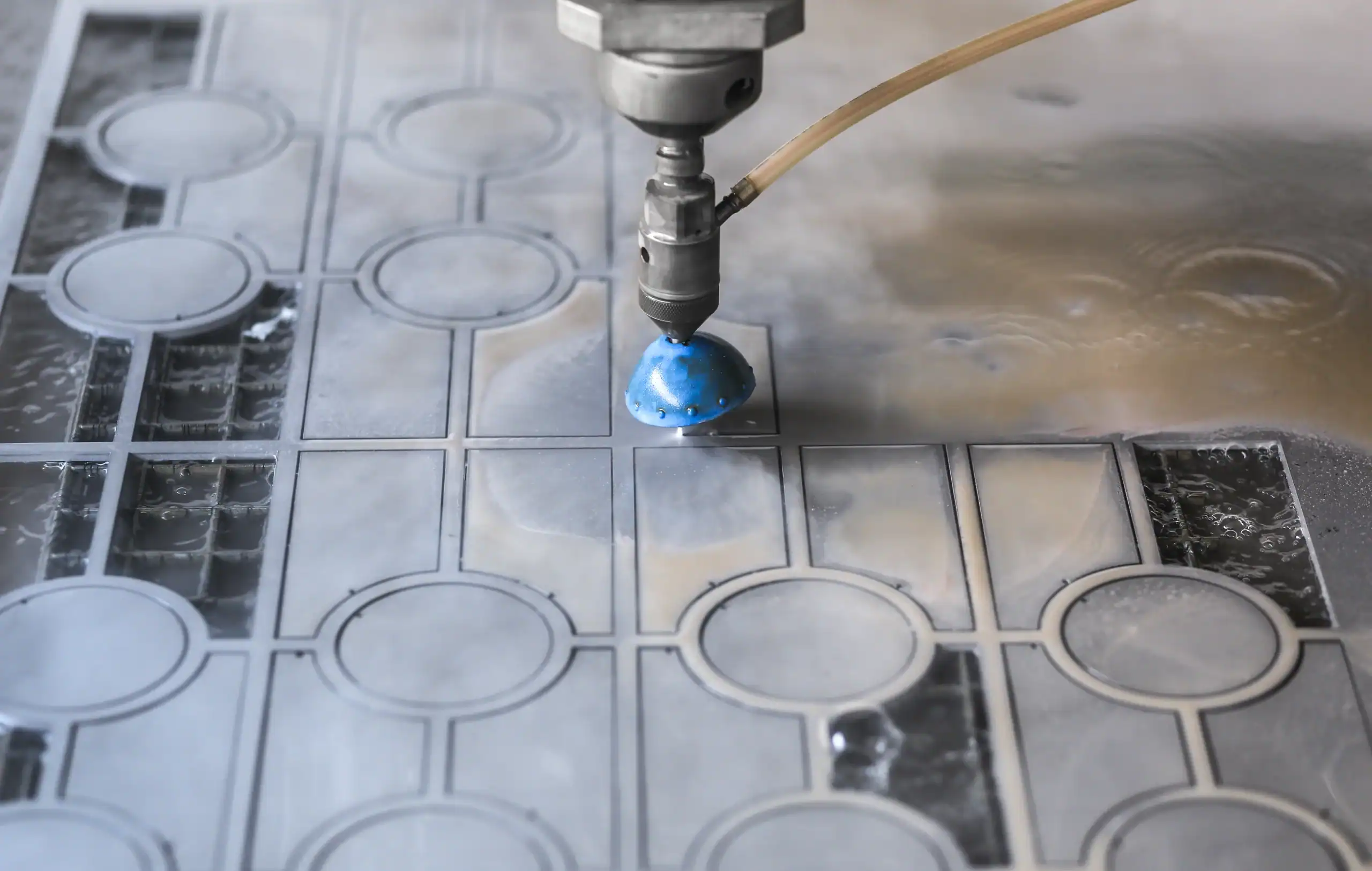
Abrasive waterjet cutting forces water through a small orifice at up to 60,000 PSI, mixing it with garnet particles that do the actual cutting. The stream follows a CNC-programmed path with tolerances held to ±0.005 inches. Because the process generates no heat, there’s no warping, no discoloration, and no hardened edges — which is why it’s specified for stainless steel, marine-grade aluminum, titanium, and other metals where heat distortion would compromise the part.
What goes wrong almost always traces back to the same handful of issues: a file that wasn’t ready to cut, a tolerance that wasn’t communicated, or a shop that didn’t ask the right questions before programming the machine. Understanding the process helps you avoid all three.
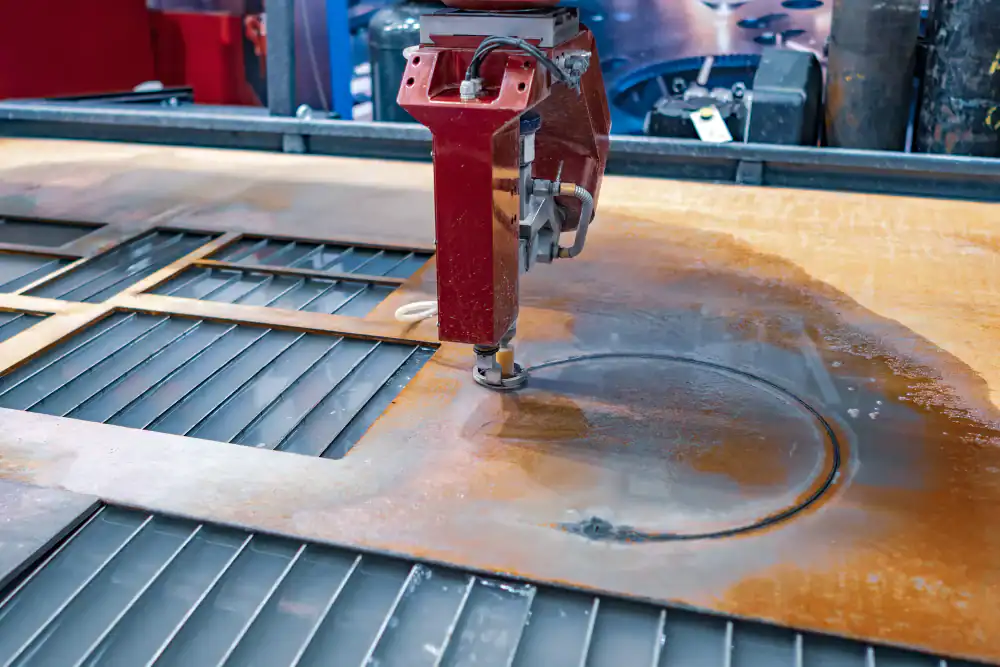
The waterjet machine cuts exactly what it’s told to cut. If your file has open lines, overlapping paths, incorrect scale, or geometry that won’t translate cleanly to a cut path, the machine doesn’t compensate — it just cuts what’s there. That’s why file preparation is where most preventable errors originate.
Send vector-based CAD files: DXF, DWG, or STEP formats at 1:1 scale. A PDF export of a drawing might look accurate on screen, but PDFs frequently lose dimensional precision during export and can’t be reliably programmed into a CNC system. If you’re working from a sketch or concept, that’s fine — just communicate that clearly so we can help translate it into a cuttable file.
Tight inside corners are another common issue. Waterjet cuts with a stream that has a physical diameter, which means a perfectly sharp interior corner isn’t achievable — the tool path produces a small radius at every inside corner. For most structural applications this doesn’t matter, but for parts that need to nest together precisely or fit into a specific slot, it’s worth flagging during the design phase rather than discovering it after the cut.
Every file we receive goes through an in-house review before we program a single cut path. We’re looking for open geometry, scale errors, fragile sections, and design intent questions that are easier to resolve in five minutes than after the fact. It’s not a complicated step, but it’s the one that prevents the most expensive mistakes.
Not every job needs the tightest possible tolerance, and understanding this can save you money. Waterjet cutting operates across a range — from ±0.030 inches at high-speed, low-precision settings to ±0.002 inches at premium calibration. The commercial standard that most quality shops target, and the one we hold at our facility, is ±0.005 inches. That’s tight enough for aerospace components, marine hardware, and precision industrial assemblies.
The problem is that buyers often don’t specify tolerance at all, leaving the shop to make assumptions. A shop running at economical feed rates to keep costs down might deliver parts at ±0.015 or ±0.020 inches — technically functional for rough structural work, but nowhere near acceptable if those parts need to align with drilled holes, fit into machined slots, or stack with other precision components.
Before you place an order, ask the shop what tolerance they guarantee in writing. A shop that can’t answer that question specifically is telling you something important. Material thickness also affects achievable tolerance. On thin sheet metal, tighter tolerances are easier to hold. On thick plate — say, two-inch steel or three-inch aluminum — maintaining ±0.005 inches requires taper compensation, a feature on quality CNC waterjet systems that corrects for the slight bevel that forms as the stream cuts deeper. Without taper compensation, you get a beveled edge instead of a square one, and your tolerance degrades whether you asked for it to or not. We run taper compensation on all precision work.
Want live answers?
Connect with a Tri-State Waterjet expert for fast, friendly support.
Long Island has over 3,600 manufacturing companies, a dense construction market, a significant marine industry along the South Shore, and an aerospace supplier base rooted in the Farmingdale corridor. That’s a lot of demand for precision metal cutting — and enough shops to make the choice feel complicated.
The reality is that not all waterjet shops operate the same way. The machine matters, but so does the process around it: how files are handled, how tolerances are communicated, how quickly the shop responds when something needs clarification. A shop that cuts without asking questions is a shop that’s going to cut your expensive material wrong at some point.
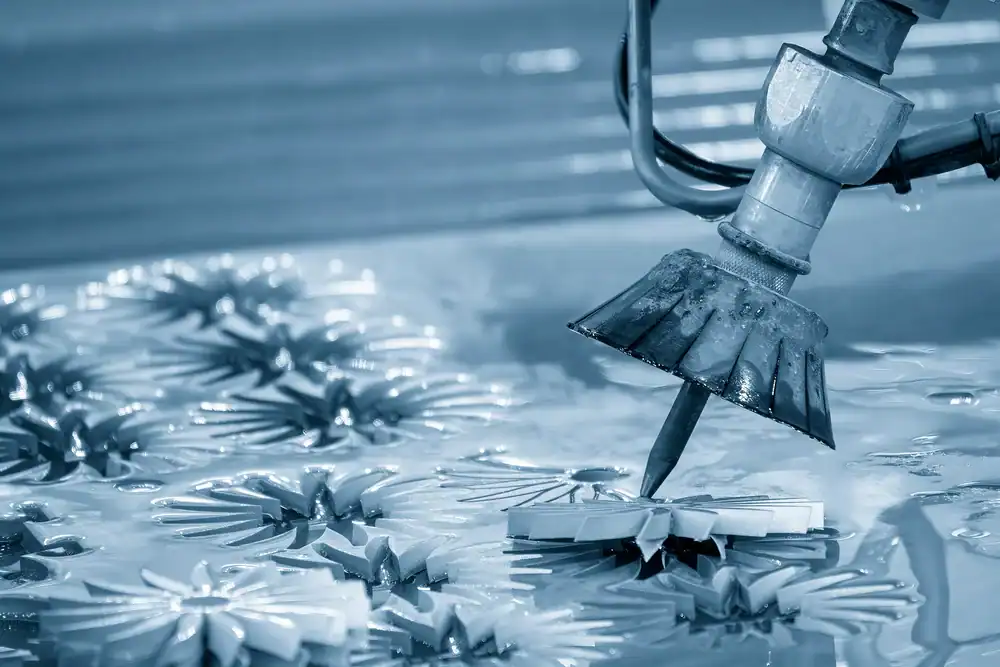
Start with the tolerance question. Any shop worth working with should be able to tell you exactly what they guarantee — a specific number, not a vague assurance about “tight tolerances.” If they can’t answer that question clearly, move on.
Ask whether they review files before cutting. This is a process step that separates shops that treat your job as a transaction from ones that treat it as a collaboration. A pre-cut file review catches geometry errors, scale issues, and design questions before they become material waste. It takes a few minutes on the shop’s end and can save you the cost of a full sheet of aluminum or stainless steel.
Ask about lead time and communication. On Long Island, where contractors are managing project timelines that don’t have slack built in and manufacturers are running production schedules that depend on parts arriving on time, a shop that goes quiet after you place an order is a liability. You want to know that if something comes up — a file issue, a material question, a design conflict — someone is going to call you before cutting, not after.
Local presence matters more than it sounds. Working with a shop in West Islip instead of shipping to an out-of-state facility means no freight damage risk on precision-cut metal, no three-day shipping window built into your timeline, and the option to come in and discuss a complex job in person. For contractors sourcing components for a South Shore build or manufacturers in the Hauppauge Industrial Park running tight production cycles, that proximity is a real operational advantage.
One question we hear often is whether waterjet cutting is more expensive than laser or plasma cutting. The honest answer is that it depends on what you’re cutting and what you need the finished part to do. Waterjet typically has a higher per-hour rate than laser cutting for thin sheet metal. But waterjet produces clean, burr-free edges with no heat-affected zone, which means no secondary grinding, no deburring, and no rework from heat distortion. For thick plate, reflective metals like copper and brass, or any application where edge quality matters, the total cost including finishing and rework almost always favors waterjet. For Long Island marine and aerospace applications specifically — where 316 stainless and 5052 marine aluminum are common — waterjet is often the only method that preserves the material’s corrosion resistance at the cut edge.
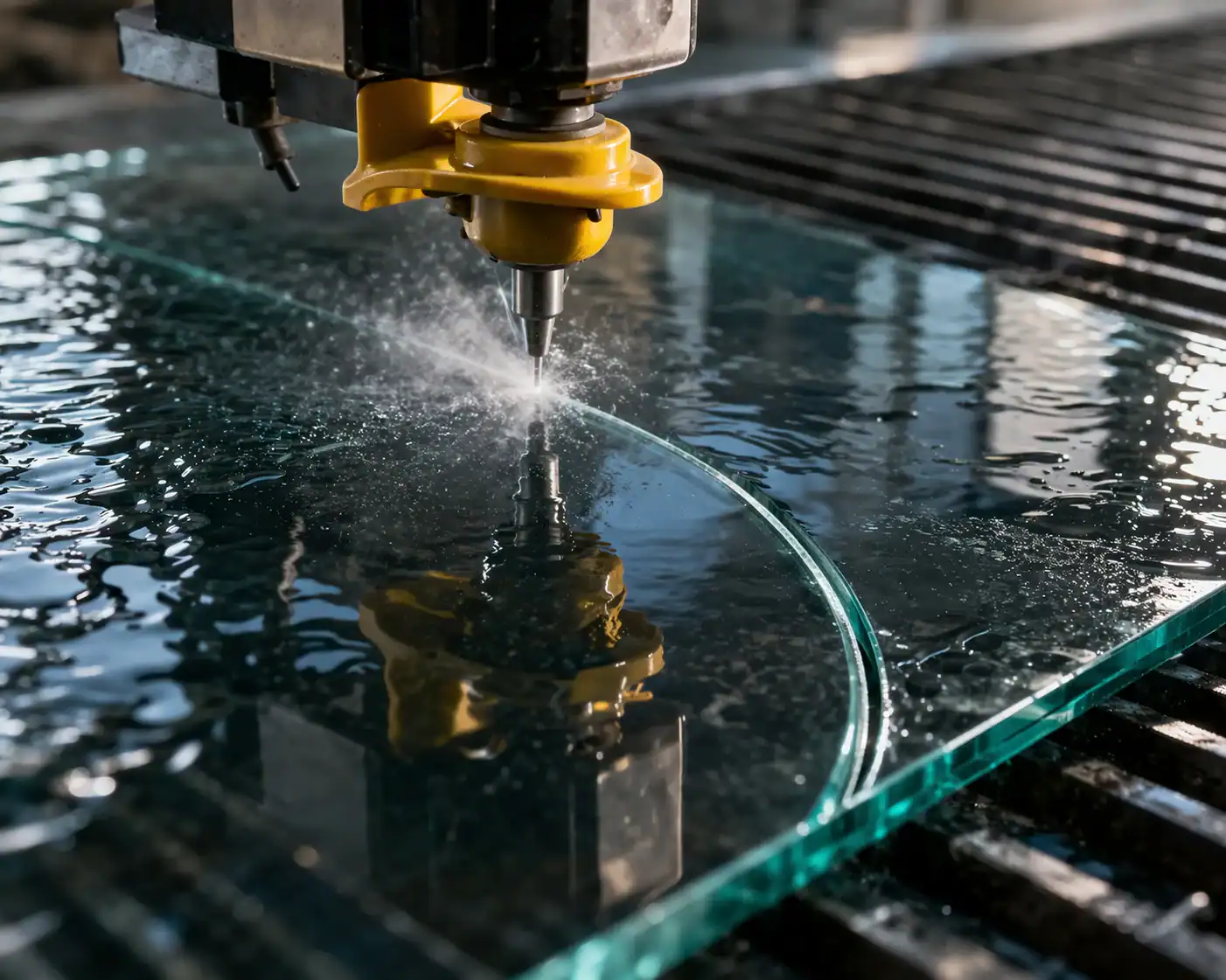
Another common question: can waterjet cut any glass? Not quite. Waterjet cuts architectural glass, decorative panels, and standard glass well. But tempered glass has internal tension zones that cause it to shatter when a cut crosses them. If you’re speccing a project that involves glass, make sure you know what type you’re working with before ordering.
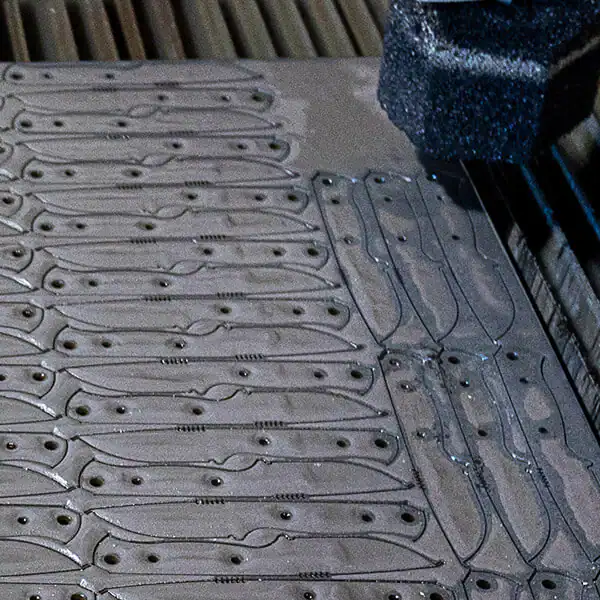
People also ask whether small or one-off jobs are worth bringing to a waterjet shop. Yes — and this is worth stating plainly. Waterjet cutting requires no custom tooling, which means there’s no minimum quantity threshold the way there is with stamping or die-cutting. A single custom bracket for a marine application, one architectural panel for a Gold Coast renovation, or a prototype component for a manufacturer testing a new design — all of these are legitimate jobs, and we’ll treat them with the same care as a production run.
Finally, buyers sometimes wonder whether waterjet can hold precision on thicker material. It can, with the right equipment and process. We cut metals up to eight inches thick and hold ±0.005 inches across complex geometries. The key variables are taper compensation, feed rate, and abrasive selection — all of which we manage on our end. Your job is to communicate what the part needs to do. Our job is to figure out how to cut it correctly.
The five things that separate a clean, accurate cut from a costly mistake are all manageable: send the right file format, specify your tolerance, understand your material, ask the right questions of your shop, and work with someone local enough to actually be accountable. None of this is complicated — it just requires a shop that’s willing to have the conversation before cutting starts.
Long Island’s manufacturing base, construction market, and marine industry all run on tight timelines and tight tolerances. There’s no room in that environment for a shop that treats your job as a file to process rather than a part that has to fit, function, and arrive on time.
If you have a metal cutting project — whether it’s a single prototype or a full production run — we’re located in West Islip and ready to talk through what you need before anything gets cut.
Summary:
Article details:
Share: