Not all waterjet cutting is created equal. Here's what separates precision results from costly rework — and what Long Island shops actually need to know.
You’ve probably been burned before. Parts came back slightly off. The shop said they could hold the tolerance, and technically they did — just not the one you needed. Now you’re behind schedule, your material is gone, and you’re starting over. That’s the kind of thing that makes you want to do a lot more homework before sending a file to a new shop.
This guide is for you. We’re going to walk through how precision waterjet cutting actually works, what separates a real precision shop from one that just uses the word, and what Long Island manufacturers, fabricators, and builders should be asking before they commit to a vendor.
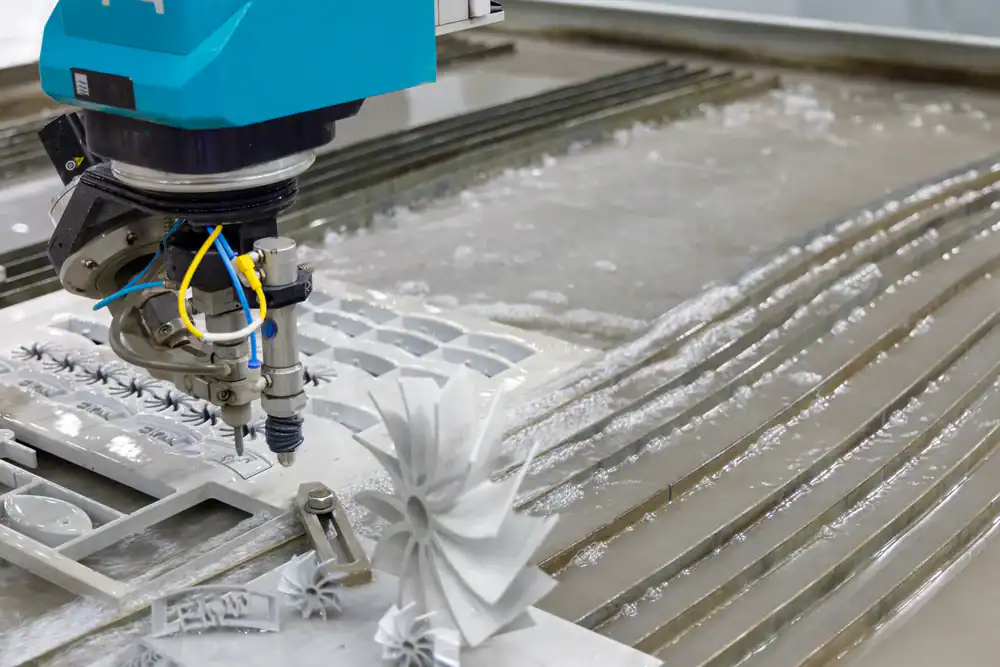
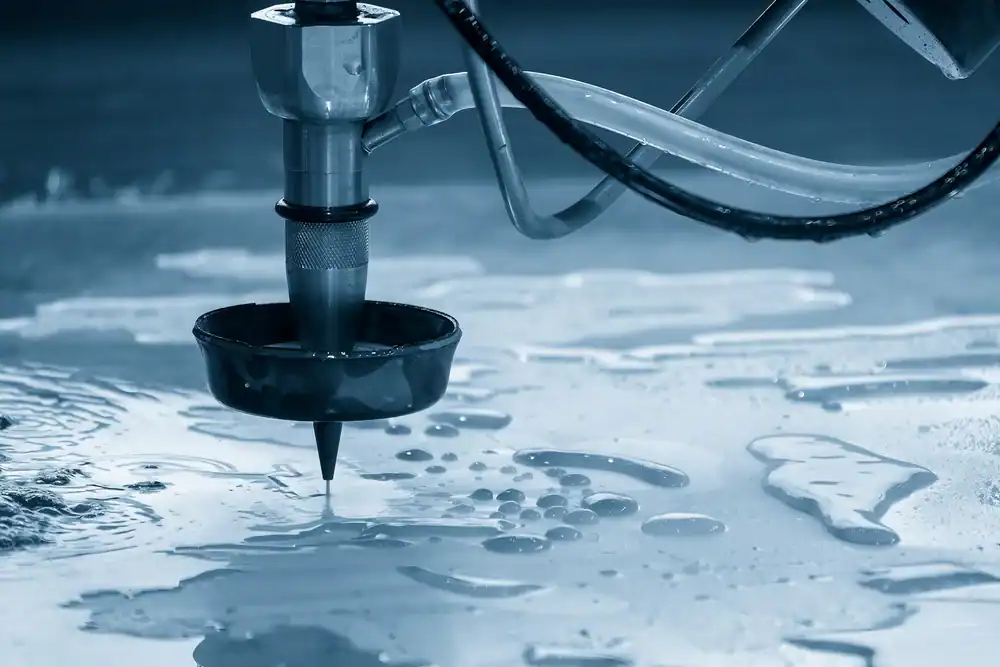
At its core, waterjet cutting uses a highly pressurized stream of water — typically mixed with a fine abrasive like garnet — to cut through material. The stream travels at roughly three times the speed of sound and exits at pressures up to 60,000 PSI. There’s no heat involved. No flame, no laser beam, no plasma arc. Just water and abrasive, moving fast enough to cut through steel, marble, titanium, and glass with surgical accuracy.
Because there’s no heat, there’s no heat-affected zone. That matters more than most buyers realize. Thermal cutting methods — laser, plasma — change the material at the cut edge. Metal hardens. Composites delaminate. Marble cracks. Waterjet leaves the material structurally intact, right up to the cut line. What you send in is what you get back, just shaped the way you need it.
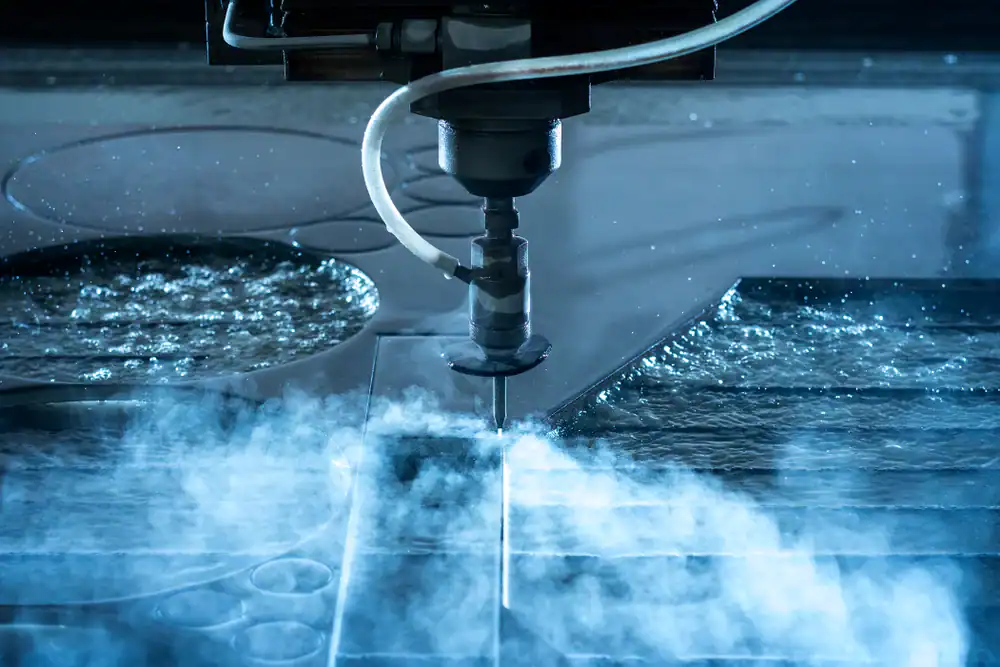
This is the question that separates serious buyers from casual ones — and it’s where a lot of shops get evasive. The honest answer is that it depends, and any shop that gives you a single number without context is either oversimplifying or overselling.
In optimal conditions — well-maintained equipment, skilled operator, appropriate feed rate, material under one inch thick — precision waterjet cutting can hold tolerances as tight as ±0.001″. That’s genuinely impressive. But that’s also not what every shop delivers on every part. Standard commercial tolerance across the industry sits around ±0.005″, which is still excellent for most fabrication work. Economy-grade cutting, where speed is prioritized over precision, typically lands around ±0.010″ to ±0.030″.
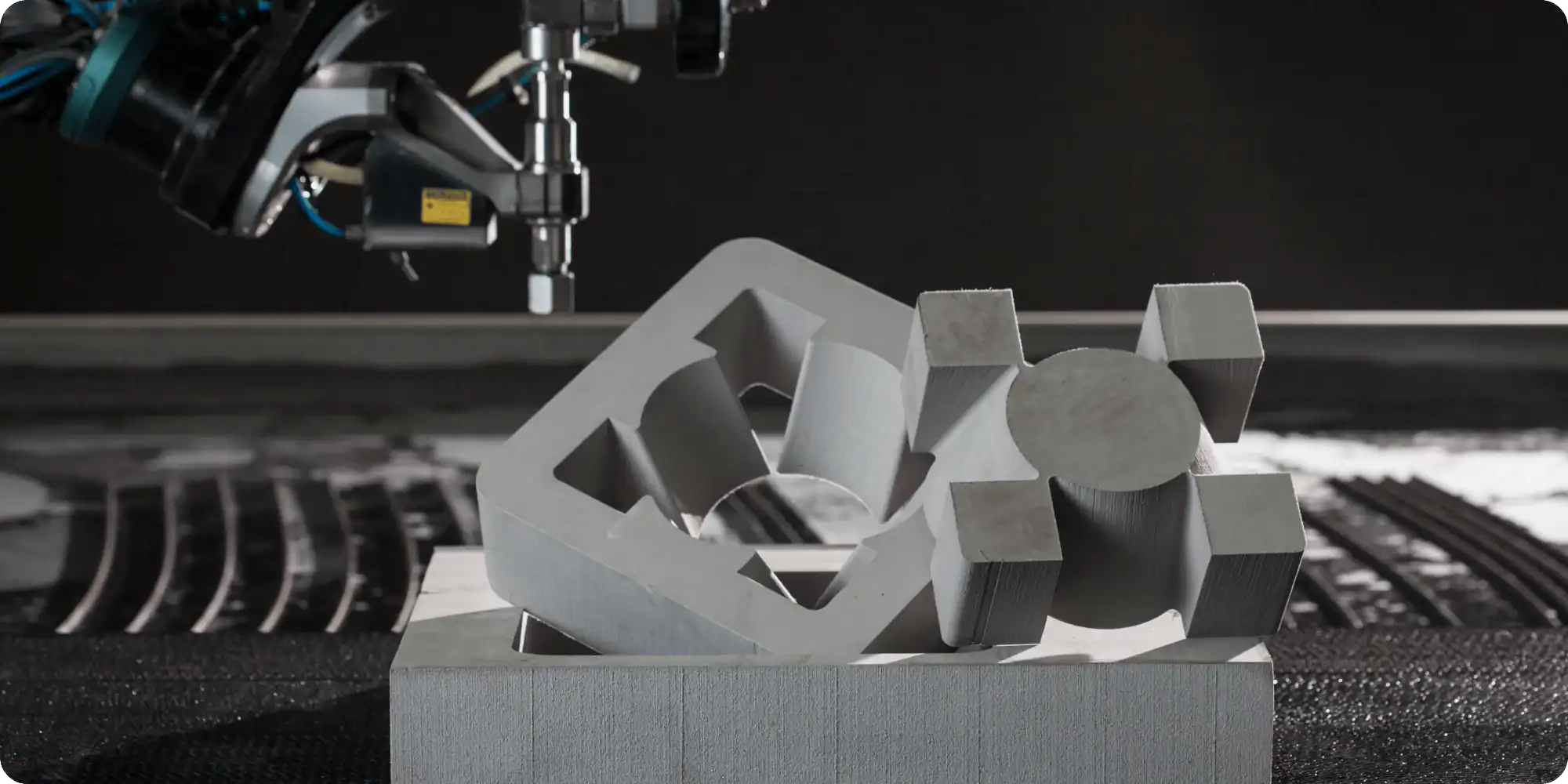
The variable that most buyers don’t know to ask about is taper compensation. When a waterjet cuts through thicker material, the stream naturally wants to bow slightly, leaving a subtle bevel on the cut edge. Without taper compensation technology built into the machine, that bevel is just part of the result — and the buyer often doesn’t find out until the part doesn’t fit. Machines equipped with taper compensation actively correct for this during the cut, so edges come off the table true and square. It’s not a minor upgrade. It’s the difference between a part that goes straight into assembly and one that needs secondary machining.
Operator skill is the other factor that rarely gets discussed honestly. The machine doesn’t cut the part — the operator does. Nesting parts efficiently, setting the right feed rate for the material, fixturing the workpiece properly, knowing when to slow down for a tight inside corner — these decisions happen on every job, and they directly affect the result. A premium machine run by an inexperienced operator will not outperform a good machine run by someone who’s been doing this for years. That’s just the reality of the trade.
The short answer is almost anything. That’s not marketing language — it’s one of the genuinely distinctive things about waterjet cutting compared to other methods.
On the metal side, waterjet handles aluminum, stainless steel, carbon steel, titanium, brass, copper, tool steel, and exotic alloys without changing the material’s properties at the cut edge. No hardening, no warping, no oxidized edge that needs to be ground off before welding. For Long Island’s aerospace supply chain — companies supporting operations in Bethpage, Hauppauge, and Ronkonkoma — that edge integrity matters. Aerospace components often can’t tolerate the metallurgical changes that thermal cutting creates.
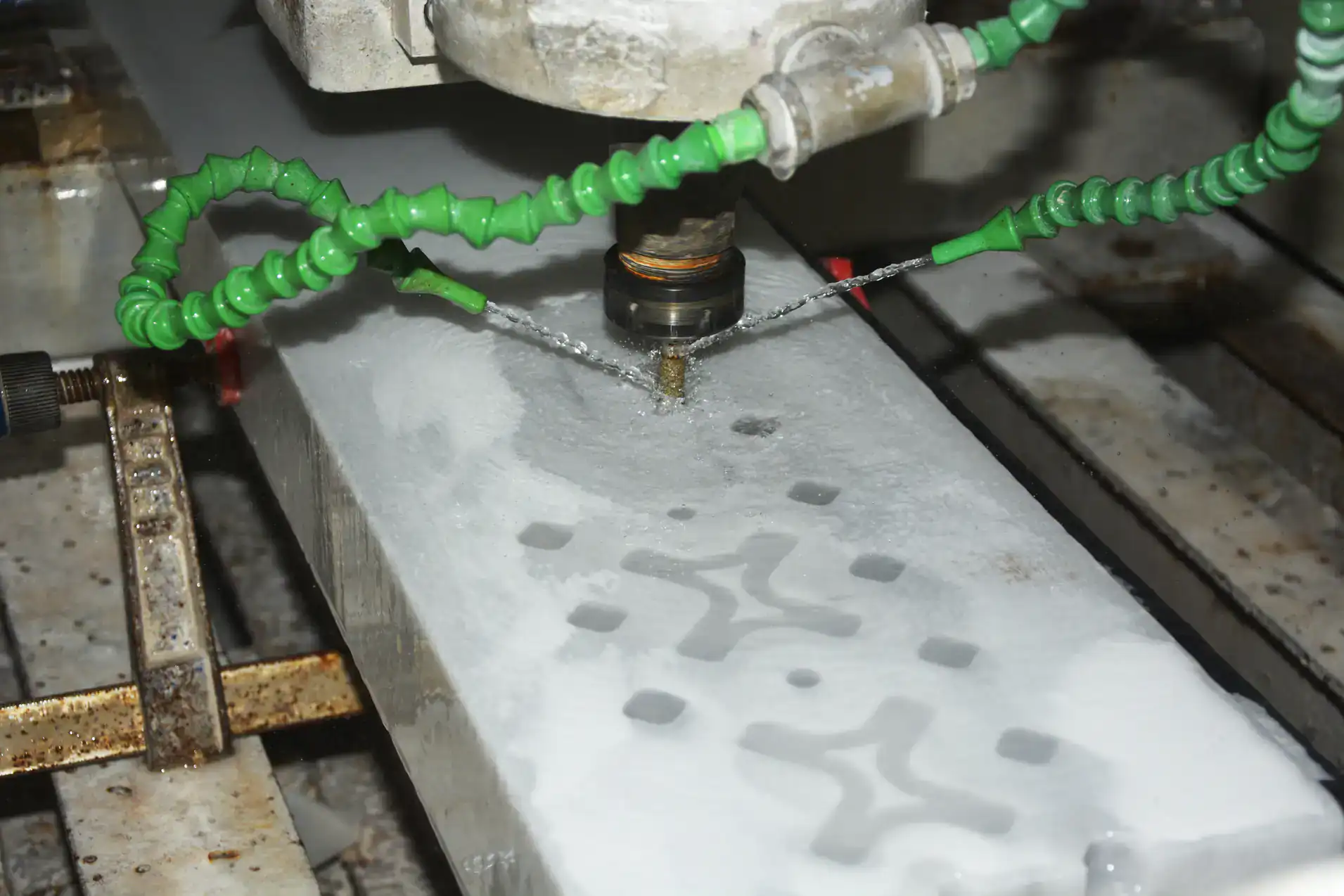
Stone and marble are another strong application. Custom countertop cutouts, architectural inlays, decorative lobby installations — waterjet cuts these with tolerances tight enough for seamless seam matching, without the cracking risk that saw cutting introduces. Architectural glass, carbon fiber composites, Kevlar, HDPE, foam, rubber, and wood all cut cleanly as well. The one honest exception worth knowing: tempered glass shatters under any cutting method, waterjet included. Annealed glass and most architectural glass cut without issue, but tempered glass is off the table for everyone.
Material thickness is another area where waterjet outperforms competing methods. Lasers are typically limited to under half an inch for stone or glass applications. Waterjet cuts stone and metal up to twelve inches thick, depending on the material. For heavy plate work or thick architectural stone, that’s not a minor advantage.
Want live answers?
Connect with a Tri-State Waterjet expert for fast, friendly support.
This comparison comes up constantly, and the honest answer is that each method has a legitimate place. The mistake is assuming one is always better than the others — or worse, choosing based on price per cut without accounting for what happens after the cut.
Plasma is the fastest option for thick steel, and it costs less per linear foot than waterjet. But it creates a significant heat-affected zone that almost always requires deburring, grinding, or secondary finishing before the part is usable. If you’re cutting structural steel that doesn’t need tight tolerances, plasma makes sense. If you’re cutting parts that go into assembly without secondary operations, the math changes quickly.
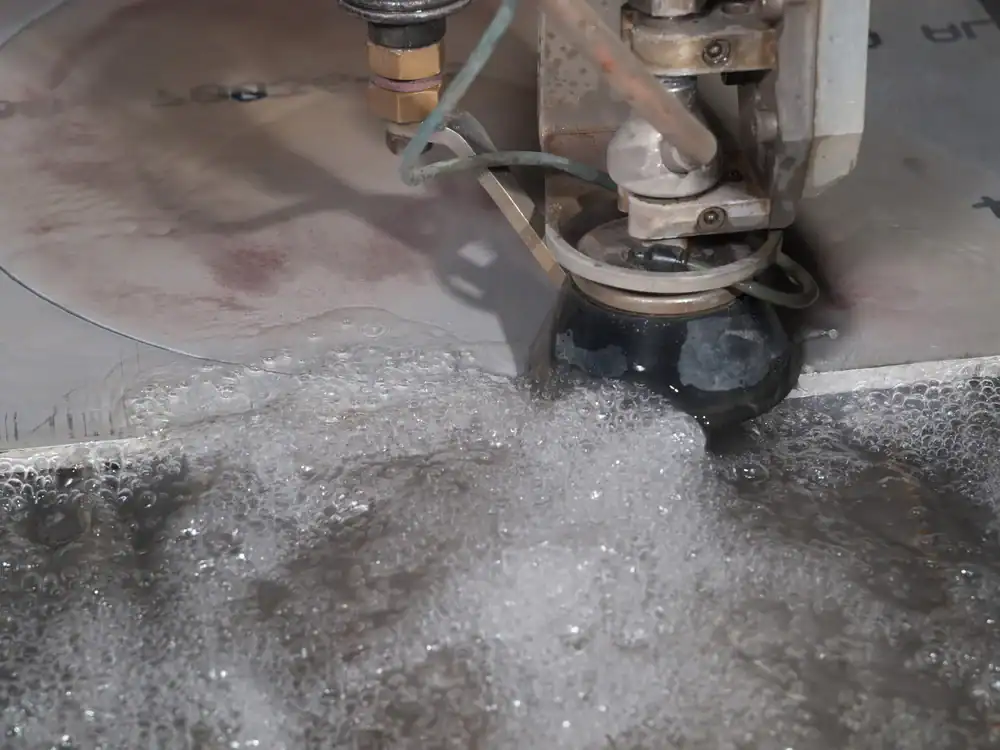
For thin metals, laser cutting is fast and accurate — and it’s a legitimate choice when material thickness is under about a quarter inch and the material isn’t heat-sensitive. Where laser starts to struggle is with thicker materials, reflective metals like copper and brass, and anything that can’t tolerate heat at the cut edge.
Waterjet holds tolerances from ±0.003″ to ±0.010″ in typical commercial applications, compared to plasma’s ±0.005″ to ±0.030″. Against laser, the tolerance comparison is closer — both can achieve tight results on thin material. The real differentiator is material range and edge condition. Laser creates oxidized edges on some metals that require cleanup before welding or coating. It also generates heat that can warp thin aluminum or discolor stainless steel. Waterjet produces none of that. The edge is clean, burr-free, and ready for the next step in most cases.
For Long Island fabricators working on marine hardware, architectural metalwork, or components that need to go straight from the cut table into powder coating or welding, that edge quality isn’t a luxury — it’s a time and labor savings. Every secondary operation you eliminate is money back in the job.
The other consideration is material versatility. Laser cutting is a metal-focused process. Waterjet cuts metal, stone, glass, composites, foam, rubber, wood, and plastic — often on the same machine, in the same day. For shops or contractors who need multiple materials cut for a single project, that flexibility is genuinely useful.
**How long does waterjet cutting take?** Most standard jobs complete within one to three business days. Simple parts with clean geometry can often be ready same-day or next-day if the material is in stock. More complex work — intricate patterns, thick material, very tight tolerances — may take three to five days. We also offer rush services for jobs with hard deadlines, which is something Long Island’s manufacturing and construction schedules frequently demand.
**What file format do I need to send?** DXF, DWG, and STEP are the standard formats we work with. If your file is in one of those formats and the geometry is clean, the process moves quickly. Before any cut is made, we review every file for potential issues — tight inside corners, dimension conflicts, anything that could cause a problem after the material is on the table. That review step catches errors before they become expensive mistakes, which is the whole point.
**Is waterjet cutting available for one-off parts, or do I need a minimum order?** There’s no minimum. We cut single prototypes and full production runs. A lot of our customers in the Hauppauge Industrial Park — the second-largest industrial park in the country, right here in Suffolk County — come to us for prototype parts during development and then return for production quantities once a design is locked. That flexibility matters when you’re moving fast on a new product.
**Can waterjet cut the marble or stone for a custom kitchen renovation on Long Island?** Absolutely, and it’s one of the cleaner ways to do it. We handle countertop cutouts, custom inlays, and decorative stone with tolerances tight enough for seamless fitting — without the cracking risk that comes from saw cutting natural stone. Given the volume of high-end residential renovation happening across Nassau and Suffolk Counties, this is a regular part of what we do. Whether it’s a custom marble backsplash in Garden City or an architectural stone inlay for a commercial lobby in Melville, the process is the same: cold cutting, precise geometry, clean edges.
**How much does precision waterjet cutting cost?** It depends on material, thickness, complexity, and the tolerance required. Tighter tolerances mean slower feed rates, which means more time on the machine — and that’s reflected in the price. We’d rather explain that upfront than have you surprised by a quote. The easiest way to get a real number is to send us your file.
The reason precision waterjet cutting has become the standard for demanding fabrication work isn’t complicated. It handles more materials than any competing method, it doesn’t introduce heat that changes what you started with, and when it’s done right, parts come off the table ready to use. No grinding, no deburring, no chasing a tolerance that should have been held the first time.
For Long Island specifically — where the manufacturing base runs from aerospace and defense in Bethpage and Hauppauge to marine fabrication along the coast to luxury residential construction across Nassau County — the range of materials and applications that waterjet handles cleanly is a practical advantage, not just a talking point.
If you’re evaluating waterjet cutting for an upcoming project, the most important thing you can do is ask the right questions before you send a file. What equipment do we run? Do we use taper compensation? Will we review your file before cutting? What tolerance can we actually hold on your material? We’ve been answering those questions honestly from our shop in Farmingville since 1981. If you’re ready to talk through a project, we’re a straightforward call or file upload away.
Summary:
Article details:
Share: