Hear from Our Customers
You’re not looking for cutting services that get close. You need flanges that bolt up without grinding, parts that meet spec without secondary finishing, and edges that don’t crack when you weld them. That’s what happens when you cut with high pressure water instead of heat.
Waterjet cutting services in Mastic, NY give you tolerances tighter than +/- 0.005″ in materials up to 10 inches thick. No warping. No hardening. No oxide layers or recast that show up later and cost you time. The cut is cold, clean, and ready to use.
Whether you’re running one prototype or a hundred production parts, the process stays consistent. You send the file, we cut it, and it arrives ready for your next operation. No surprises. No rework. Just parts that match what you designed.
We operate out of West Islip on Long Island, positioned to serve the established manufacturing base across Suffolk County. That includes contractors, fabricators, and machine shops in Mastic who need precision cutting without the overhead of owning the equipment themselves.
Long Island’s industrial corridor runs deep, from aerospace suppliers to marine fabricators to custom architectural work. We’ve built our operation around the reality that most of those businesses need reliable cutting capacity without the capital investment or learning curve. You get access to multi-axis waterjet technology and material consultation without adding a machine to your floor.
We’re not the cheapest option, and that’s intentional. You’re paying for accuracy, material expertise, and turnaround times that keep your projects moving.
The process starts with your file. Send us a CAD drawing or a sketch with dimensions, and we’ll review it for cuttability. If there’s an issue with tolerances, material thickness, or edge requirements, we’ll tell you before we start cutting. That conversation happens up front, not after you’ve already paid.
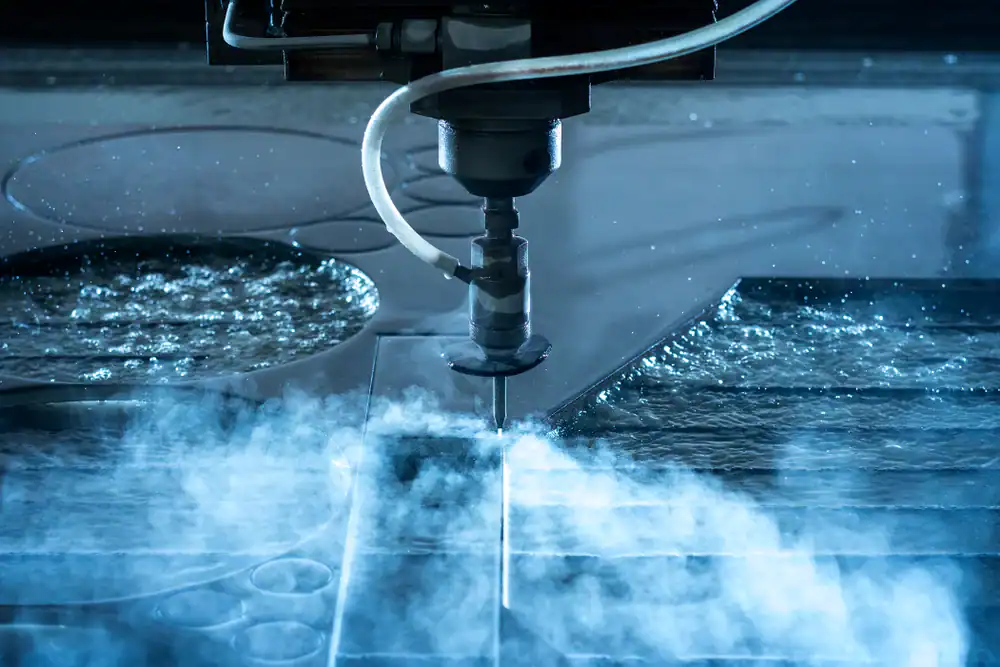
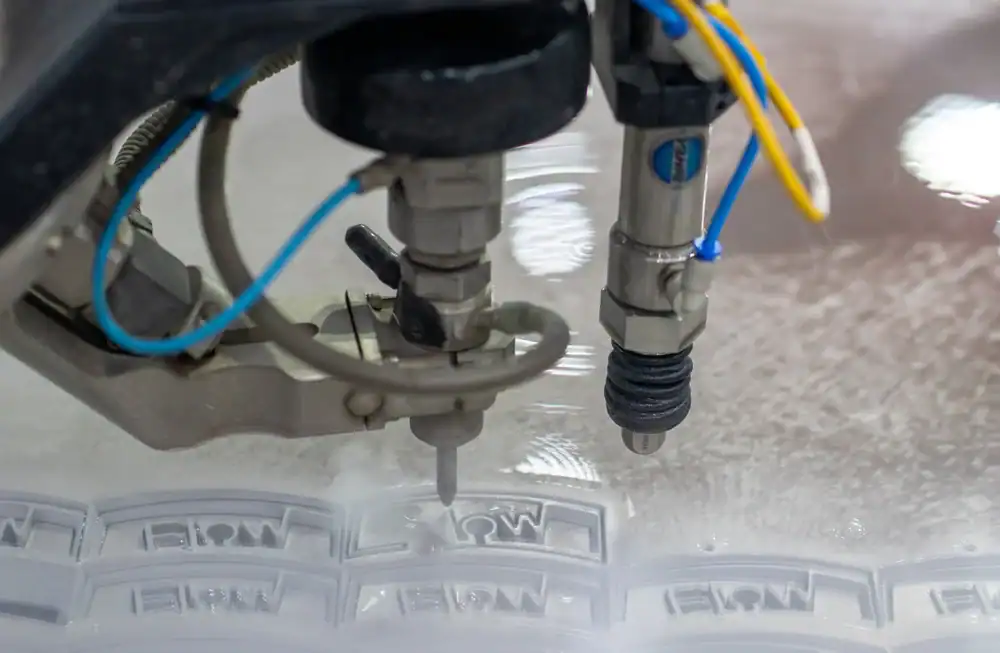
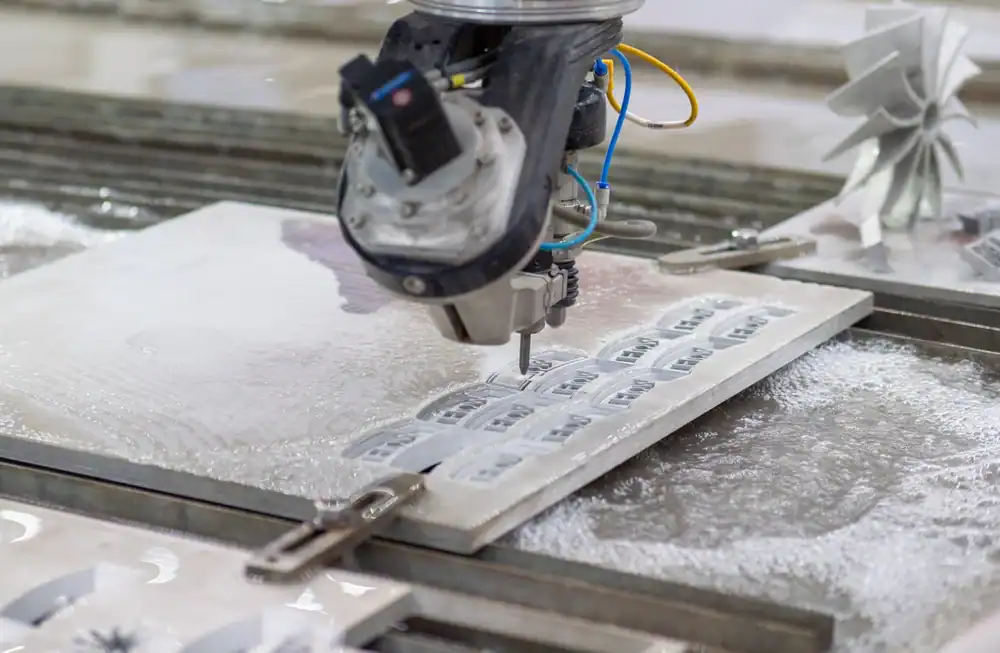
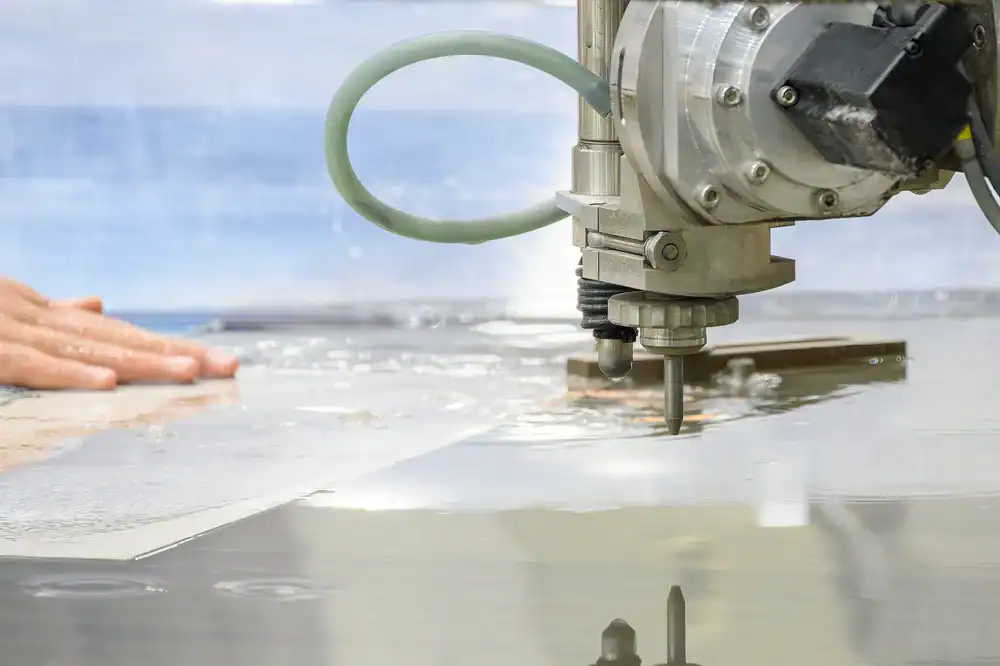
Once the file is confirmed, we program the waterjet system and load your material. The cutting head moves across the surface at up to 60,000 PSI, mixing water with garnet abrasive to slice through metal, stone, glass, composites, or plastics. The stream is thinner than a credit card, so material waste stays minimal and detail stays sharp.
Because there’s no heat involved, your material properties don’t change. Stainless doesn’t harden. Aluminum doesn’t warp. Plastics don’t melt. The edge comes out clean enough that most parts go straight into assembly or welding without additional finishing. If you need beveled edges or 3D contours, the multi-axis head handles that in the same setup.
Turnaround depends on complexity and queue, but most custom waterjet cutting jobs in Mastic, NY ship within days, not weeks. You’ll get a quote within 24 hours and a realistic delivery window before we start.
Ready to get started?
You’re getting more than a cutting service. You’re getting material consultation, design review, and access to a process that handles everything from 1/8″ foam to 10″ steel plate in the same machine. That flexibility matters when your projects vary or when you’re prototyping something new and don’t want to commit to hard tooling yet.
Mastic sits in the heart of Long Island’s manufacturing economy, where machine shops and fabricators serve industries that demand precision: aerospace, marine, automotive, architectural. Those sectors don’t tolerate heat-affected zones or parts that need rework. Waterjet cutting eliminates both problems by keeping the cut cold and the tolerances tight.
The process also handles materials that are difficult or impossible to cut with thermal methods. Tempered glass. Titanium. Composites. Rubber gaskets. Stone countertops. If you’ve been told a part can’t be cut without cracking, warping, or delaminating, waterjet is usually the answer. We’ve cut everything from custom architectural panels for designers in the Hamptons to precision flanges for contractors in Brookhaven.
You also get burr-free edges, which means less time deburring, less risk of injury during handling, and cleaner welds. For production runs, that adds up fast. For one-off custom work, it’s the difference between a part that works and one that needs another round of finishing.
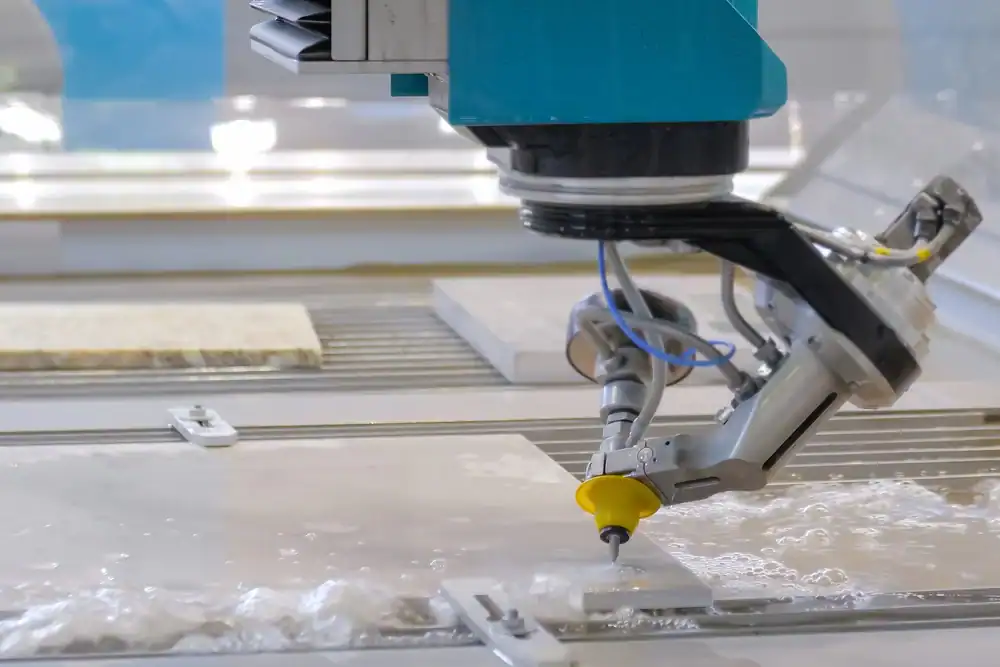
Waterjet cuts through virtually any material up to 10 inches thick. That includes metals like stainless steel, aluminum, titanium, brass, and copper. It also handles stone, glass, ceramics, plastics, composites, rubber, and foam. The process doesn’t rely on heat, so it won’t melt, warp, or burn materials that are sensitive to temperature.
If you’re working with exotic alloys, tempered glass, or layered composites, waterjet is often the only cutting method that won’t compromise the material’s integrity. There’s no heat-affected zone, no recast layer, and no risk of cracking from thermal stress. That makes it ideal for aerospace parts, marine components, and architectural elements where material properties have to stay consistent from edge to edge.
The limitation isn’t the material itself—it’s thickness and density. Softer materials cut faster. Harder materials like tool steel or thick titanium take longer but still deliver clean, precise edges. If you’re not sure whether your material is a good fit, send us the specs and we’ll tell you what to expect.
Waterjet cutting holds tolerances as tight as +/- 0.005″ in most materials, which puts it in the same range as laser cutting for precision. The difference is that waterjet doesn’t create a heat-affected zone, so there’s no warping, hardening, or metallurgical changes that throw off your dimensions after the cut cools.
Plasma is faster on thick steel, but it can’t hold the same tolerances and it leaves a heat-affected edge that often needs grinding or secondary finishing. Laser is fast and precise on thin materials, but it struggles with thicker stock and reflective metals like aluminum or copper. Waterjet handles both without changing the process or the setup.
For parts that need to bolt together, fit into tight assemblies, or meet strict dimensional requirements, waterjet delivers the consistency you’re looking for. The edge quality is clean enough that most parts go straight into welding or powder coating without additional prep. If you’ve been dealing with parts that don’t fit right because of thermal distortion, switching to waterjet usually solves it.
Most jobs ship within three to five business days, depending on material availability, complexity, and current queue. Simple 2D cuts in standard materials like aluminum or stainless usually move faster. Complex 3D cuts, thick materials, or large quantities take longer but still stay within a week for most projects.
We provide quotes within 24 hours of receiving your file, and that quote includes a realistic delivery window. If you’re on a tight deadline, let us know up front. We can often prioritize rush jobs, but that depends on what’s already in the system. The key is communication—if you need it fast, say so, and we’ll tell you whether it’s possible before you commit.
Turnaround also depends on whether you’re supplying the material or we’re sourcing it. If you send us the stock, we can start cutting as soon as the file is programmed. If we’re ordering material, add a few days for delivery. Either way, you’ll know the timeline before we start, so there’s no guessing about when your parts will arrive.
Most parts come off the waterjet ready to use. The edges are clean, burr-free, and don’t require deburring or grinding unless you’re chasing an extremely fine surface finish for a specific application. That’s one of the main advantages over plasma or laser cutting, where you’re almost always dealing with slag, dross, or heat-affected edges that need cleanup.
If you’re welding the parts, the cold-cut edge means there’s no hardened zone or oxidation to interfere with penetration. If you’re powder coating or anodizing, the surface is clean and ready for prep. If you’re assembling parts with tight tolerances, they’ll fit together without additional machining in most cases.
There are situations where secondary finishing makes sense. If you need a mirror polish, a specific surface roughness, or chamfered edges, those operations happen after cutting. But for the majority of fabrication and manufacturing work, waterjet edges are good to go as-cut. That saves time, labor, and the cost of additional equipment or processes. It’s one of the reasons waterjet cutting is cost-effective even when the per-hour cutting rate is higher than other methods.
Yes. Waterjet works for one-off prototypes and production runs up to several thousand parts. There’s no hard tooling required, so you’re not locked into a minimum order quantity or a long setup process. If you need one part to test fit and function, we can cut it. If that part works and you need 500 more, we can run those too without changing the process.
The flexibility comes from CNC programming. Once the file is set up, the machine repeats the same cut with the same tolerances every time. That consistency matters when you’re scaling from prototype to production, because you’re not introducing new variables or risking dimensional drift between runs. The first part and the five hundredth part come out the same.
For low-volume production, waterjet is often more cost-effective than stamping, laser cutting, or machining because there’s no tooling cost to amortize. For high-volume production, it depends on the part. If the geometry is complex, the material is exotic, or the tolerances are tight, waterjet stays competitive even at higher quantities. If you’re not sure whether waterjet makes sense for your volume, send us the specs and we’ll give you an honest assessment.
Waterjet makes sense when you need precision without compromising the material. If you’re cutting parts that will be welded, waterjet won’t harden the edges or create a heat-affected zone that weakens the joint. If you’re working with materials that can’t handle heat—like tempered glass, certain plastics, or composites—waterjet is often the only option that won’t crack, melt, or delaminate the material.
It’s also the right choice when you need complex shapes or tight tolerances without investing in custom tooling. Plasma and laser are faster on simple cuts in thin materials, but they struggle with thick stock, intricate geometries, and reflective metals. Waterjet handles all of that in the same setup, which means fewer operations, less handling, and less risk of dimensional errors between processes.
For contractors, fabricators, and machine shops in Mastic and across Long Island, waterjet cutting offers access to precision manufacturing capability without the capital cost of owning the equipment. You get the same quality and consistency as an in-house system, but you only pay for what you use. That flexibility matters when your projects vary or when you’re bidding jobs that require capabilities you don’t currently have. You can take on more work without adding overhead, and you can deliver parts that meet spec without the risk of rework or rejection.
Useful Links
Other Services we provide in Mastic