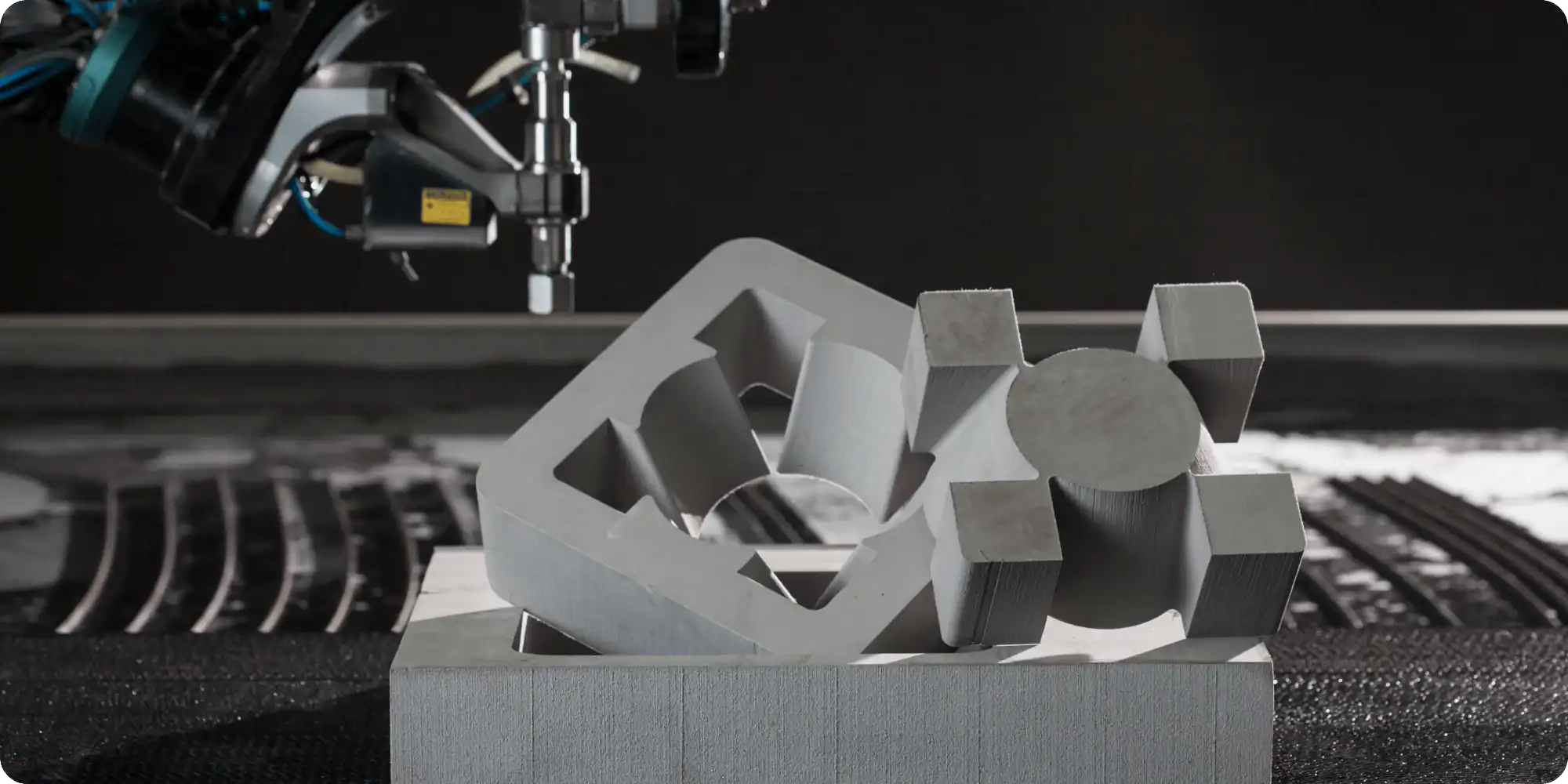
How Precise Is Waterjet Cutting? Understanding Tolerances and Edge Quality
Waterjet cutting delivers exceptional precision, tight tolerances, and clean edge quality, making it a reliable solution for architectural, ballistic, and industrial fabrication.
In fabrication, precision is not just a preference — it is critical to the success of the final product. Whether you are cutting architectural panels, ballistic materials, or custom industrial parts, even the smallest dimensional variation can affect fit, performance, and installation. Waterjet cutting stands out as a highly accurate, heat-free process that produces clean edges, tight tolerances, and reliable consistency across a wide range of materials. Understanding how that precision works can help explain why waterjet technology is trusted for exacting applications.
What Does “Tolerance” Mean in Fabrication?
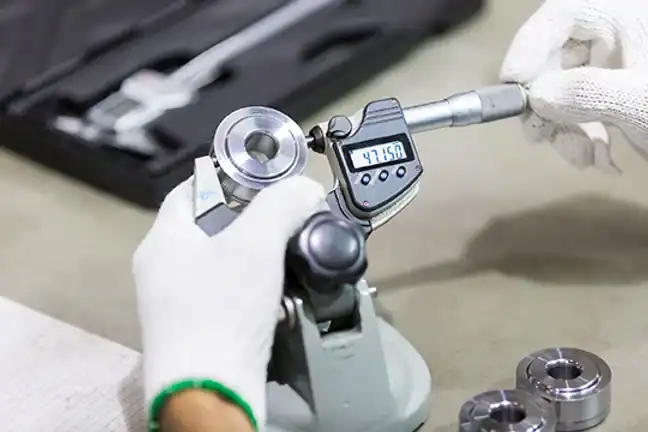
In simple terms, tolerance is the allowable variation from a specified dimension. For example, if a part must be exactly 10.000 inches long with a ±0.005-inch tolerance, the acceptable range is 9.995″–10.005″.
Waterjet technology excels in maintaining tight, repeatable tolerances, even on large or complex parts — perfect for architectural panels, precision inserts, and ballistic laminates that demand exact fits.
Waterjet Cutting Accuracy: The Numbers
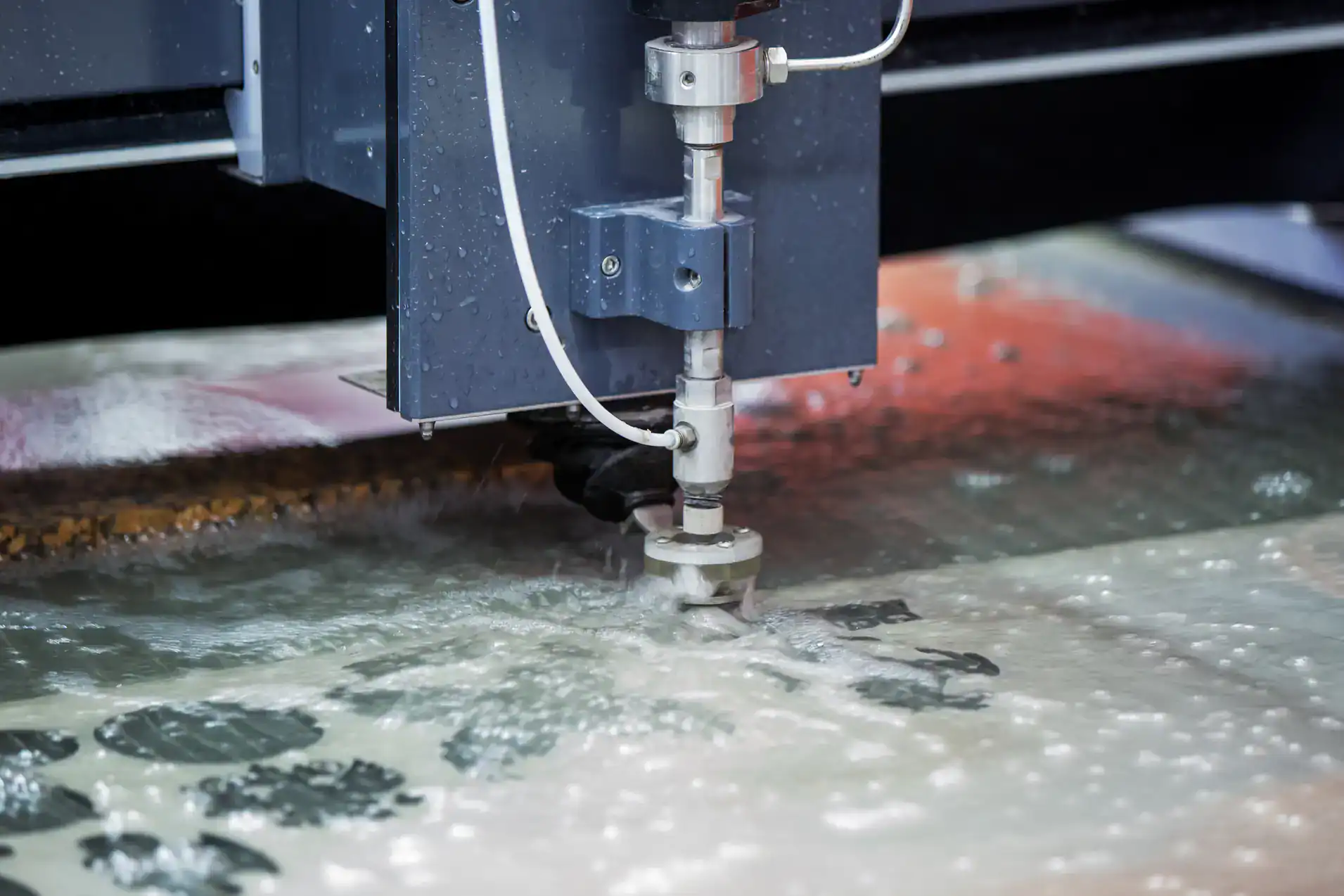
Modern waterjet machines, like Tri-State’s Flow™ Dynamic Waterjet®, consistently achieve impressive levels of accuracy and consistency.
Linear cutting accuracy: ±0.003″ to ±0.005″ (0.08–0.13 mm)
Repeatability: ±0.001″ (0.03 mm)
Edge taper: < 1° with dynamic compensation
Those numbers rival or exceed traditional machining and laser processes — all without introducing heat, stress, or oxidation.
Why Waterjet Cutting Delivers Superior Precision
Cold Process – No Heat Distortion: There’s no heat-affected zone (HAZ), so materials maintain their original strength and shape.
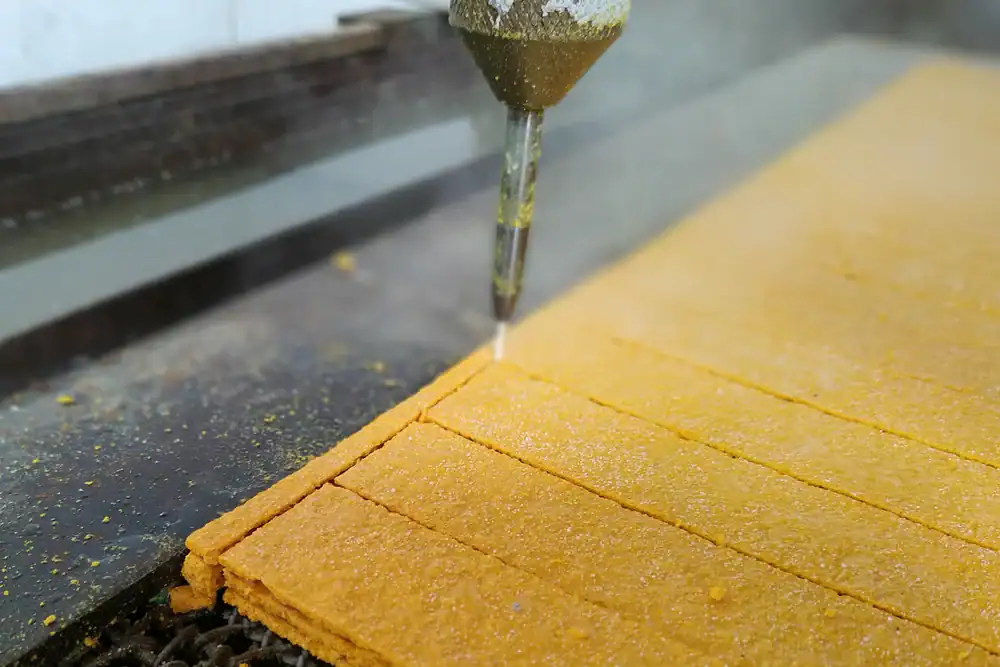
Fine Abrasive Stream: We use carefully graded garnet abrasive, producing smooth edges and minimal kerf width (~0.040″).
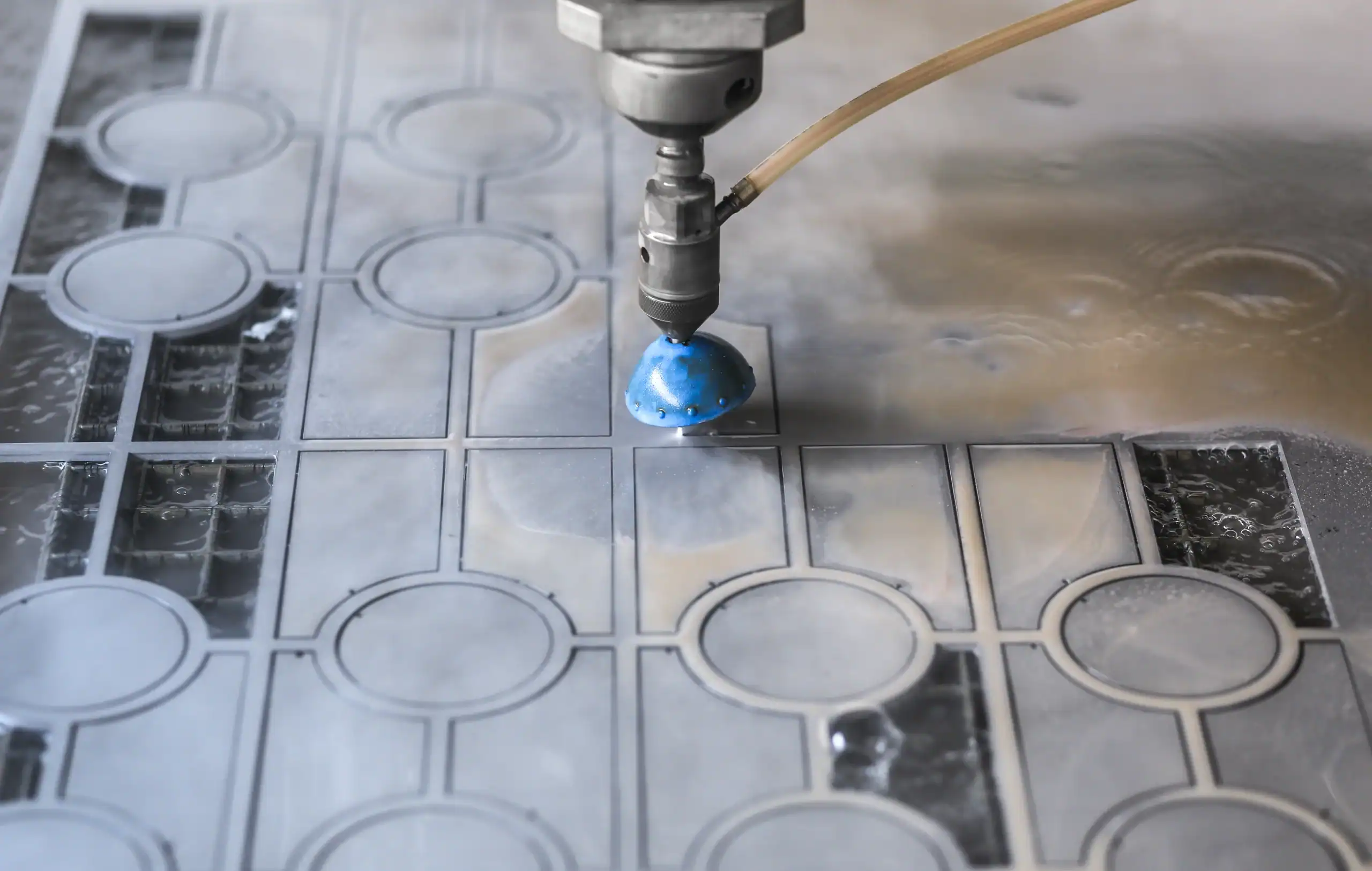
Dynamic Taper Compensation: Advanced software automatically tilts the cutting head to counteract stream taper, ensuring square, crisp edges.
Stable Work Surfaces: Our vibration-dampened cutting tables prevent micro-movement — essential for glass, composites, and thin metals.
Precision Motion Control: CNC servo motors position the cutting head within thousandths of an inch — even on complex geometries.
Want live answers?
Connect with a Tri-State Waterjet expert for fast, friendly support.
Every component we cut at Tri-State Waterjet is inspected for dimension, edge finish, and squareness before leaving our shop.
Edge Quality Classifications
Waterjet cuts are rated by edge quality levels (Q1–Q5):
Quality Level
Description
Typical Use
Q1
Rough, fastest cut
Internal roughing / scrap removal
Q2
Semi-rough
Prototyping / general fabrication
Q3
Standard
Architectural panels, general cutting
Q4
Fine
Decorative and precision parts
Q5
Ultra-fine, slowest
Aerospace, optical, or fit-critical parts
At Tri-State, we typically cut Q3–Q4 for architectural work and Q4–Q5 for ballistic or mechanical applications — balancing speed, cost, and accuracy.
Why Precision Matters
Every downstream process — welding, fitting, glazing, or assembly — depends on the accuracy of the cut. That’s why we verify each piece against dimensional tolerances and flatness standards before packaging. Your parts don’t just fit — they align perfectly.
FAQ
Q1: How accurate is waterjet cutting compared to laser cutting?
Waterjet tolerances are comparable — often tighter — and with no heat distortion, the final part fits more precisely.
Q2: Can waterjet cutting hold tolerances on thick material?
Yes. Our systems cut materials up to 12 inches thick with full-depth precision.
Q3: Does cutting speed affect accuracy?
Yes. Slower cutting speeds yield finer edges and tighter tolerances; we adjust feed rates per project.
Q4: Are edges smooth enough for finished parts?
Absolutely. Waterjet cutting leaves a clean, satin-smooth edge with no burrs or discoloration.
Q5: What materials maintain best precision with waterjet cutting?
Metals (steel, aluminum, brass), glass, stone, composites, and ballistic laminates — virtually anything solid and stable.
Summary:
This blog explains how waterjet cutting achieves high precision through tight tolerances, repeatability, and superior edge quality without heat distortion or surface damage. It highlights the accuracy capabilities of modern waterjet systems, including linear tolerances, repeatability, and taper control, while also breaking down the factors that influence performance such as abrasive quality, motion control, and dynamic taper compensation. The article also covers edge quality classifications, real-world applications, and why precision cutting is essential for proper fit, assembly, and finish in demanding fabrication projects.