Precision waterjet cutting transforms architectural design in Long Island, NY. Intricate metal screens, custom glass signage, and marble inlays cut with zero heat distortion and flawless precision.

Your design calls for curves a saw can’t execute. Materials that crack under heat. Tolerances tighter than traditional fabrication delivers. Maybe it’s a perforated metal screen for a Nassau County commercial lobby. Custom glass signage for a Suffolk County storefront. Intricate marble inlays for a high-end residential project.
Whatever the application, you need precision without compromise.
Precision waterjet cutting changes what’s possible in architectural fabrication and custom signage. This technology cuts through virtually any material—stainless steel, glass, marble, composites—with accuracy down to thousandths of an inch. Zero heat distortion. Edges clean enough to install immediately. No secondary finishing eating into your timeline.
Here’s how waterjet cutting is reshaping architecture and signage across Long Island, and why it matters for your next project.
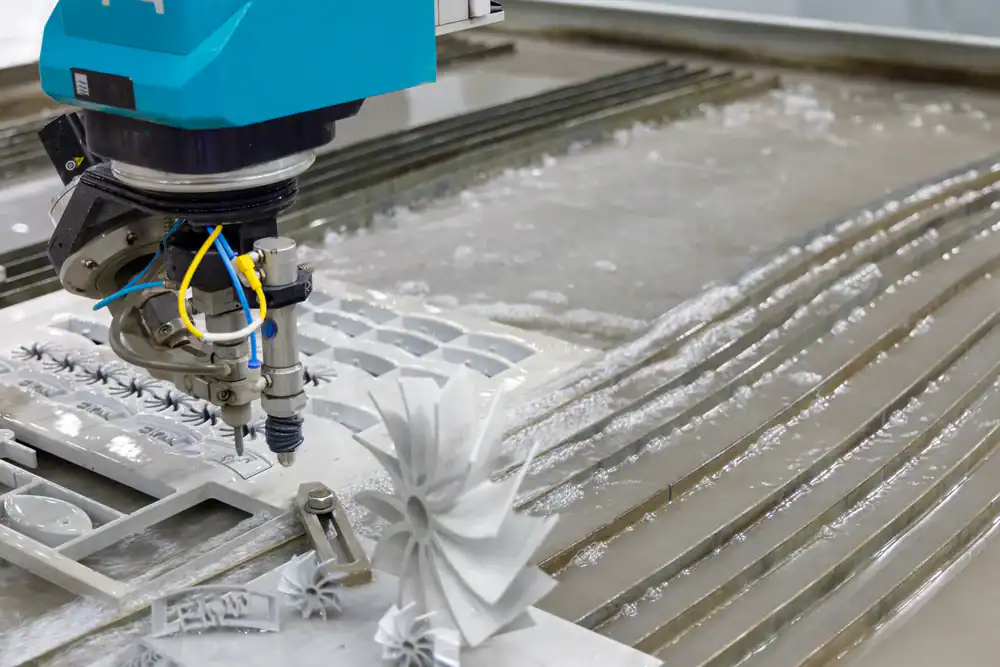
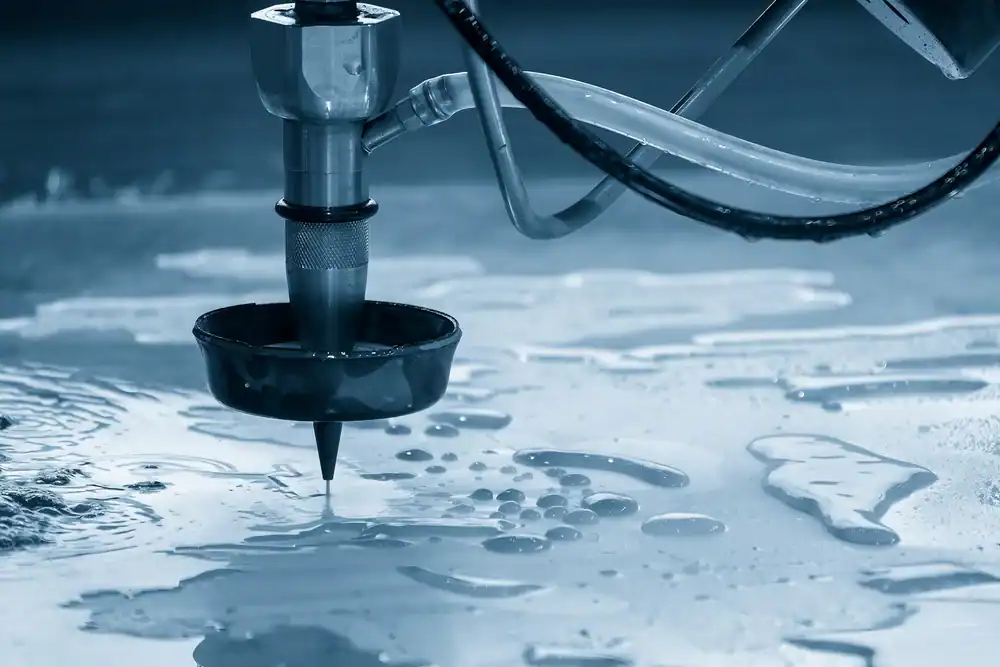
Precision waterjet cutting uses high-pressure water mixed with abrasive garnet to cut through materials with exceptional accuracy. Water pressurized to 60,000-90,000 PSI exits through a tiny nozzle, creating a cutting stream that slices through six-inch steel, delicate glass, or thick marble without generating heat.
The process is CNC-controlled. Your CAD file translates directly into cutting instructions. The waterjet head follows your design path with precision measured in thousandths of an inch, executing tight curves, sharp angles, and internal cutouts that traditional methods can’t touch.
No heat means no warping. No cracking. No changes to material properties. That matters when you’re working with expensive stone that can’t tolerate thermal stress, thin metals that would distort under a torch, or laminated glass that would delaminate from heat exposure.

The fundamental difference is temperature. Laser and plasma cutting melt material at the cut line. That creates heat-affected zones that warp thin stock, harden edges, and alter material properties. Not ideal when you’re cutting stainless steel panels that need to stay flat or architectural glass that would crack from thermal stress.
Custom waterjet cutting is a cold process. Your material experiences zero thermal distortion. No hardened edges. No micro-fractures from heat expansion.
Your marble doesn’t crack. Your aluminum doesn’t warp. Your glass edges stay smooth.
Traditional saws and routers struggle with hard materials like stone and thick metals. They can’t execute tight inside corners. They generate chips, cracks, and rough edges that require secondary grinding and polishing. And they’re limited by blade depth and tool geometry.
Waterjet technology cuts any material without changing tools. The same machine that cuts six-inch steel handles delicate glass or intricate patterns in marble. You’re not limited by blade depth, material hardness, or reflective surfaces that bounce laser beams.
Tolerances tell the real story. Plasma cutters work within 0.015 inches of your design. Waterjet systems hold 0.001 to 0.005 inches depending on material and thickness. That’s the difference between parts that need shimming versus components that align perfectly on first install.
Material versatility matters too. Laser cutting fails on reflective metals like copper, brass, and aluminum. Can’t handle thick materials effectively. Waterjet cuts through reflective surfaces, thick plates, and layered composites without issue. One system. Your entire material range.
For Long Island architects and contractors managing projects where fit and finish actually matter, that precision advantage isn’t optional.
Modern waterjet systems translate digital designs into precise cutting paths through CNC technology. You submit a DXF, DWG, or STEP file. The system converts those vectors into machine instructions controlling cutting speed, pressure, and head movement.
The cutting head moves in any direction with precision down to 0.01mm. Curves, angles, internal features—all executed without manual intervention. This eliminates human error and ensures consistent results whether you’re cutting one prototype or a hundred identical pieces.
Advanced systems include dynamic waterjet technology that adjusts parameters in real-time based on material thickness and geometry. The system automatically compensates for taper and maintains edge quality throughout the cut. You don’t get the diagonal cuts or inconsistent edges that plague thicker materials on other systems.
Abrasive delivery is equally sophisticated. Garnet particles meter into the water stream at rates optimized for your specific material and cutting speed. Modern systems monitor and adjust this flow automatically. Too little abrasive slows the cut. Too much wastes material and damages the focusing tube.
File review happens before cutting begins. We check your design for features too small to cut reliably, inside corners that need radius adjustments, nesting opportunities to reduce material waste. This catches problems that would otherwise result in failed parts and expensive material waste.
Your design translates directly into finished parts with minimal intervention. No tool changes. No fixture setups. No programming adjustments for different materials. The waterjet handles thin sheet goods to thick plate in one continuous operation.
That’s how precision waterjet cutting delivers consistent results across diverse projects—from custom signage for Long Island businesses to architectural elements for commercial developments.
Want live answers?
Connect with a Tri-State Waterjet expert for fast, friendly support.
Modern architecture demands materials and geometries traditional fabrication can’t deliver. Decorative metal screens with intricate patterns. Stone inlays with curves measured in millimeters. Glass panels with internal cutouts for lighting. These aren’t optional design flourishes—they’re what differentiate high-end commercial and residential projects across Long Island, NY.
Waterjet cutting executes these features without compromise. The technology handles the full range of architectural materials—stainless steel, aluminum, brass, marble, granite, glass, tile, composites—with the same precision and clean edges.
Custom architectural panels represent one of the most common applications. Perforated metal screens for building facades. Decorative wall panels for interior spaces. Structural elements that combine function with aesthetic detail. Components that install exactly as designed because the tolerances actually match your specifications.
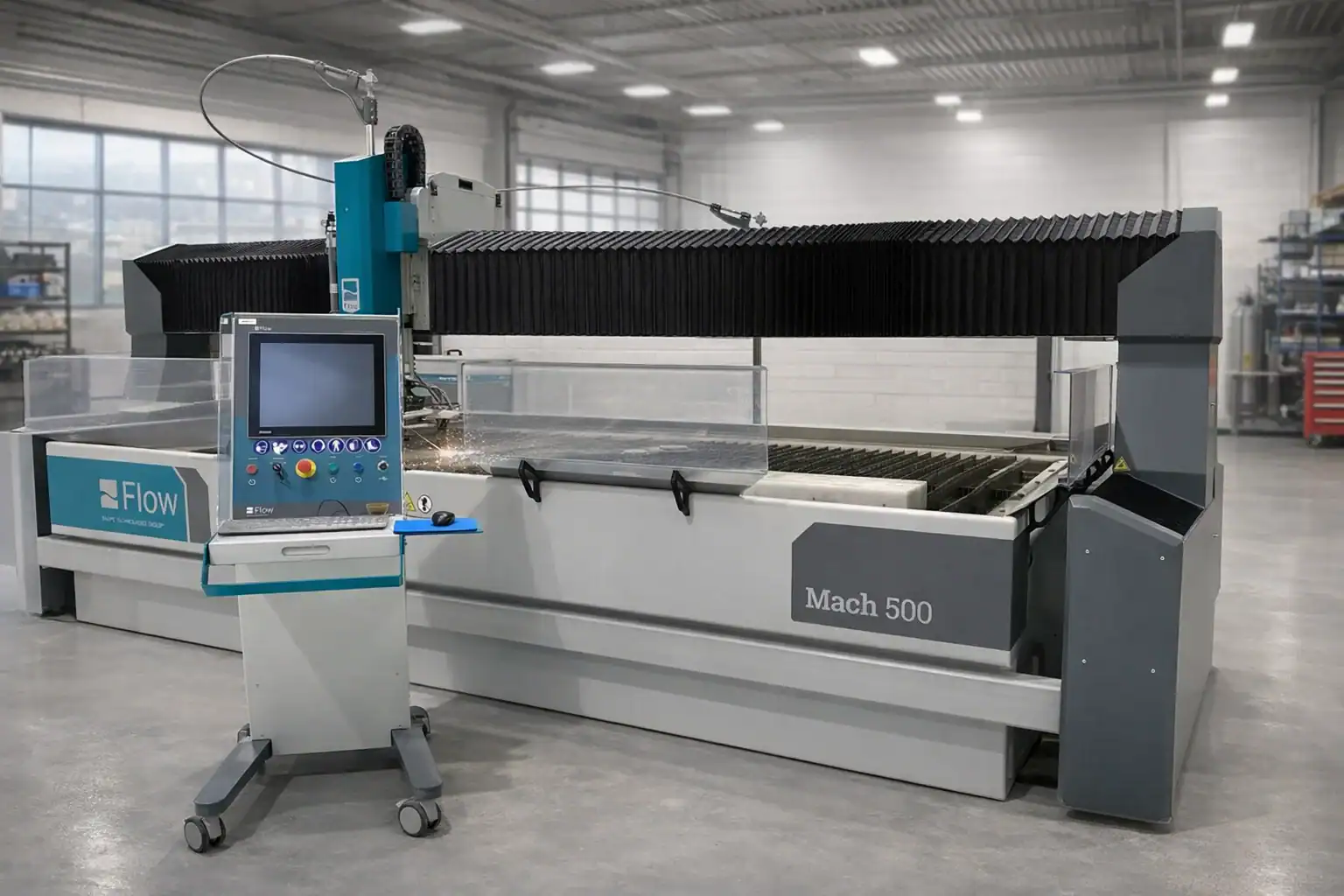
Metal architectural work demands precision that preserves both dimensional accuracy and visual appeal. Stainless steel screens with repeating geometric patterns. Brass accent panels with organic curves. Aluminum cladding with integrated mounting features.
These components need to fit perfectly while maintaining the clean, finished appearance architects specify.
Metal waterjet cutting delivers both. The cold cutting process keeps your stainless steel flat—no warping from heat that prevents proper installation. Edges come off the machine smooth enough that they don’t require grinding or deburring in most applications. You eliminate secondary operations that add cost and delay.
The process excels at decorative screens and panels where the pattern itself is the design feature. Intricate geometric patterns. Organic forms. Company logos. Custom artwork. All cut with the same precision.
Inside corners stay sharp. Curves follow your design path exactly. And because the kerf is narrow—typically 0.04 inches—fine details remain crisp.
Thickness capacity matters for architectural applications. Waterjet systems cut metals up to six inches thick, though most architectural work involves quarter-inch to half-inch stainless steel for screens and panels. Thicker aluminum plate for structural elements. Cutting speed adjusts based on thickness, but precision remains consistent regardless of depth.
Material properties stay intact. No heat-affected zone hardening edges or changing metal characteristics. This matters when fabricators need to weld, bend, or machine parts after cutting. The material behaves exactly as it should because waterjet cutting hasn’t altered its structure.
Complex assemblies benefit from waterjet precision. When panels need to align with adjacent pieces or fit into existing frameworks, tolerances measured in thousandths make the difference between field adjustments and perfect installation. Parts that fit right the first time save labor costs and project delays.
For contractors managing commercial builds or high-end residential renovations across Nassau and Suffolk counties, that installation efficiency translates directly to staying on schedule and on budget.
Glass and stone are expensive, brittle, and unforgiving. Traditional cutting methods risk chipping, cracking, wasted material. Heat-based processes create thermal stress causing delayed fractures. You need a method that cuts cleanly on the first attempt without damaging materials that cost hundreds or thousands per square foot.
Glass waterjet cutting removes heat entirely. No thermal stress. No micro-fractures along cut lines. No chipping requiring secondary grinding. Smooth, clean edges on the first pass, whether you’re cutting standard architectural glass or specialty materials like borosilicate.
The technology handles complex shapes impossible with traditional glass tools. Curves. Tight radiuses. Internal cutouts for fixtures or ventilation. The waterjet executes these features with 0.01mm precision. You’re not limited to straight cuts or simple shapes. If you can design it in CAD, waterjet cutting executes it without compromising structural integrity.
Marble waterjet cutting delivers similar advantages for stone work. Intricate inlays fitting together seamlessly. Tight inside corners traditional saws can’t reach. Complex geometries for custom installations. The waterjet cuts through marble at any thickness without generating heat and vibration that cause cracks.
Edge quality on stone is particularly important. The process produces edges smooth enough to install immediately in many cases. No chipping requiring extensive hand-finishing. No cracks propagating through material later. The stone maintains structural integrity because cutting doesn’t introduce stress.
Material waste drops significantly. The narrow kerf and precise cutting mean you use every inch of expensive stone or glass. When you’re working with premium marble or specialty glass for Long Island projects, material savings add up quickly. You’re not throwing away chunks because of wide saw blades or failed cuts from chipping.
Turnaround depends on design complexity and current queue, but most projects move faster than traditional multi-step fabrication. Simple cuts in standard materials often ship within days. Complex geometries or specialty materials take one to two weeks. The advantage? Waterjet cutting eliminates secondary operations. You’re not waiting for parts to move from cutting to deburring to finishing across multiple vendors.
The difference between adequate fabrication and exceptional results often comes down to precision you can measure and materials that stay intact. Precision waterjet cutting delivers both. Tolerances tight enough that parts fit without forcing. Edges clean enough to install immediately. Materials maintain their properties because heat never entered the process.
No matter if you’re an architect specifying decorative elements for a Long Island commercial build, a contractor managing a high-end renovation, or a sign shop creating custom installations, waterjet technology solves problems traditional methods create. Complex geometries become achievable. Expensive materials don’t get wasted. Timelines stay on track because secondary finishing operations disappear.
The technology continues advancing—tighter tolerances, faster cutting speeds, better software integration—but the core advantage remains. You get precision cutting across any material without heat distortion, warping, or compromised edges that plague thermal methods. For projects where fit, finish, and timeline actually matter, we bring this precision to architects, designers, contractors, and fabricators who need cutting that works the first time.
Summary:
Article details:
Share: