Choosing between glass, metal, or marble for waterjet cutting isn't just about what looks good. It's about what performs under pressure, fits your timeline, and doesn't waste your budget.
You’re staring at material specs for your next project, and the stakes are high. Pick the wrong material for waterjet cutting, and you’re looking at wasted stock, blown timelines, or parts that don’t fit. Pick the right one, and you get clean cuts, zero rework, and a project that actually stays on schedule.
The problem isn’t finding someone who can cut materials. It’s knowing which materials make sense for waterjet cutting in the first place—and why that choice matters more than most fabricators admit. Glass behaves differently than metal. Marble has its own rules. And if you’re working on Long Island, where project timelines don’t wait and material costs add up fast, getting this decision right the first time isn’t optional.
Here’s what you actually need to know about material selection for precision waterjet cutting.
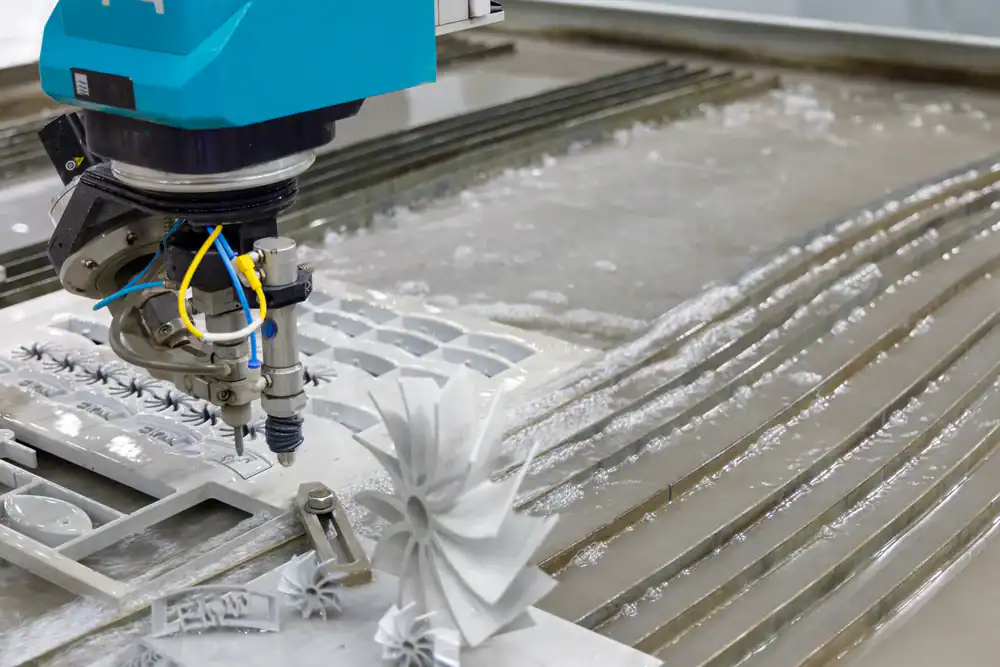
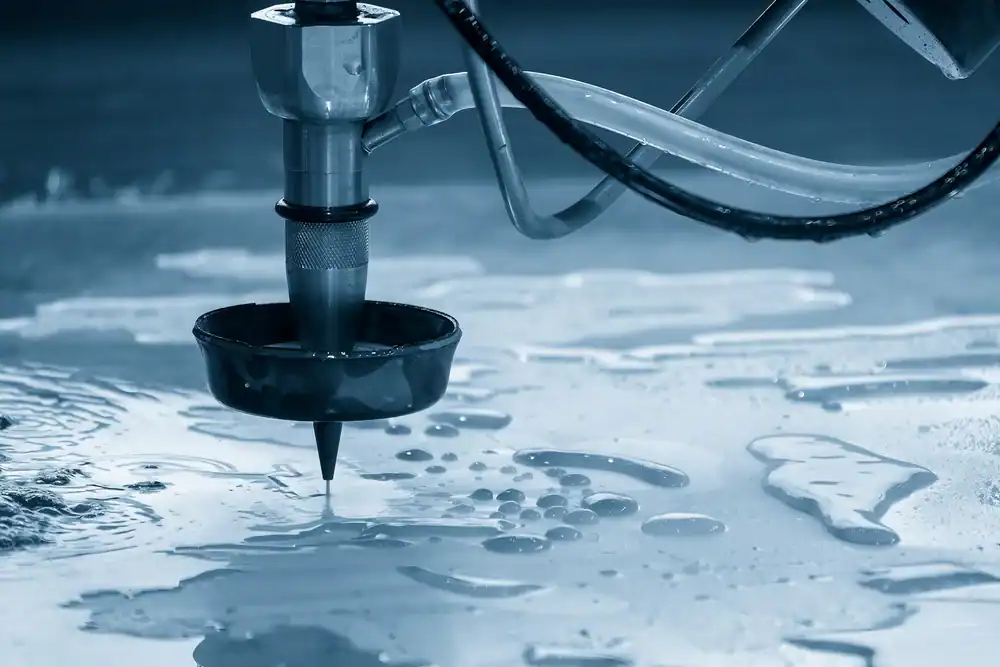
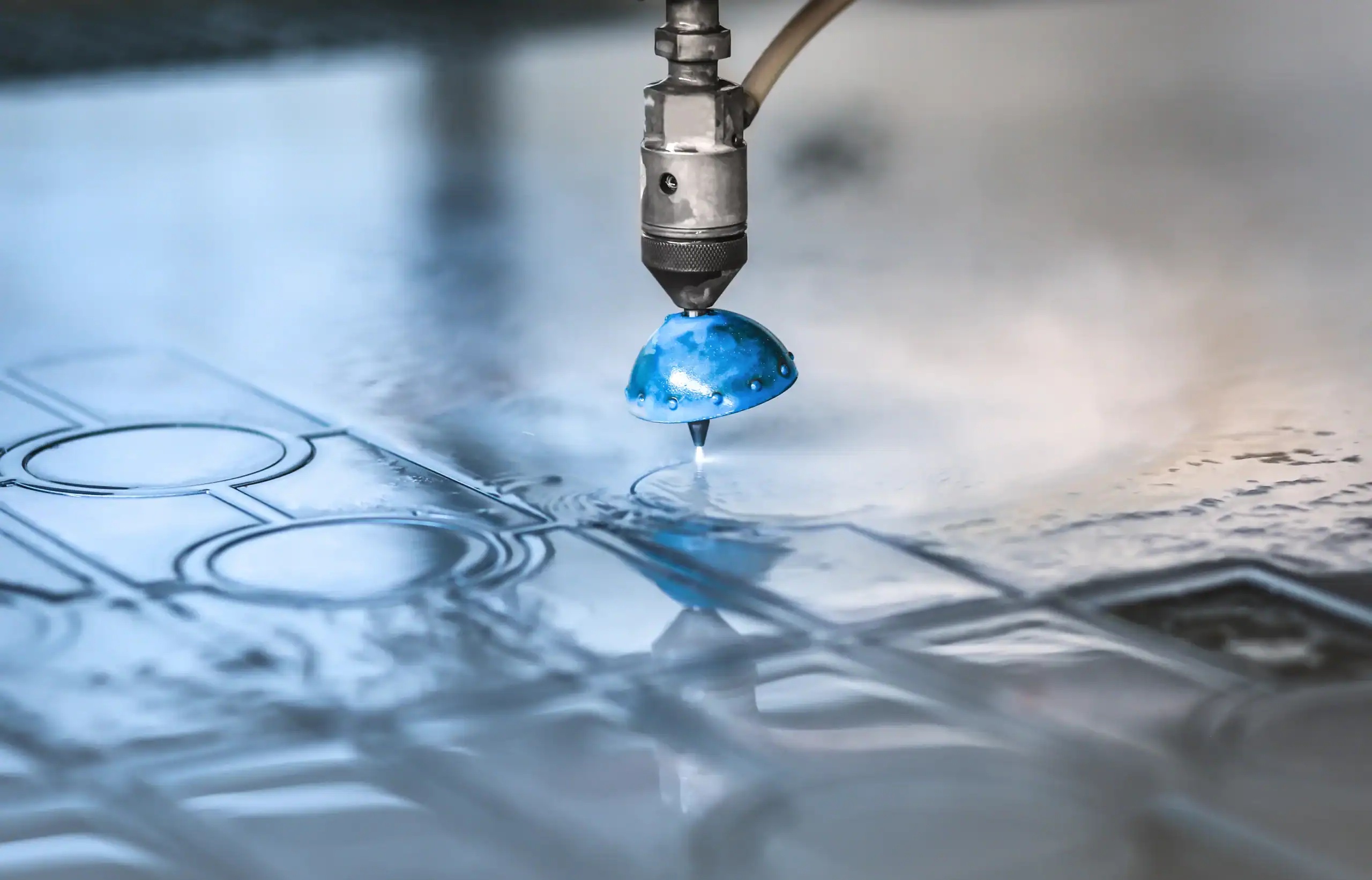
Waterjet cutting uses high-pressure water mixed with abrasive particles to slice through materials without generating heat. That one detail changes everything about which materials work and which ones don’t.
Traditional cutting methods—saws, lasers, plasma—all introduce heat. That heat creates problems: warped edges on thin metal, micro-fractures in glass, compromised structural integrity in composites. Waterjet cutting eliminates those issues entirely because it’s a cold cutting process.
What that means for you: materials that can’t handle thermal stress suddenly become viable options. Aluminum that would warp under a laser cuts clean. Glass that would crack under a saw comes out smooth. Hardened steel that would lose its temper stays exactly as strong as it started.

Glass is brittle. It doesn’t forgive mistakes. Traditional cutting methods—scoring and breaking, diamond saws, even some laser systems—all risk chipping, cracking, or creating micro-fractures that show up later as failures.
Glass waterjet cutting solves that problem by eliminating heat and vibration. The water stream cuts through glass without thermal stress, which means no cracks forming along cut lines. No chipping means no secondary grinding or polishing eating into your schedule. You get smooth, clean edges on the first pass.
This works across different types of glass. Architectural glass for commercial buildings. Borosilicate for industrial applications. Optical glass for specialty projects. Fused silica when precision is non-negotiable. The process adapts without requiring different tooling or setup.
There’s one exception: tempered glass. It can’t be cut with waterjet—or any method—because it has internal tension. The moment a cut crosses those tension zones, the glass shatters. That’s by design. Tempered glass is engineered to break into small, relatively harmless pieces when disturbed, which is why it’s used in windshields and safety applications. If your project requires tempered glass, it needs to be cut before the tempering process, not after.
For everything else, glass waterjet cutting delivers intricate patterns, tight inside corners, and complex geometries that traditional methods can’t touch. Curves your saw can’t handle. Cutouts that would take multiple attempts with a scoring tool. Internal holes for hardware without cracking the surrounding material.
The precision matters when you’re working on architectural projects on Long Island, where glass components need to fit into metal frames or align with other building elements. Tolerances down to 0.01mm mean parts fit without forcing, align without shimming, and install without rework.
Turnaround is faster too. The cutting process itself doesn’t have the bottlenecks built into traditional methods. Material procurement typically takes longer than actual cutting time, so having your glass specified and ordered early keeps projects moving. We can often accommodate rush projects because you’re not waiting on multiple attempts or dealing with material waste from failed cuts.
Metal fabrication has a heat problem. Laser cutting, plasma cutting, even oxy-fuel torches—they all generate temperatures that change the metal’s structure. That creates heat-affected zones where the material becomes harder, more brittle, or loses the properties you specified when you ordered it.
Metal waterjet cutting eliminates that problem completely. The cold cutting process preserves material properties from edge to edge. Aluminum stays as soft and workable as it started. Stainless steel maintains its corrosion resistance. Hardened tool steel keeps its temper. Titanium doesn’t develop surface embrittlement.
This matters when you’re cutting materials that cost serious money. Titanium, Inconel, specialty alloys—these aren’t materials you can afford to compromise. The waterjet cuts them accurately without altering their metallurgical properties, which means the part performs exactly as engineered.
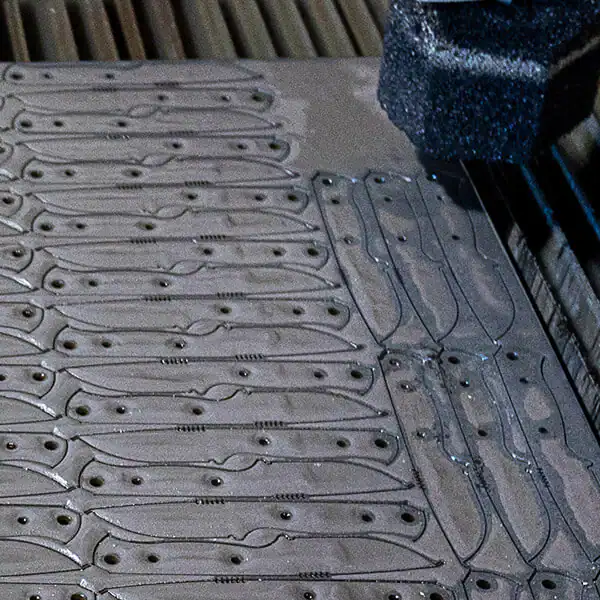
Thickness isn’t a limitation either. Waterjet cutting handles metals up to 6 inches thick on stainless steel, even thicker on aluminum. Thin sheets work just as well—no warping, no distortion, no heat zones that ruin precision parts. You can stack multiple thin sheets and cut them simultaneously for production efficiency.
The versatility shows up in what you can cut on the same machine. Aluminum for architectural panels. Stainless steel for food processing equipment. Brass and copper for decorative elements. Carbon steel for structural components. Titanium for aerospace parts. No equipment changes. No tooling swaps. The same waterjet system handles your entire material range.
Tolerances hold to ±0.001 inches even on complex geometries. That level of precision means parts that fit without forcing, components that assemble without adjustment, and finished products that meet spec without secondary machining. For custom fabrication work in Long Island, NY, where contractors and manufacturers need parts that work the first time, that precision translates directly to staying on schedule and on budget.
Edge quality is another advantage. The waterjet produces a smooth, finished edge that often requires no additional treatment. You’re not scheduling secondary grinding or paying for edge cleanup. The part comes off the machine ready to use in most structural, mechanical, and design applications.
Reflective metals like copper and brass cut cleanly too. Laser cutting struggles with reflective surfaces—the beam bounces back and creates inconsistent cuts. Waterjet doesn’t care about reflectivity. The abrasive stream cuts through regardless of surface finish or material properties.
Want live answers?
Connect with a Tri-State Waterjet expert for fast, friendly support.
Material selection isn’t about personal preference. It’s about matching material properties to project requirements—and understanding what each material delivers under waterjet cutting.
Start with your end use. Architectural features that need transparency and light transmission point toward glass. Structural components that bear load require metal. Decorative elements or high-end finishes often call for marble or stone. But those are starting points, not final answers.
Consider how the material behaves under cutting. Glass delivers smooth edges and intricate patterns but can’t be tempered after cutting. Metal offers strength and durability with no heat distortion. Marble provides aesthetic appeal with precision that traditional stone cutting can’t match.
Marble is expensive. It’s also unforgiving. Traditional cutting methods—saws, routers—risk chipping the surface, cracking the slab, or creating rough edges that need extensive finishing. When you’re working with luxury materials for high-end residential or commercial projects, those risks aren’t acceptable.
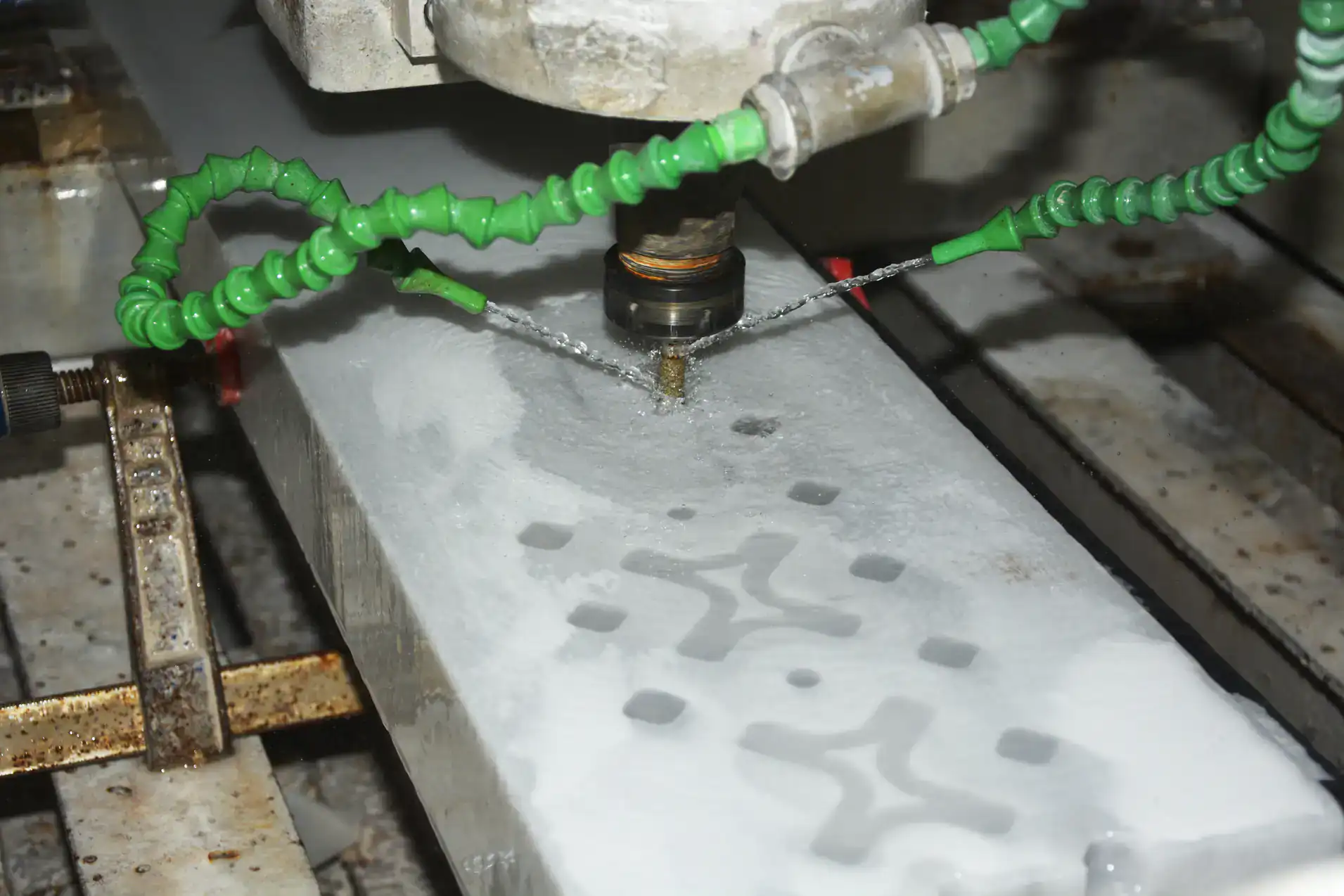
Marble waterjet cutting eliminates those risks by using a cold cutting process that doesn’t stress the stone. No chipping means the surface stays pristine. No heat cracks means the structural integrity remains intact. No rough edges means less time spent on finishing work that delays installation.
The precision enables design work that traditional methods can’t execute. Intricate inlays where pieces fit together seamlessly. Complex patterns with tight inside corners. Custom shapes that match architectural drawings exactly. This level of detail matters for luxury installations where the quality of fabrication is visible and scrutinized.
Thickness isn’t a limitation. The waterjet cuts marble at virtually any thickness you’re working with—3/4-inch slabs, 2-inch thick pieces, whatever your design requires. Thicker material takes longer to cut because the water stream has to penetrate deeper, but the precision and edge quality remain consistent regardless of thickness.
Long Island has seen significant growth in luxury residential construction, with over 300,000 premium units completed recently. Commercial projects are specifying marble at rates not seen in a decade. That demand creates pressure on lead times across the industry. Fabricators who can deliver precision work without multiple attempts stay busy. Those who can’t lose projects to competitors who understand how to handle complex installations.
The process itself is straightforward. You provide the design file and material specs. We review the file for any potential issues—not to redesign your work, but to catch anything that might cause problems during cutting or installation. Once aligned, the file goes directly into our CNC system.
The waterjet uses high-pressure water mixed with garnet abrasive to cut through marble at any thickness. Because it’s a cold cutting process, there’s no heat distortion, no structural stress, no micro-fractures that show up later. Pieces come out ready to install, with edges smooth enough to go straight into your project.
Material waste drops too. The precision of waterjet cutting means you’re using every inch you paid for. Tight nesting of parts on the slab reduces offcuts. Accurate cuts eliminate the need to order extra material as insurance against mistakes.
Not every project needs waterjet cutting. Sometimes a saw or traditional method makes more sense—simpler, faster, cheaper for basic cuts on materials that aren’t sensitive to heat or vibration. But when precision matters, when your material can’t handle thermal stress, or when your design has complexity that traditional tools can’t execute, custom waterjet cutting becomes the right choice.
Here’s when waterjet makes sense: Your material is expensive and you can’t afford waste from trial cuts. Your design has curves, intricate patterns, or tight tolerances that require CNC precision. Your timeline doesn’t allow for secondary finishing operations. Your material would be damaged by heat from laser or plasma cutting.
Glass projects almost always benefit from waterjet cutting because of the risk of chipping and cracking with traditional methods. Metal projects that require no heat-affected zones—aerospace parts, hardened tool steel, precision components—need waterjet’s cold cutting process. Marble and stone work where the aesthetic quality of the edge matters and chipping isn’t acceptable.
Compare that to traditional methods. Saws work fine for straight cuts in materials that can handle blade contact and vibration. Lasers excel at thin sheet metal where speed matters more than edge quality. Plasma cutting makes sense for thick steel plates where edge quality is secondary and you’re separating material more than creating precision parts.
The decision often comes down to what happens after cutting. If you’re scheduling grinding, deburring, or polishing to clean up rough edges, you’re paying for secondary operations that waterjet cutting would have eliminated. If parts don’t fit and need adjustment, you’re losing time that accurate cutting would have preserved. If material gets scrapped because heat distortion ruined it, you’re replacing stock that cold cutting would have saved.
For custom fabrication work on Long Island, where projects range from architectural glass for commercial buildings to precision metal components for industrial applications, having access to waterjet cutting means you can take on work that other fabricators turn down. The intricate mosaics. The complex inlays. The designs where there’s zero room for error.
The process also scales differently than traditional methods. Waterjet cutting handles both prototypes and production runs without expensive tooling changes. You can cut one piece to test fit, then cut a hundred more with identical precision. Traditional methods often require different setups, different equipment, or different approaches depending on volume.
Material compatibility is another factor. Waterjet cuts virtually any solid material—metals, glass, stone, composites, plastics—without changing equipment. Traditional methods are more limited. You need different saws for different materials. Lasers struggle with reflective metals. Plasma creates too much heat for sensitive materials.
Choosing the right material for waterjet cutting comes down to understanding what you’re actually trying to achieve. Glass when you need transparency and intricate patterns without thermal stress. Metal when structural integrity and material properties can’t be compromised. Marble when luxury aesthetics demand precision that traditional stone cutting can’t deliver.
The cold cutting process, tight tolerances, and ability to handle complex geometries make waterjet cutting the right choice when your project demands precision without compromise. No heat distortion. No warped edges. Just clean, accurate cuts from CAD file to finished part.
If you’re working on a project that requires glass waterjet cutting, metal fabrication, or marble work where quality and precision actually matter, we handle the custom cutting and complex fabrication that keeps your project on track.
Summary:
Article details:
Share: