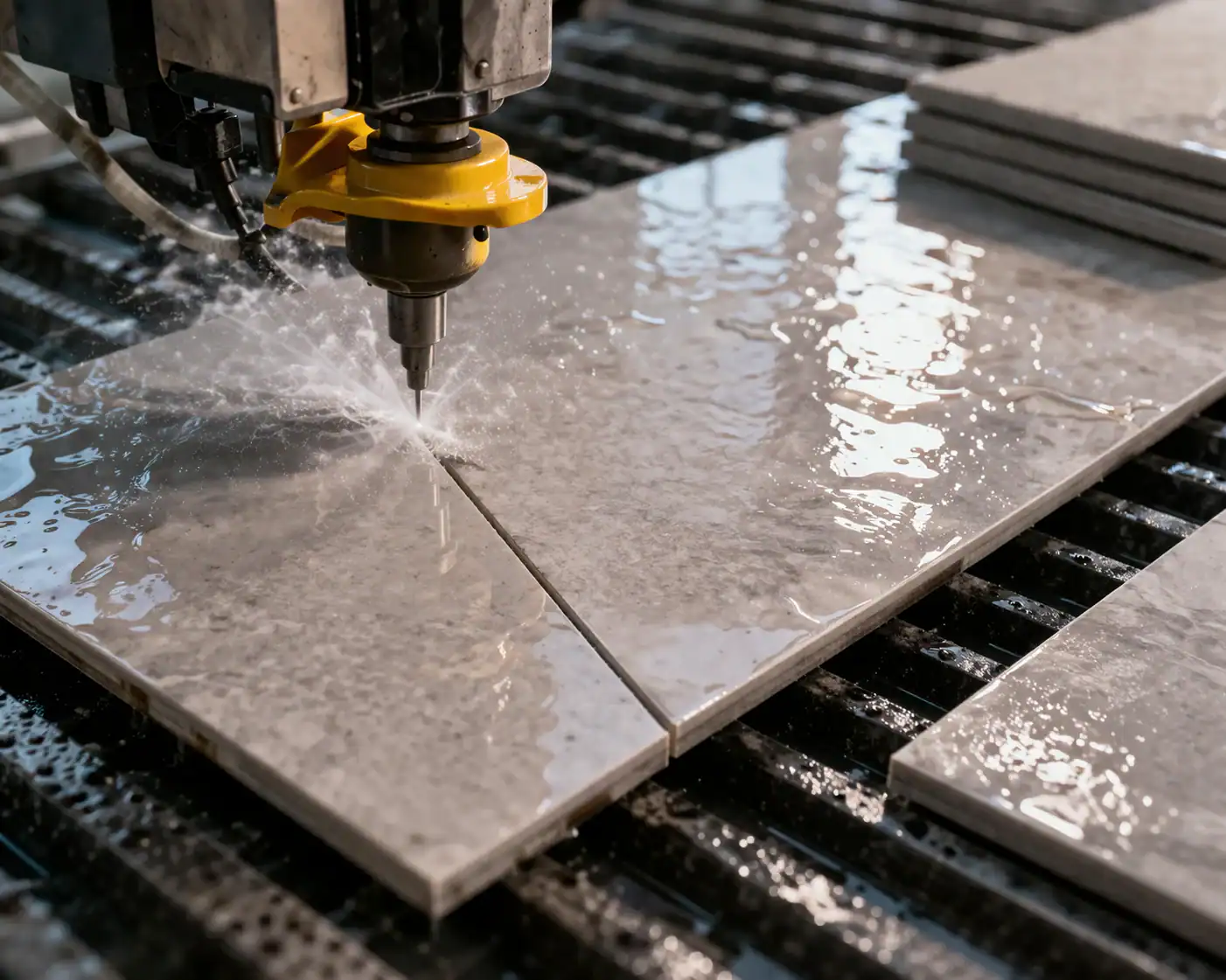
Precision marble waterjet cutting eliminates chipping and heat damage while enabling intricate custom designs. Learn why this technology dominates luxury interior projects across Long Island.
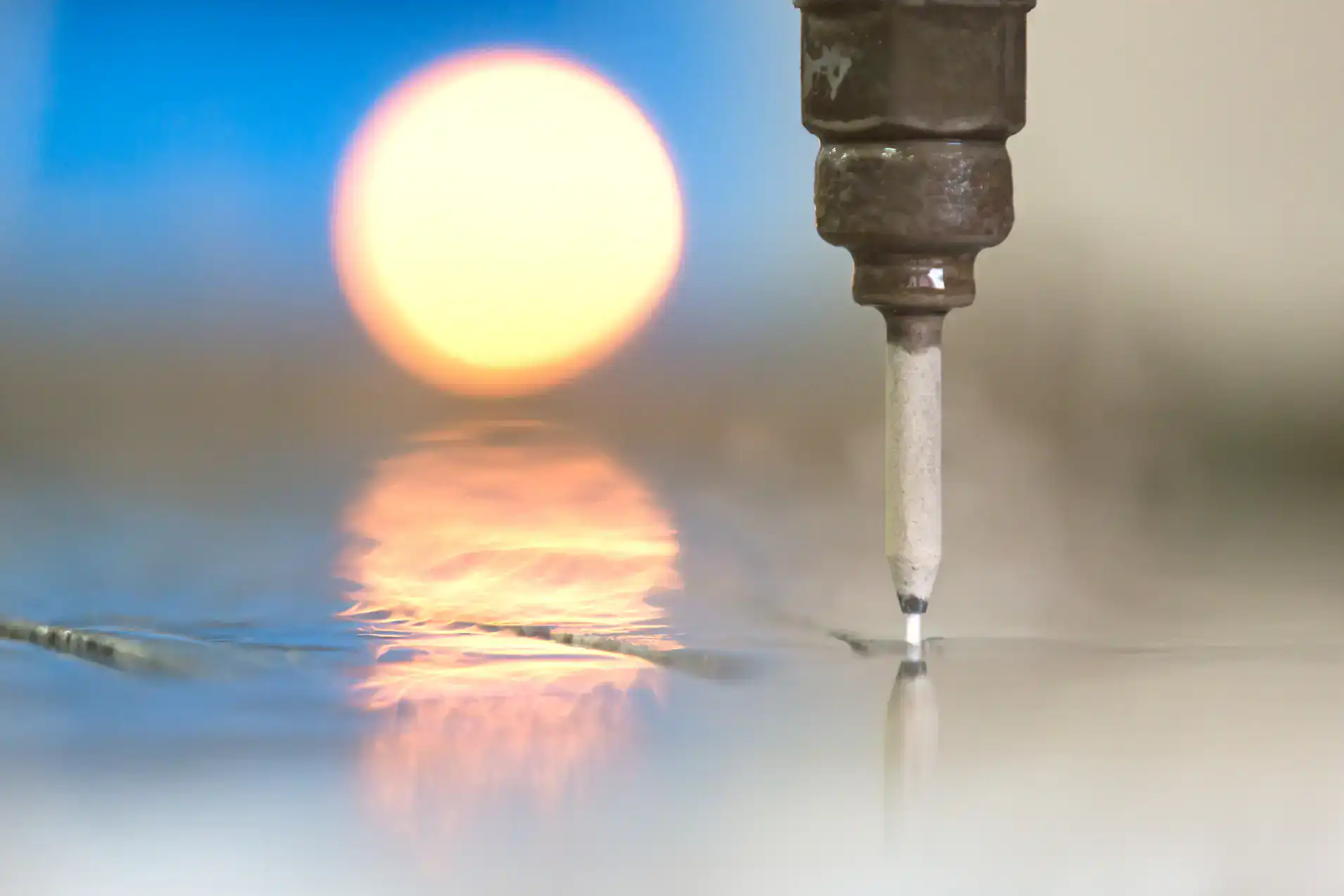
If you’re investing in marble for a luxury project, the cutting method matters as much as the stone itself. Traditional saws chip edges, generate heat stress, and limit what’s actually possible to create. Marble waterjet cutting eliminates those problems entirely. You get clean cuts, intricate patterns, and zero thermal damage—exactly what high-end residential and commercial projects demand. This isn’t about following trends. It’s about choosing a fabrication method that protects your material investment and delivers results that match your design vision, whether you’re working on a Hamptons estate or a Nassau County commercial build.
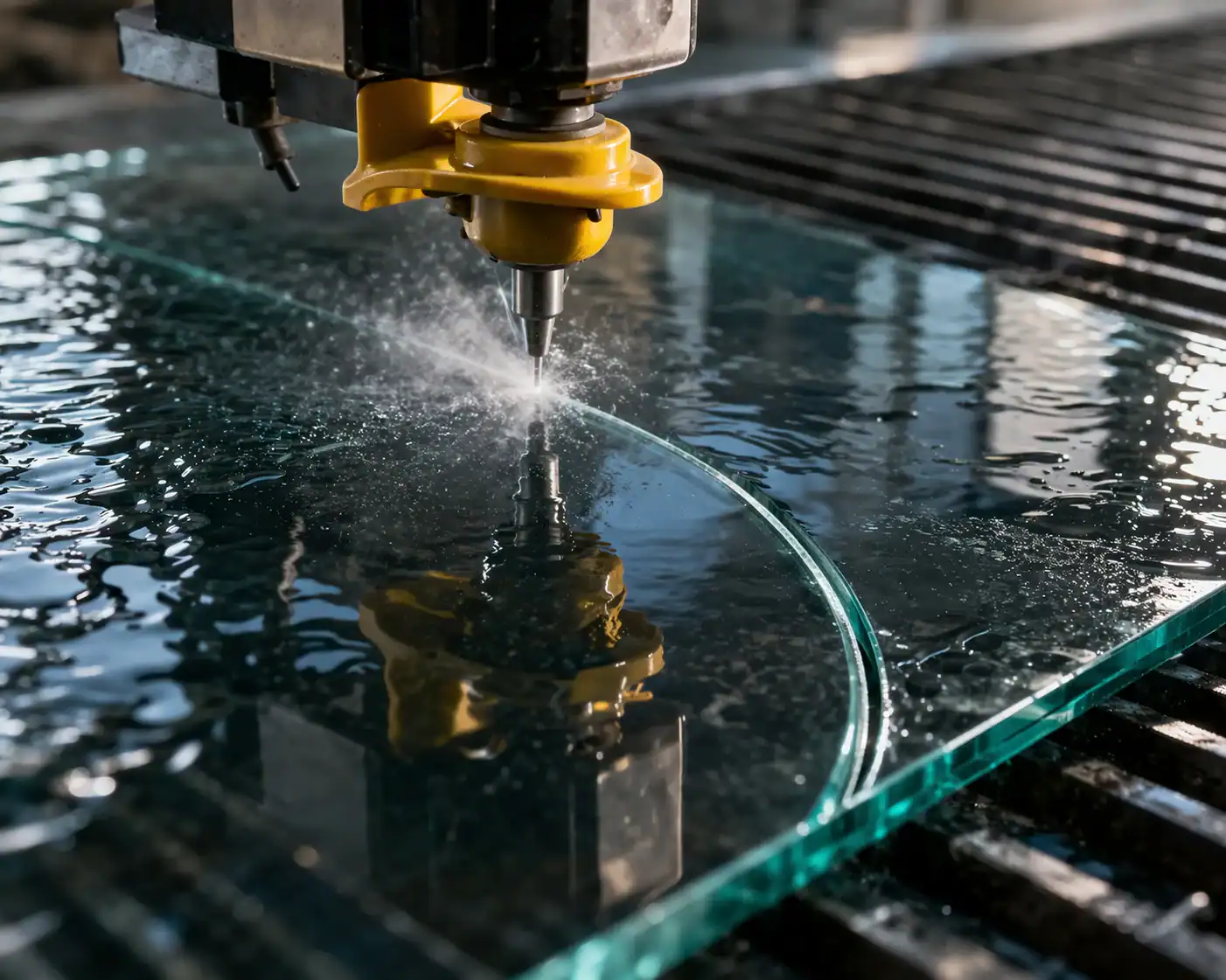
Waterjet cutting uses high-pressure water mixed with abrasive garnet to slice through marble without generating heat. That’s the fundamental difference that changes everything. No thermal stress means no micro-fractures forming inside the stone. No heat-affected zones means the marble’s natural structure stays completely intact from the moment cutting begins.
The process is CNC-controlled, which means your CAD file translates directly into precise cuts with tolerances holding to ±0.003″ to ±0.005″. That’s tight enough for seamless inlays and perfect edge alignment on luxury installations. You’re not dealing with the guesswork that comes with manual cutting or the geometric limitations of blade-based tools.
For marble specifically, this precision matters because the material is both expensive and unforgiving. A single chipped edge on a bookmatched Calacatta slab can ruin the entire visual effect you’re trying to create. Custom waterjet cutting eliminates that risk completely.
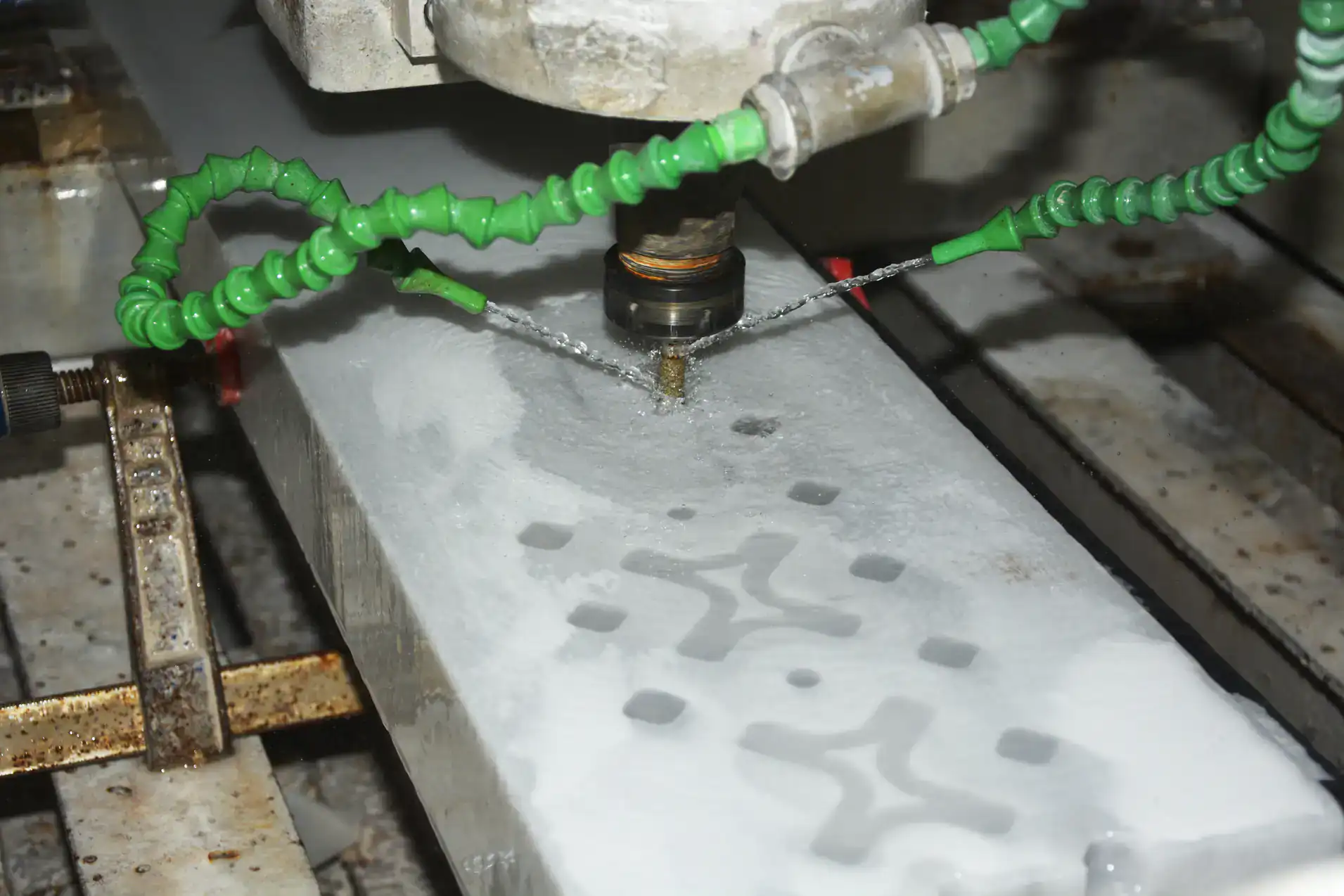
Traditional marble cutting generates significant heat that most people don’t think about until it’s too late. Diamond blades spinning at high speed create friction, and that friction transfers thermal energy directly into the stone. Marble is calcium carbonate-based, which makes it particularly susceptible to thermal shock. The result isn’t always immediately visible—hairline cracks form that you might not see for weeks, but they compromise the installation and eventually show up as structural problems.
Waterjet cutting operates at room temperature. The water stream does the cutting through mechanical erosion, not heat. This cold cutting process means the marble’s crystalline structure remains unchanged from start to finish. No discoloration along cut lines. No weakened zones that become failure points later. No risk of the stone cracking months after installation when seasonal temperature fluctuations stress those heat-damaged areas.
This becomes absolutely critical when you’re working with high-value marble like Calacatta Gold, Statuario, or Carrara for luxury projects. These stones can cost $200 to $400 per square foot. Heat damage doesn’t just affect aesthetics—it turns expensive material into waste that has to be replaced, delaying your project and blowing through contingency budgets.
The edge quality difference is immediately visible. Because there’s no heat causing expansion and contraction during the cut, the edges come out smooth and consistent every single time. You’re not grinding away imperfections or polishing out burn marks that traditional methods leave behind. The cut edge from precision waterjet cutting is ready for installation as-is, which saves both time and the risk of further damaging the stone during secondary finishing processes.
For architects and designers specifying marble in luxury residential or commercial projects, this preservation of material integrity is non-negotiable. You’re not just paying for the stone’s appearance—you’re paying for its performance over decades. Waterjet cutting protects that investment from the moment fabrication begins, ensuring the marble you specified is the marble that actually performs in the finished installation.
Luxury interior design doesn’t tolerate gaps, misalignment, or pieces that need on-site adjustment with grinders and files. When marble components don’t fit perfectly from the start, the entire project suffers and everyone knows it. Waterjet cutting delivers tolerances within ±0.003″ to ±0.005″, which translates to virtually seamless installations that look exactly like the renderings you showed the client.
Consider a bookmatched marble feature wall in a Hamptons bathroom or a Nassau County hotel lobby. The visual impact depends entirely on the veining aligning symmetrically across adjacent slabs. If the cuts are off by even a few millimeters, the pattern breaks. The mirror effect fails. What should be a stunning focal point becomes a visible mistake that undermines the entire design.
CNC waterjet systems eliminate that risk completely. The cutting head follows programmed paths with sub-millimeter accuracy, guaranteeing each piece matches the design file exactly as drawn. This level of precision is especially important for complex applications like marble mosaics, waterjet medallions, or custom inlay work where hundreds of individual pieces need to fit together without gaps or overlaps that compromise the finished look.
The same principle applies to functional elements throughout Long Island luxury projects. A marble countertop with a waterjet-cut sink opening fits the basin perfectly on the first attempt. No filing down edges on site. No discovering during installation that the radius is slightly off and the sink won’t sit flush. The dimensional accuracy means fewer site visits, less rework, and installations that proceed on schedule without delays.
For contractors and installers, this reliability changes the entire workflow in meaningful ways. You’re not building in extra time for adjustments or keeping backup slabs on hand in case something doesn’t fit. The parts arrive ready to install, which compresses timelines and reduces labor costs that would otherwise eat into project margins.
From a design perspective, tight tolerances open up possibilities that traditional cutting methods simply can’t achieve reliably. Intricate inlays with multiple marble types fitting together seamlessly. Curved edges that follow architectural lines exactly. Patterns that repeat across large surfaces without visible variation from piece to piece. These aren’t aspirational concepts—they’re standard outcomes when precision waterjet cutting is part of your fabrication process.
Want live answers?
Connect with a Tri-State Waterjet expert for fast, friendly support.
Traditional marble cutting is fundamentally constrained by blade geometry and tool access limitations. Tight inside corners require multiple cuts and hand finishing that introduces inconsistency. Complex curves demand specialized tools and skilled operators willing to work slowly, which drives costs up quickly. Intricate patterns often get simplified during fabrication because they’re too risky or expensive to execute with conventional tools.
Waterjet cutting removes those constraints entirely. The cutting stream is narrow—typically 0.8mm to 1.2mm—and can change direction instantly without tool changes or repositioning. That means sharp inside corners, flowing curves, and detailed geometric patterns all cut with the same setup and the same precision.
This capability is exactly why marble waterjet cutting has become standard for high-end residential and commercial projects. Designers can specify exactly what they envision without compromising based on what fabrication shops are actually capable of producing.
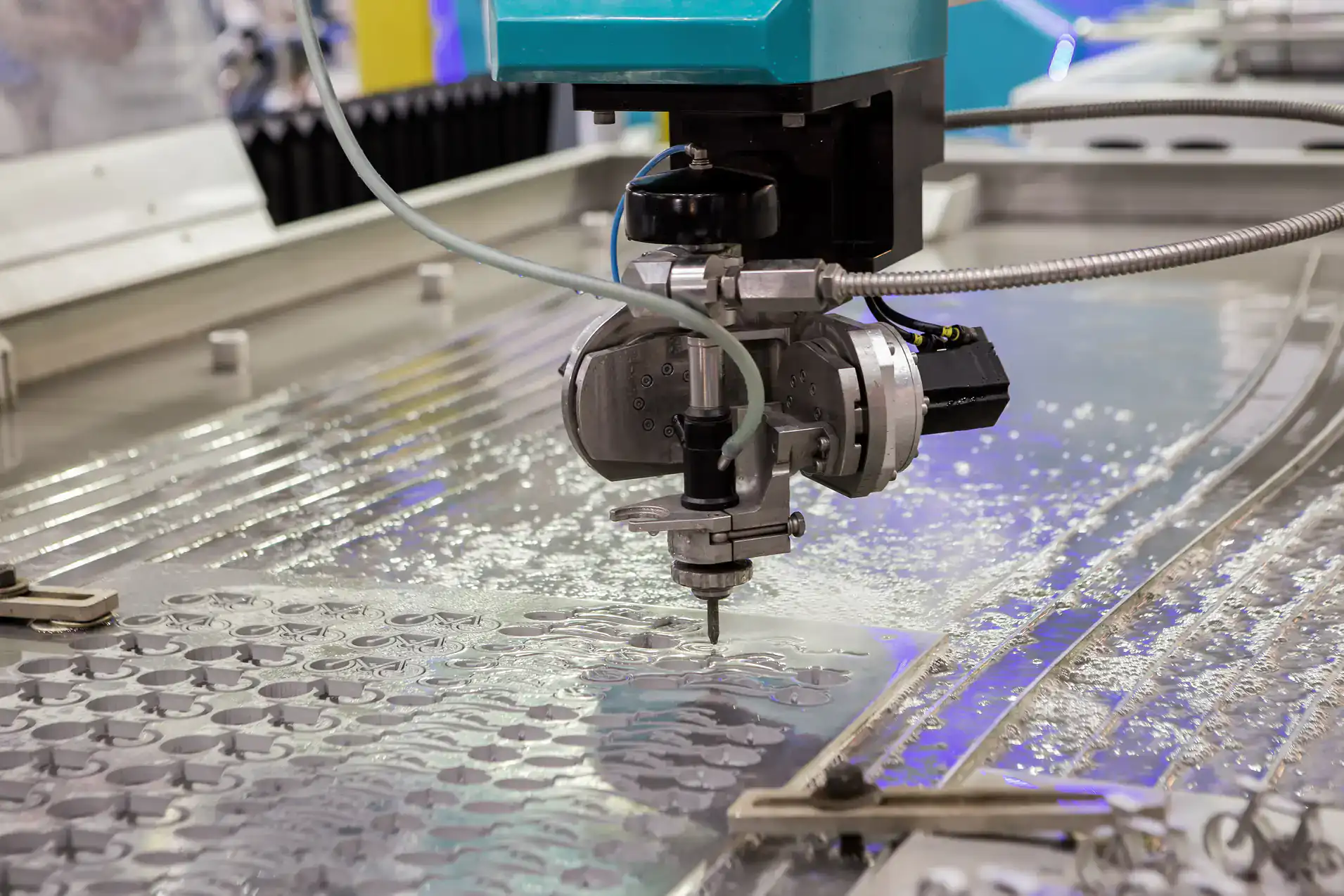
Marble mosaic work has traditionally required hand-cutting individual pieces—a time-intensive process that limits complexity and increases cost to the point where many designs become impractical. Waterjet technology changes that equation entirely for luxury projects in Long Island, NY. Complex geometric patterns that would take days to cut manually can be programmed once and executed repeatedly with identical precision across hundreds of pieces.
This matters significantly for projects where pattern consistency is essential to the design. A marble floor medallion with radiating geometric designs needs every single piece to be exact. If the angles are off by even a degree, the pattern won’t close properly when assembled and you’ll see gaps or overlaps. Waterjet cutting ensures each piece matches the template perfectly, which means the medallion assembles without gaps or misalignment that would require rework.
The same precision applies to wall installations featuring intricate arabesque patterns, Greek key borders, or custom geometric designs. These installations rely on repeating elements that interlock seamlessly across large surfaces. Traditional cutting methods struggle with the tight tolerances required, often resulting in visible inconsistencies. Waterjet systems execute these patterns as easily as straight cuts, maintaining accuracy across hundreds of individual pieces without variation.
For designers working on luxury hotel lobbies, high-end retail spaces, or custom residential projects throughout Long Island, this opens up creative possibilities that weren’t practical before waterjet technology became accessible. You can incorporate detailed border patterns that frame larger marble installations. Custom logos or monograms cut into marble for branded commercial spaces. Artistic installations that combine multiple stone types—Carrara with Nero Marquina, Calacatta with Verde Guatemala—in complex arrangements that would be impossible to execute with traditional methods.
The fabrication process itself becomes dramatically more efficient with custom waterjet cutting. Once the design is programmed into the CNC system, the waterjet cuts all the pieces in sequence without operator intervention. There’s no repositioning material between cuts, no switching between different blade types for different curve radii, and no manual measuring between pieces. The result is faster turnaround and lower labor costs compared to traditional methods—even for highly complex designs that would normally require premium pricing.
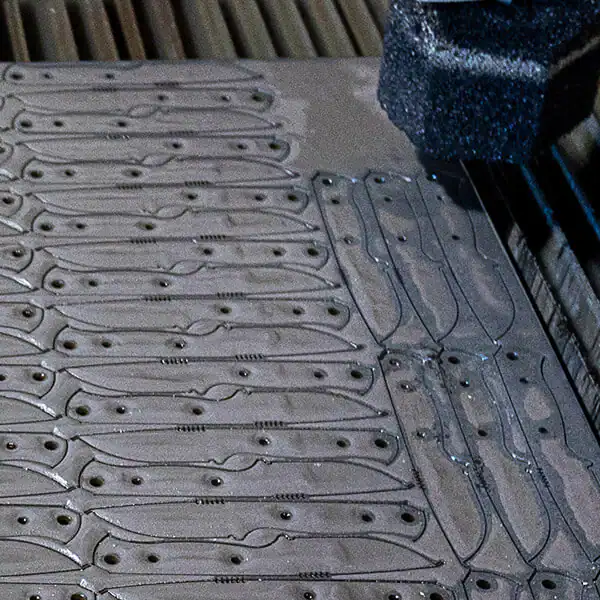
Material waste drops significantly as well, which matters when you’re working with expensive stone. The narrow kerf means less marble is turned into dust that can’t be recovered. The precision allows for tighter nesting of parts on each slab, maximizing usable material from every piece. When you’re working with marble that costs hundreds of dollars per square foot for luxury projects, that efficiency translates directly into material savings that improve project economics.
Bookmatching has become one of the defining techniques in luxury marble installations across Long Island, NY and beyond. The process involves cutting sequential slabs from the same block and opening them like a book to create symmetrical, mirror-image patterns. The visual impact is dramatic—natural veining reflects across a centerline, creating an almost architectural effect that turns functional surfaces into focal points.
Executing bookmatched installations requires absolute precision at every step. The slabs must be cut to exact dimensions, and the edges that meet at the centerline need to align perfectly so the veining flows seamlessly. Even minor discrepancies of a few millimeters break the symmetry and ruin the effect entirely. Precision waterjet cutting delivers the accuracy this technique demands without exception.
The process starts with careful slab selection at the quarry or warehouse. Once the marble is chosen and the book-match orientation is determined, we cut both slabs to identical dimensions with tolerances measured in thousandths of an inch. When installed, the veining flows seamlessly across the joint, creating the illusion of a single, continuous piece that appears naturally symmetrical.
This technique is appearing everywhere in 2026 luxury interiors throughout Long Island and the Hamptons. Kitchen islands with waterfall edges where the Calacatta veining continues down the sides in perfect symmetry. Bathroom feature walls behind freestanding tubs using bookmatched Statuario. Fireplace surrounds where the stone becomes the focal point of the entire room. Commercial lobbies using bookmatched marble to create dramatic first impressions that set the tone for the entire space.
Beyond bookmatching, waterjet precision enables complex inlay work that combines different marble types in ways traditional methods can’t reliably execute. Imagine a Carrara base with Nero Marquina accents cut to fit together with hairline seams barely visible to the eye. Or a floor pattern that incorporates three different marbles—white, gray, and black—in an intricate geometric design where every piece fits exactly as intended. These installations rely on each component fitting precisely as designed, something traditional cutting methods struggle to deliver consistently across large projects.
The elimination of secondary finishing is another significant advantage that affects both timeline and quality. With traditional methods, cut edges often need grinding and polishing to achieve the desired appearance and remove imperfections left by the blade. That additional handling increases the risk of chipping or breaking delicate pieces, especially on intricate inlay work. Waterjet cuts come off the machine with clean edges that are ready for installation, reducing both labor requirements and risk of damage during finishing.
For installers working on luxury projects, the precision means significantly less time spent on site making adjustments. The pieces fit together as intended from the start. Grout lines are consistent throughout the installation. The final result matches the rendering shown to the client during the design phase. That reliability is what separates professional-grade installations from projects that look “close enough” but don’t meet luxury standards.
Marble waterjet cutting isn’t just about technology for technology’s sake—it’s about protecting your material investment and delivering results that meet luxury standards without compromise. The precision eliminates chipping and cracking that plague traditional methods. The cold cutting process preserves the stone’s integrity completely. The ability to execute complex designs opens up creative possibilities that simply weren’t practical before.
For architects, designers, and contractors working on high-end projects, the fabrication method you choose matters as much as the material itself. Waterjet cutting ensures that expensive marble performs exactly as intended, from fabrication through decades of use in finished installations.
If your project demands precision, custom design work, or installations where perfect fitting is non-negotiable, we deliver the expertise and technology to make it happen right the first time.
Summary:
Article details:
Share: