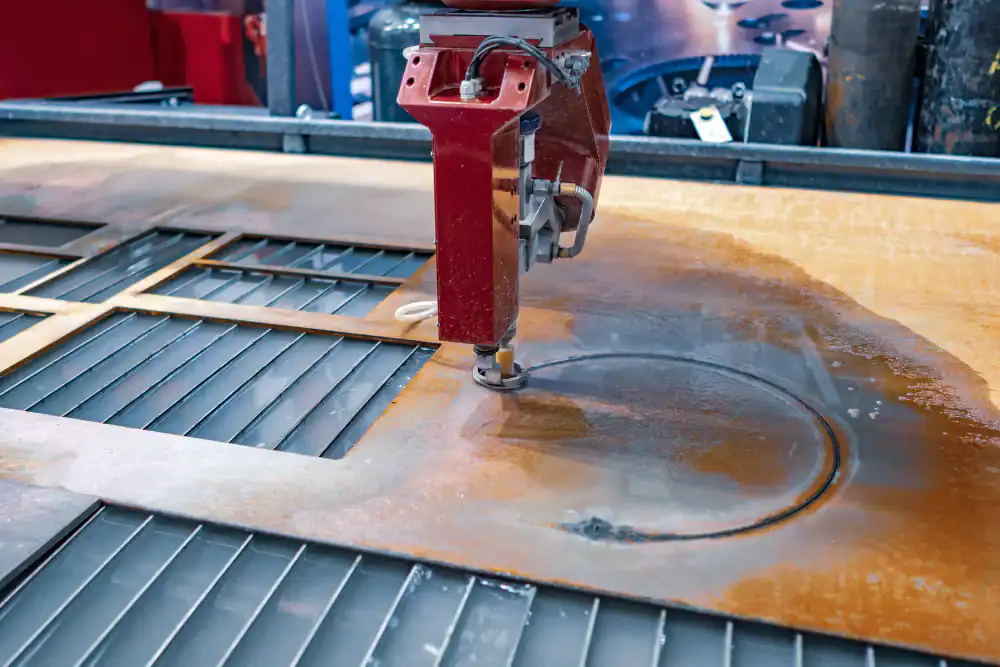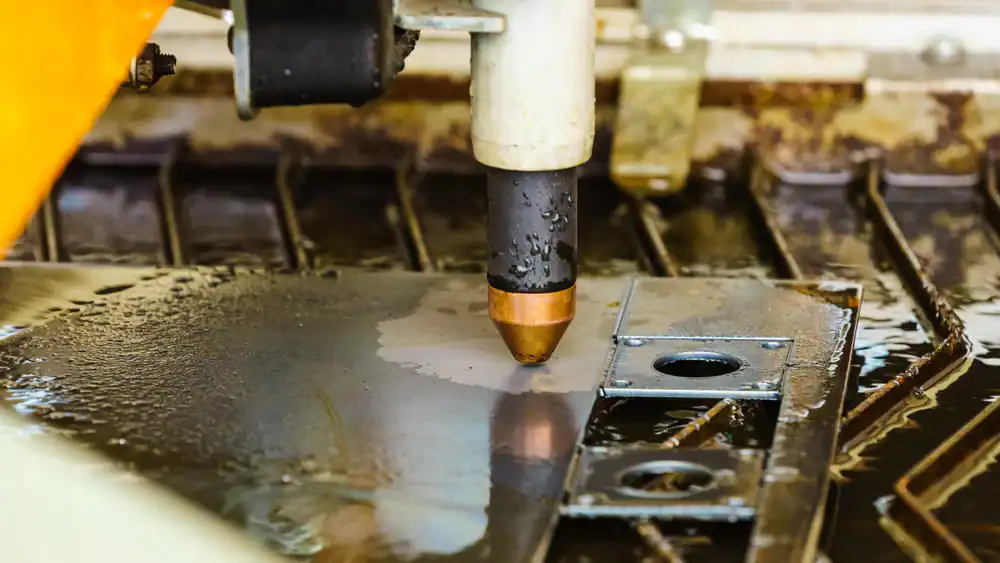
Waterjet takes care of burning on its own. Delamination takes planning. Here's where it happens, how it's controlled, and what to ask before you hand over a sheet.

You’re about to hand over a sheet of carbon fiber that cost real money, and there’s no second one waiting on the shelf. So the question in the title isn’t academic. Will it burn? Will the layers come apart?
Half of that question is easy. The other half takes some planning, and a straight answer should cover both. Here’s what happens when abrasive waterjet meets a carbon fiber laminate, where things can go wrong, and what to ask before your material goes anywhere near a cutting table. We’ll start with the easy half.
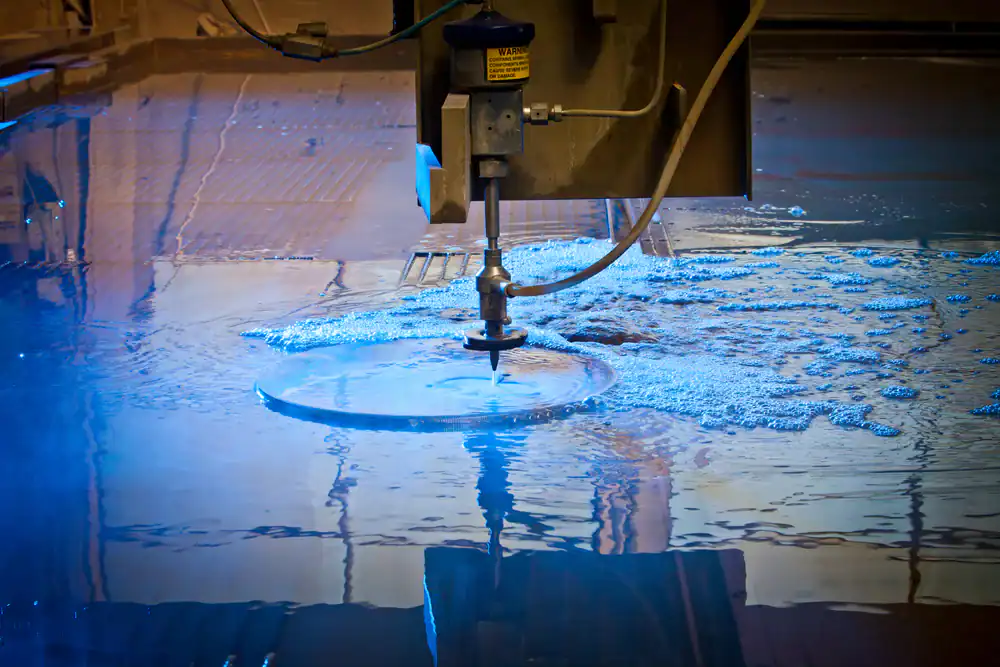
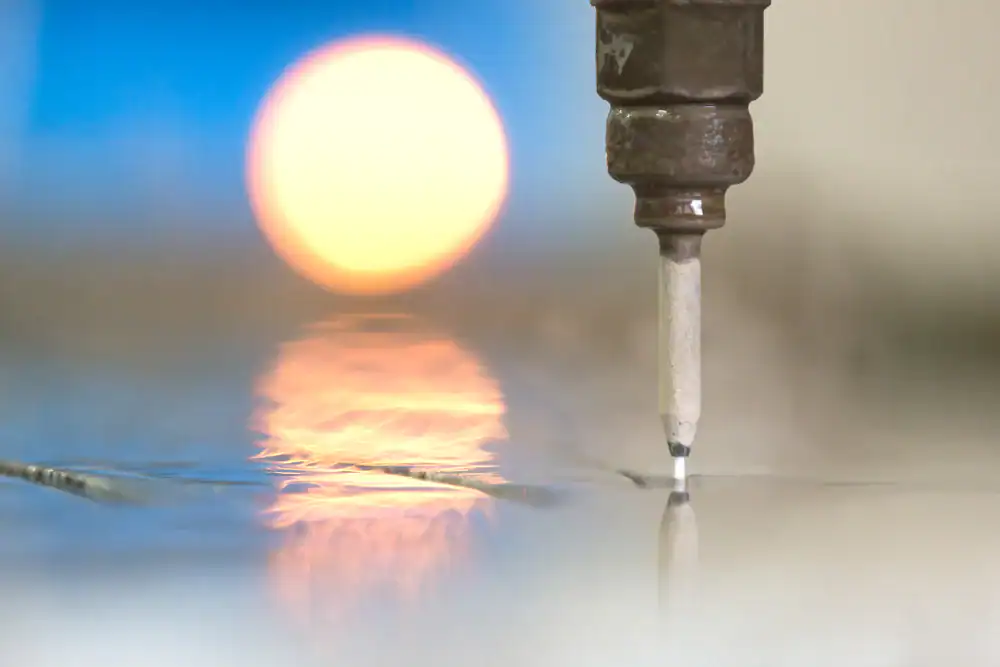
Yes, waterjet avoids burning. And for a simple reason: abrasive waterjet cuts by pushing water mixed with abrasive through the laminate, so nothing in the process gets hot. There’s no heat-affected zone, which means no charred edges, no cooked resin and no warping from thermal stress.
That matters more than it sounds. In a carbon fiber part, the resin holds the fibers in place and carries load, so a burned edge is a structural problem, not a cosmetic one. It’s one reason waterjet shows up in aerospace and defense work, where CFRP can’t tolerate thermal distortion. Long Island has a long history in that kind of work. Empire State Development announced a $5.7 million expansion for CPI Aero in Suffolk County, a company that has been headquartered there for more than 40 years.
So burning is off the table. Delamination is where it gets interesting.
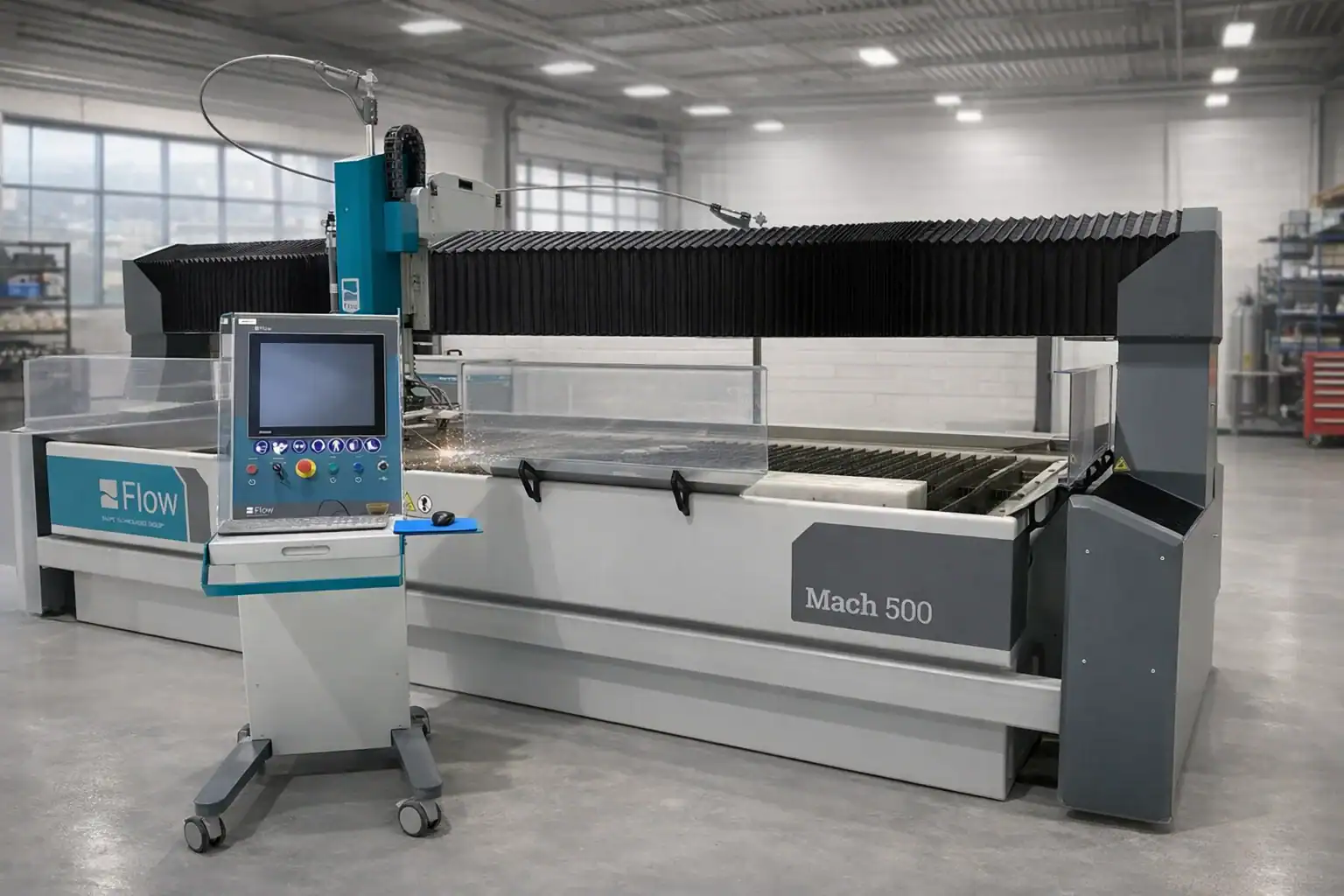
It can happen, and any claim that waterjet never delaminates carbon fiber skips the part that matters. The research backs a more honest position: the risk exists with any cutting method, and a properly controlled waterjet process cuts it down significantly.
The trouble spot is almost always the start of the cut. When the jet first pierces the laminate, the shock wave and the water have to go somewhere, and in a layered material that can mean forcing between the plies. A 2023 paper in the journal *Machines* and the micro waterjet specialists at Finepart both point to the initial pierce as where delamination typically begins. Once the jet is through and moving along a clean path, the laminate is far less likely to give you trouble.
That’s useful, because it turns a vague fear into a specific one. You’re not worried about “waterjet” in general. You’re worried about where the cuts start, and we can plan around that.
A few other things are worth knowing up front. Fibers can pull out along an edge. Abrasive can embed in the surface. The back face, where the jet exits, can fray more than the front. Builders on robotics and RC forums bring this up all the time, and they’re right: the face that looks great isn’t always matched by the face underneath. None of this makes carbon fiber a poor candidate for waterjet. It just means which face matters to you is a question worth answering before the cut, not after.
Mostly by being careful about how each cut begins. The research and the people who’ve done this on a real shop floor land in the same place.
The usual moves are pilot holes, a gentler pierce, and starting the cut off the part so the first impact lands in scrap. The *Machines* paper lists optimized cutting parameters, pre-drilled pilot holes, a suitable nozzle setup and proper piercing methods as the main controls. A 2021 paper in the *International Journal of Advanced Manufacturing Technology* describes a piercing method for abrasive waterjet that can avoid delamination in CFRP. Builders who’ve been through it often leave about an inch around each pierce point as a cushion in case something lets go.
Then there’s everything around the pierce. The sheet has to be supported and held flat so it doesn’t shift mid-cut, and pressure, speed and abrasive get tuned to the thickness instead of chasing the fastest possible pass. Piercing at full pressure in the middle of a finished part, or pushing speed at the cost of edge quality, is how good sheet turns into scrap.
Panels with a honeycomb or foam core need their own plan. One builder on a robotics forum cut only the perimeter and started the stream off the material to protect the core bond. That’s the kind of detail that gets missed if nobody asks. It’s why we like to look at your file before we cut anything: where the pierce points will fall, which holes are small enough to drill instead, and what the layup is. It’s a short conversation, and it costs less than a ruined sheet.
Want live answers?
Connect with a Tri-State Waterjet expert for fast, friendly support.
If you’re shopping for composite cutting on Long Island, the options tend to split two ways. Online services are fast and clear on stocked sheet, with listed thicknesses and lead times. They work well when your part fits the menu. They’re less helpful when your layup is unusual, your panel has a core, or your geometry has you worried.
That’s the gap we fill. Composite cutting covers more than carbon fiber, too. FRP, CFRP and fiberglass all behave differently under the jet, and we can tell you how yours is likely to act. We’d rather you call with questions than guess. A shop worth your sheet should be glad to tell you how it pierces, where the pierce points will go, and which face it’s protecting.
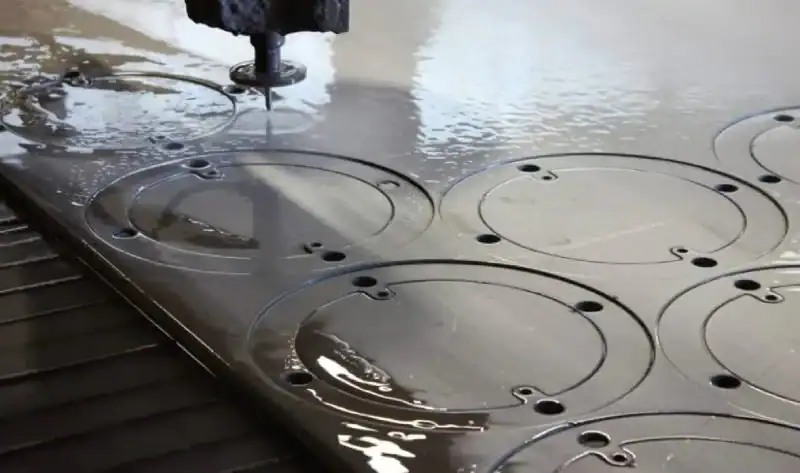
The more you tell us up front, the more useful the answer. A few details do most of the work.
Start with thickness and what the material actually is: solid laminate, or a panel with a honeycomb or foam core. Tell us which face has to look right, since the exit side can be rougher. Give us your hole sizes, because very small holes are sometimes better drilled or milled than cut. We’d rather say so before you pay for a cut that doesn’t suit the part. And let us know the quantity, whether that’s a single prototype or a production run.
Then send the drawing. A DXF or DWG works for flat parts, and STEP files are common for anything more involved. If you’re not sure your file is right, send it anyway. Checking it is part of the job, and it’s how pierce points end up somewhere they won’t hurt you.
Cost on carbon fiber depends on thickness, part complexity, cutting time and volume, so we don’t throw out numbers before we’ve seen the part. What we can tell you is that our kerf runs about 0.040 inch. That narrow cut lets parts nest tightly, which matters when the sheet is expensive.
We’re at 217 Union Blvd in West Islip, NY, serving Nassau and Suffolk counties, open Monday through Friday from 7:30 am to 5 pm. Wherever you are, if you can ship it to us, we can cut it. Calling 631-422-0888 gets you a person who can talk through your layup, which is hard to get from an upload form.
**Will water soak into my carbon fiber?** It depends on the fiber, the resin and especially the core. Some composites absorb water and the edges can swell, which is why cored panels deserve a plan, including drying time. We’ve worked with everything from aerospace-grade laminates to robotics prototypes across Long Island, and we’ll tell you upfront whether it’s a concern for your material.
**Will the front and back edges match?** Not always. The exit side tends to fray a little more, so it helps to know which face is the visible one. We can orient the cut to protect the face that matters.
**Is waterjet better than a laser or a router?** Heat is the problem with lasers, since it can damage the resin. Routers and saws throw carbon dust into the air. Waterjet contains it, which makes for a cleaner shop and no dust working its way into your parts or equipment.
**Do you only run production, or prototypes too?** Both. Long Island has a long aerospace and defense history, and one-off brackets and panels that need to be right before anyone orders more are exactly what prototyping is for. Whether you’re in Hauppauge, Garden City or anywhere in between, you can validate one part and then scale.
**Can you cut the metal parts that go with it?** Yes. The aluminum bracket, the titanium hardware and the foam core can all be cut in the same place, and milling, welding and finishing are handled in-house. So whether you’re in Islip, Smithtown or South Farmingdale, one phone call covers the whole assembly instead of three.
Here’s the short version. Waterjet avoids burning because there’s no heat in the process. Delamination is a real risk, but it concentrates at the pierce, so it can be managed with pilot holes, controlled piercing, good fixturing and tuned parameters. A shop that tells you exactly how it handles that is one worth trusting with your sheet.
If you’ve got a carbon fiber part in mind, call Tri-State Waterjet at 631-422-0888 or send the details we covered above. We’ll tell you plainly what we’d do, what we’d change in the file, and whether waterjet is the right call for your layup. You get the answer before your material is on the table.
Summary:
Article details:
Share: