A lower laser quote doesn't always mean a lower cost. Here's how Long Island shops decide when metal waterjet cutting earns its place on the job.
You sent a bracket drawing to two shops. The laser quote came back at a fraction of the waterjet number, and now you’re wondering why anyone would pay more. It’s a fair question, and plenty of Long Island buyers ask it. Sometimes the cheaper quote is the right call. Other times it turns into warped parts, rough edges on aluminum, or a week of grinding nobody budgeted for. We cut metal for a living, so we’d rather you pick the right process, even when it isn’t ours. Here’s how to tell the difference, starting with where waterjet fits in the local manufacturing picture.
Long Island has roughly 3,000 manufacturers employing about 72,000 people, and it ranks second among New York’s regions for both, according to the Workforce Development Institute’s 2019 manufacturing snapshot. That’s a lot of brackets, housings, panels, and one-off parts that need to come from somewhere close.
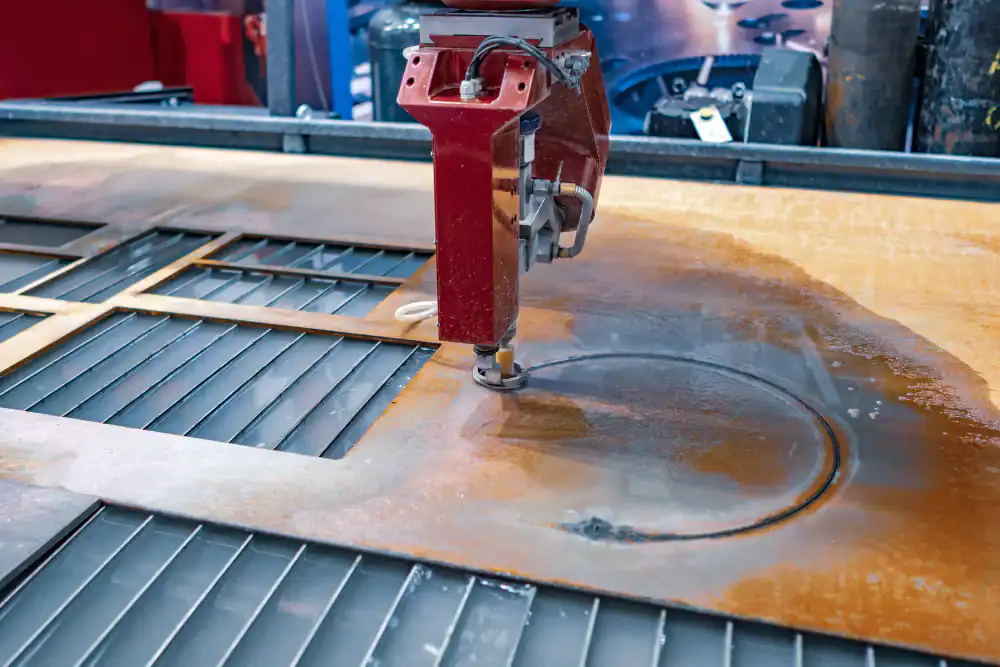
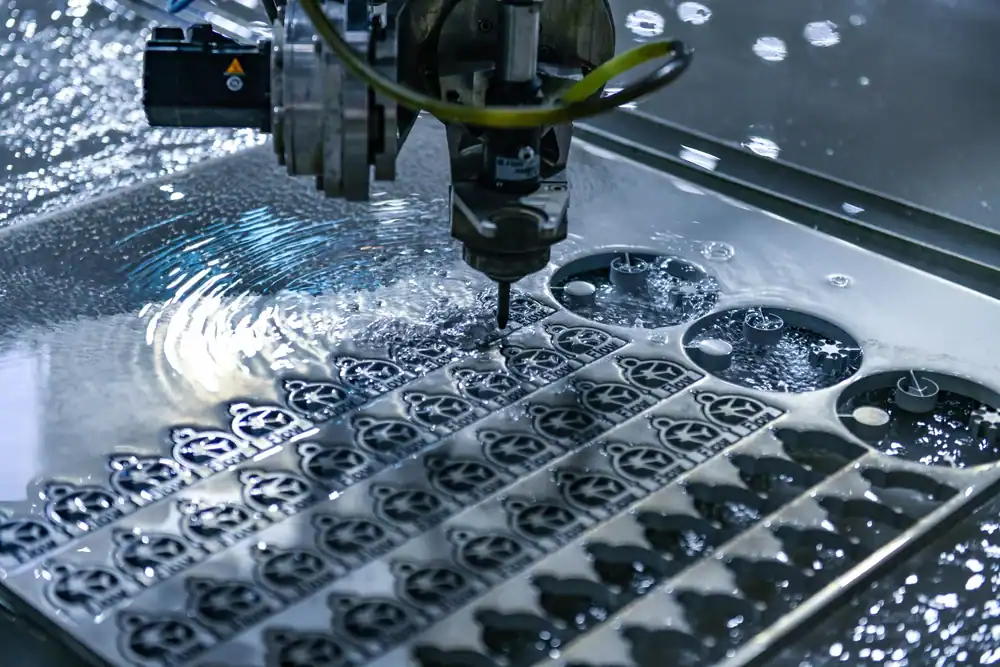
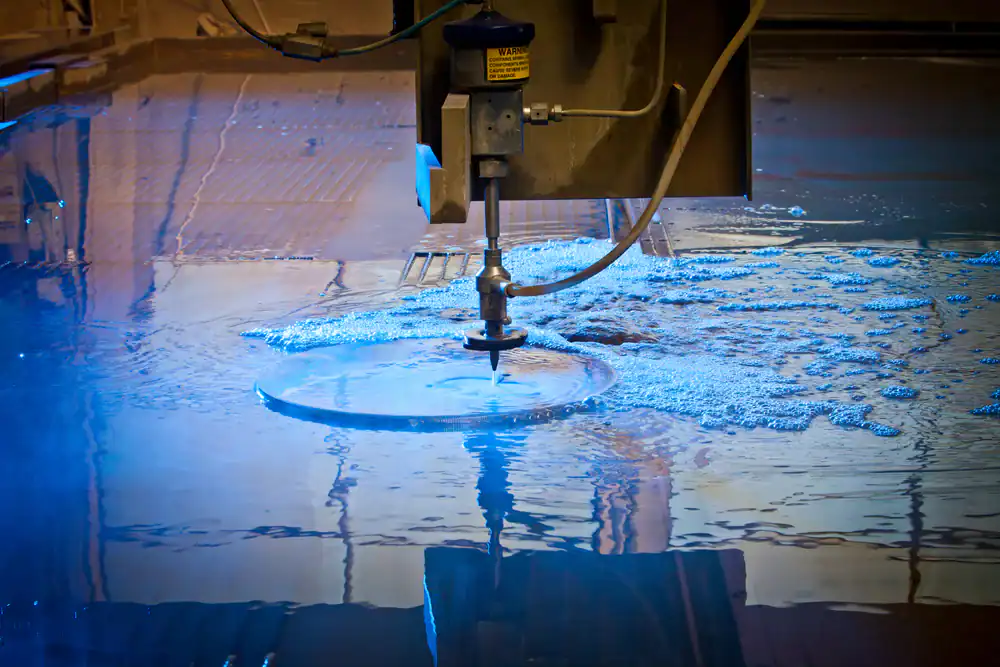
Metal waterjet cutting handles a good share of it. We push water at up to 60,000 PSI, mix in garnet abrasive, and let that stream follow your CAD file through the metal. Nothing gets melted, so the material keeps the properties you specified. Stainless, aluminum, mild steel, tool steel, titanium, brass, copper, Inconel, and Hastelloy all run through the same Flow Mach 500 here in West Islip.
The catch is that waterjet isn’t the cheapest way to cut every part, and we’d rather say so up front.
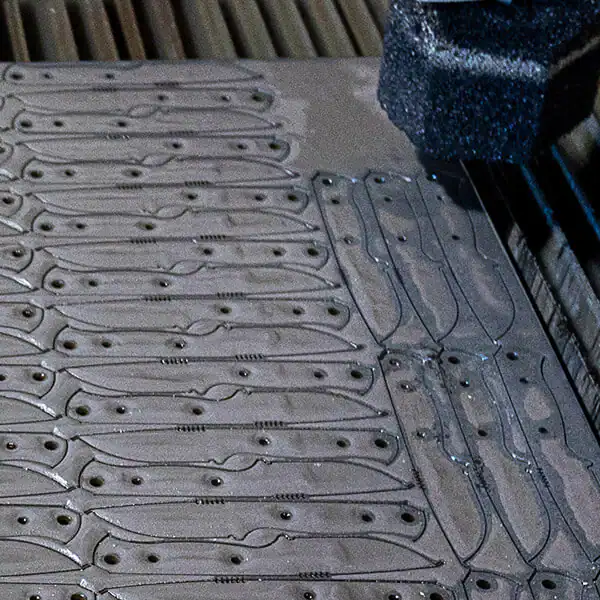
A poster on Practical Machinist described a waterjet quote that landed at three to four times the laser quote for half-inch mild steel brackets. Another machinist replied that waterjet usually does cost more, “but not 3x.” Both are about right. On thin, simple mild-steel parts, laser often wins on price, and we won’t pretend otherwise.
So where does the extra money go? Mostly cut time. Industry cost guides, including one from RapidDirect, put outsourced waterjet work at roughly $150 to $350 per hour. They also note that shops quote either by the hour or by the inch of cut, and that programming and higher edge-quality settings push the number up. Add a shop minimum on a small order and a cheap-looking per-part price can climb fast.
We’re not the cheapest option on Long Island, and that’s intentional. We’d rather spend on equipment that holds tolerance, nesting that stretches expensive material, and turnaround that doesn’t leave you waiting three weeks on a prototype. Your quote comes down to the material, the thickness, the total length of cut, setup and programming, and any minimums. Ask every shop to break those out. If one can’t, the low number probably has a piece hiding somewhere.
The math also changes once you count what happens after the cut. A part that needs a pass at the grinder, or one that has to be re-cut because heat warped it, has stopped being the cheap part.
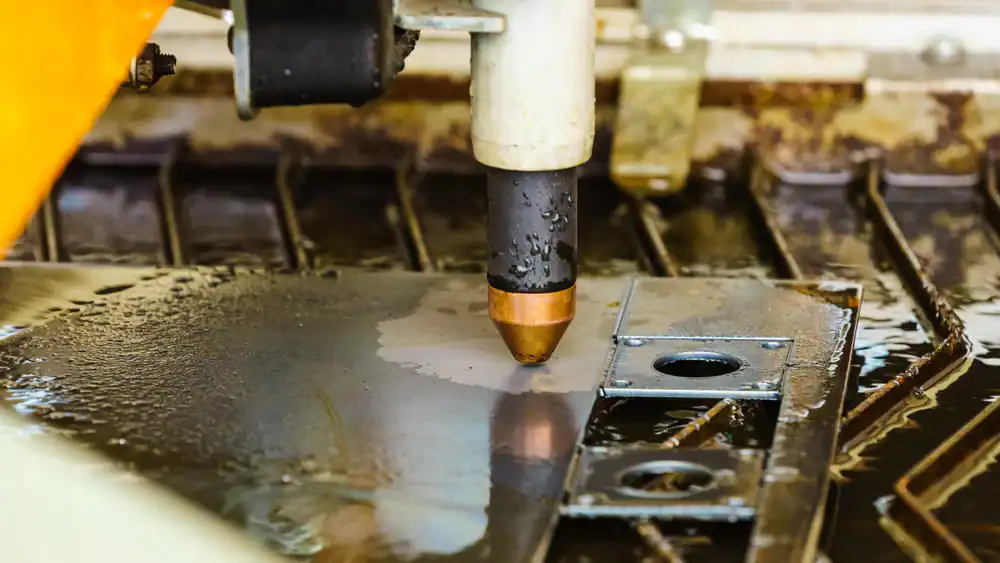
Start with thickness and material. If you’re cutting steel plate up to six inches, laser isn’t really in the conversation. If you’re cutting aluminum, brass, or copper, lasers tend to struggle with the reflectivity and can leave rough edges. Titanium, Inconel, and hardened tool steel are where heat starts to matter, because a hot cut can change the metal you paid good money for.
That’s why precision waterjet cutting comes up so often for suppliers in Hauppauge, Bethpage, and Farmingdale, where Grumman and Republic Aviation built the region’s aerospace history. Shops there tend to expect tight tolerances and quick iteration on alloys that don’t forgive heat. Our typical tolerance is ±0.005 inch. If your print calls for tighter, bring it up at quote and we’ll tell you straight whether it’s realistic.
West Islip sits on the South Shore, where marine fabrication, construction, and manufacturing all overlap. Stainless, brass, and aluminum components are everyday work for that crowd. Out east, East Hampton architects and design-build firms send us decorative screens, panels, and signage. Long Island’s scarce real estate keeps pushing renovation and repurposed commercial space, and that kind of project leans on custom waterjet cutting straight from CAD. Some of those jobs also include glass or stone. Since the same cold process handles glass waterjet cutting and marble waterjet cutting, one shop can cut the metal frame and the insert it holds.
Want live answers?
Connect with a Tri-State Waterjet expert for fast, friendly support.
Here’s what happens when you send us a job. You email a DXF, DWG, or STEP file, and before anyone programs the machine, our in-house design team goes through it. They look for overlapping lines, gaps in the geometry, tolerance problems, and material conflicts. Those are cheap to fix on a screen and expensive to find in a finished plate.
Then you get a quote, and the part goes onto the Flow Mach 500. There are no tooling fees, because the CAD file is the tool. That makes custom waterjet cutting practical for a single prototype, and the same machine cuts your first part and your hundredth the same way.
If you’re local to Long Island, you aren’t waiting on parts shipped from across the state. You’re dealing with a shop in West Islip that serves both Nassau and Suffolk counties.
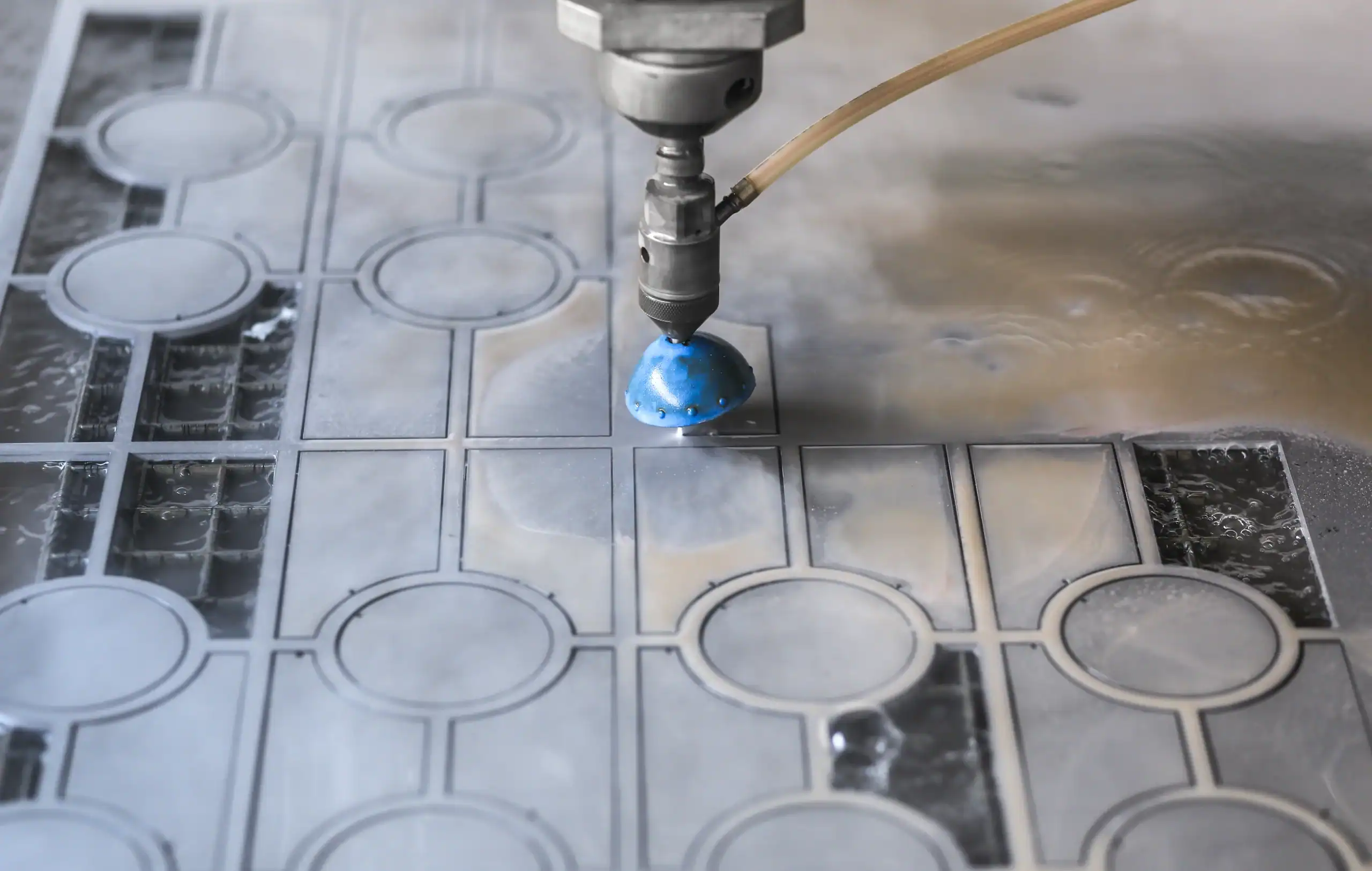
Most waterjet headaches start in the file, not at the machine. A line drawn twice, a shape that doesn’t quite close, or a hole sitting closer to an edge than the material allows will all turn into a problem once the stream starts moving. We’d much rather catch those before cutting than after.
You don’t need a perfect drawing to get started. That’s what the review is for. A clean DXF, DWG, or STEP file with closed geometry and the material and thickness noted will speed up your quote. If the print has a critical tolerance, flag it on the drawing so we can check it against the material before we commit to anything.
Kerf is worth knowing about, too. According to Flow International, which makes our machine, the stream removes a strip typically 0.030 to 0.040 inch wide. That narrow cut lets us nest parts tightly on a sheet and share cut lines where the design allows. It matters when you’re buying titanium or Inconel, because a tighter nest means less scrap leaving the shop with your money on it.
Then there’s the edge. Because the cut is cold, edges often come off ready for welding, forming, assembly, or installation without a trip to the grinder. If your spec calls for a particular surface finish, the spec decides, and that’s a conversation to have before the cut. This is especially handy for designers and architects in East Hampton or anywhere else on Long Island who know exactly what a screen should look like but have never prepared a file for a cutting shop. Send what you have. We’ll tell you what needs to change.
How thick can you cut? Up to six inches in steel plate, and thicker in softer materials, without swapping tooling or setup.
How precise is it? Our typical tolerance is ±0.005 inch. On thick plate or a tighter print, tell us the number you need and we’ll confirm at quote what’s realistic instead of guessing.
Does waterjet leave a heat-affected zone? No. The cut is cold, so any welding, brazing, or heat treating afterward starts from undamaged metal. That matters for the titanium and Inconel work common among aerospace and defense suppliers around Hauppauge, Bethpage, and Farmingdale.
Can you handle a prototype and then a production run? Yes, with no tooling charges at either stage. For a Long Island shop that needs to approve a part and then order a batch, approving the prototype means approving the process that makes the batch.
How fast can I get parts? That depends on the job, the material, and what’s already in the queue. Being in West Islip means you aren’t waiting on shipping from across the state, and a quick call gets you a real answer for a Nassau or Suffolk deadline.
Do you only cut metal? No. We also cut glass, marble, stone, plastics, and composites, which helps when a project mixes materials.
For some jobs, yes: thick plate, reflective metals, heat-sensitive alloys, and parts that need to go straight to welding or assembly. For thin, simple mild-steel brackets, laser may be the better deal, and we’ll tell you if that’s what your job looks like.
Either way, ask what’s behind the number. Material, thickness, cut length, programming, and minimums all move a quote, and a file review before cutting is what keeps surprises off your plate.
If you’ve got a drawing sitting in your inbox, send it to Tri-State Waterjet or call us at 631-422-0888. We’ll look at the file, give you a straight answer on what it will take, and tell you honestly whether waterjet is the right fit.
Summary:
Article details:
Share: