Custom panels, decorative screens, intricate patterns — here's what architects and fabricators on Long Island should know before specifying waterjet cutting.
You’ve done the design work. The concept is strong, the client loves it, and now you need someone to actually build it — accurately, cleanly, and on time. That’s where things tend to get complicated.
Custom architectural metalwork sits at the intersection of design intent and fabrication reality, and the gap between those two things is where projects go sideways. Wrong dimensions, rough edges on visible surfaces, panels that need field modification — these aren’t rare outcomes. They’re what happens when the wrong cutting process meets the wrong shop.
This post is about how waterjet cutting fits into architectural projects, what it can realistically do, and what to look for when you’re sourcing this work on Long Island, NY.
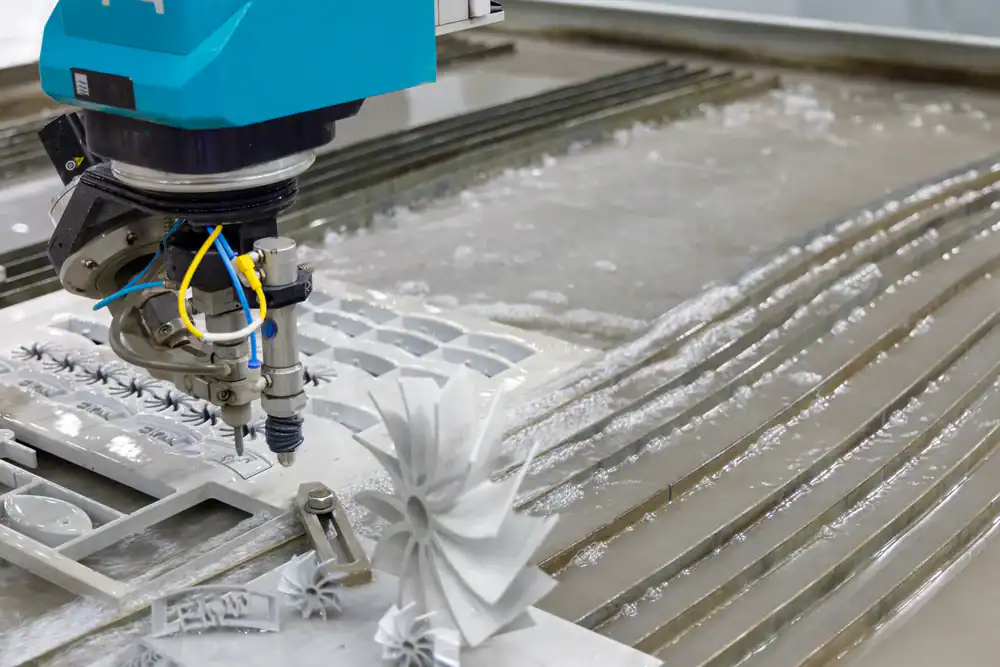
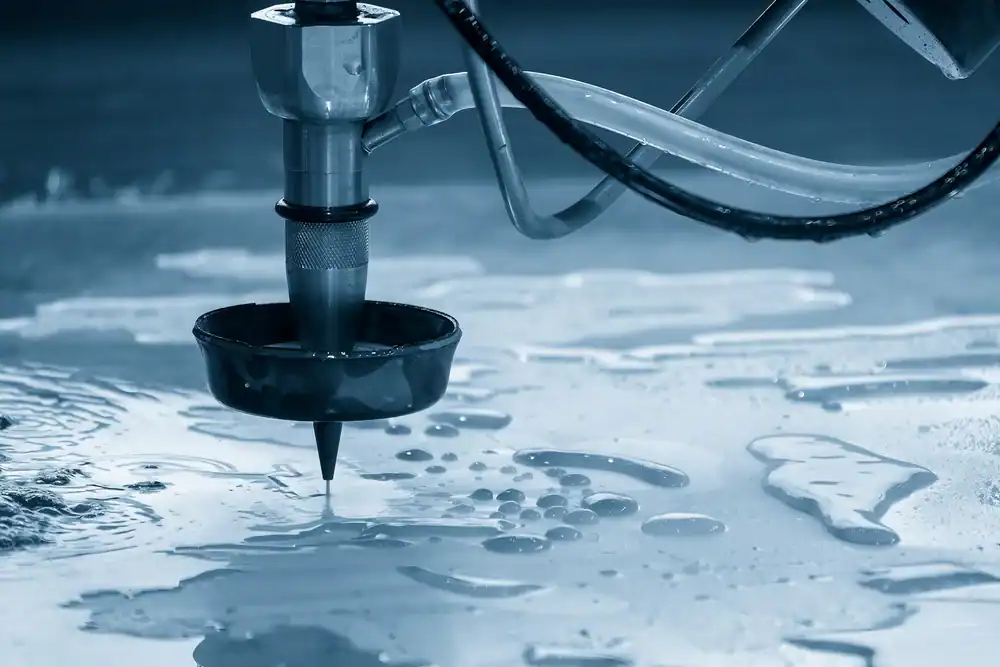
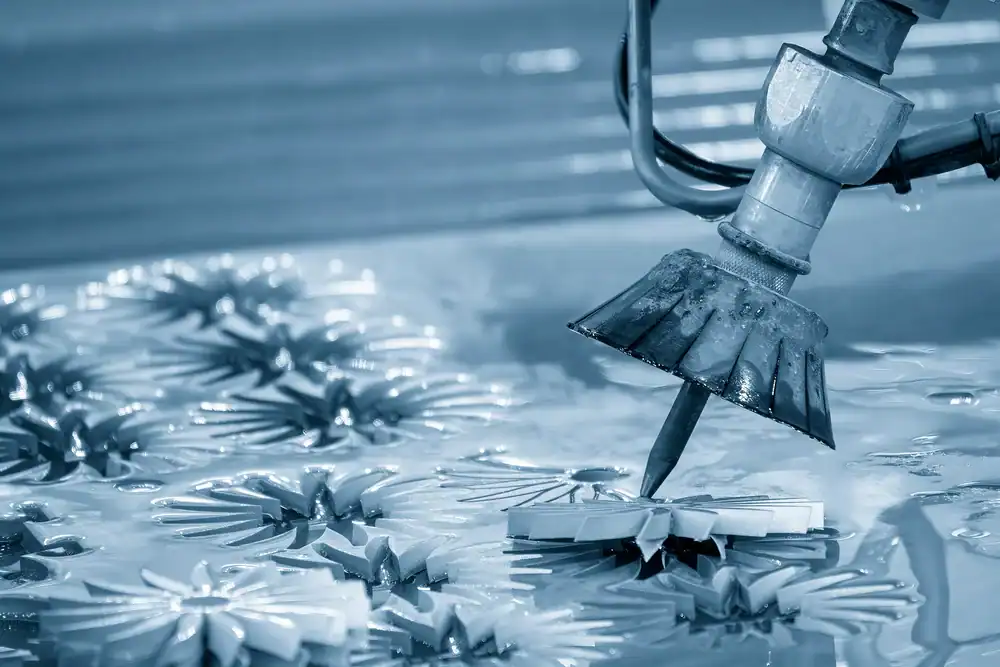
Waterjet cutting uses a high-pressure stream of water — mixed with fine abrasive garnet — to erode through material rather than melt or shear it. The system operates at pressures up to 90,000 PSI, and because there’s no heat involved, the material comes off the table in exactly the state it went on. No thermal stress, no dimensional drift, no warped panels.
For architectural applications, that matters in a very specific way. Large custom panels cut with laser or plasma can shift dimensionally as the metal heats and cools unevenly during the cut. On a small industrial part, that’s manageable. On a four-foot decorative screen or a lobby feature panel, it’s a problem you discover at installation — not in the shop.
Architects and fabricators talk a lot about tolerances in the abstract — but what they’re really worried about is whether the part fits when it arrives on site. That’s the actual test. A tolerance specification on paper means nothing if the panel needs shimming, forcing, or field cutting to fit the reveal it was designed for.
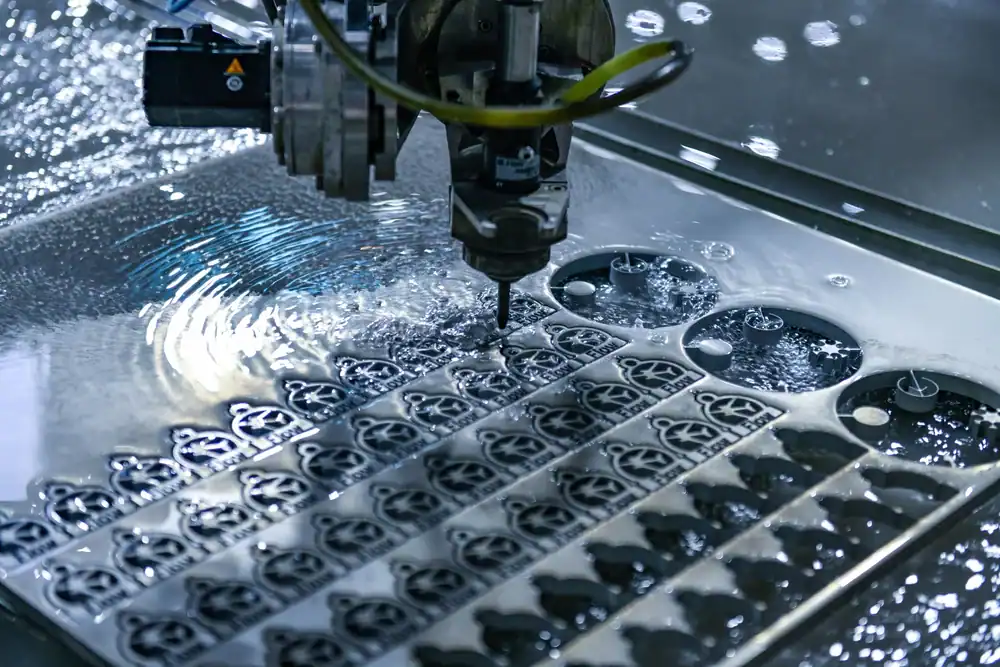
We hold tolerances of ±0.003 inches for most architectural applications. That’s not a marketing claim — it’s a function of the process. Because there’s no heat, there’s no thermal expansion to account for. The cut follows the vector path in the file, and the part comes out matching that path. For panels that need to register with adjacent surfaces, slot into reveals, or align with other components, that level of consistency is what keeps installation straightforward.
The other thing worth understanding is edge quality. For architectural work, the cut edge is often a visible finish surface — on a decorative screen, a custom panel, a lobby sign. Waterjet’s abrasive stream erodes material rather than shearing or melting it, which is what creates burrs and slag in traditional cutting. Most architectural metal parts come off our waterjet table ready to install, not ready for grinding. That’s a real time and cost difference, especially when you’re working with stainless steel or specialty metals that are difficult to finish after the fact.
There’s also the question of complexity. Waterjet follows a vector path, which means it can cut any geometry that can be drawn in a CAD file — tight internal radii, compound curves, fine text, intricate geometric patterns. There’s no tooling to change, no setup premium for complexity. A simple rectangular panel and a detailed parametric screen pattern go through the same workflow. That’s important for architects who have learned to self-censor their design ambitions because they assume fabrication can’t keep up.
One more thing that doesn’t get talked about enough: material waste. The kerf — the amount of material removed per cut — is approximately 0.030 to 0.040 inches. That’s narrow enough to nest parts tightly and minimize waste on expensive architectural metals. When you’re working with stainless steel, brass, or architectural-grade stone, that efficiency has a real effect on cost per part.
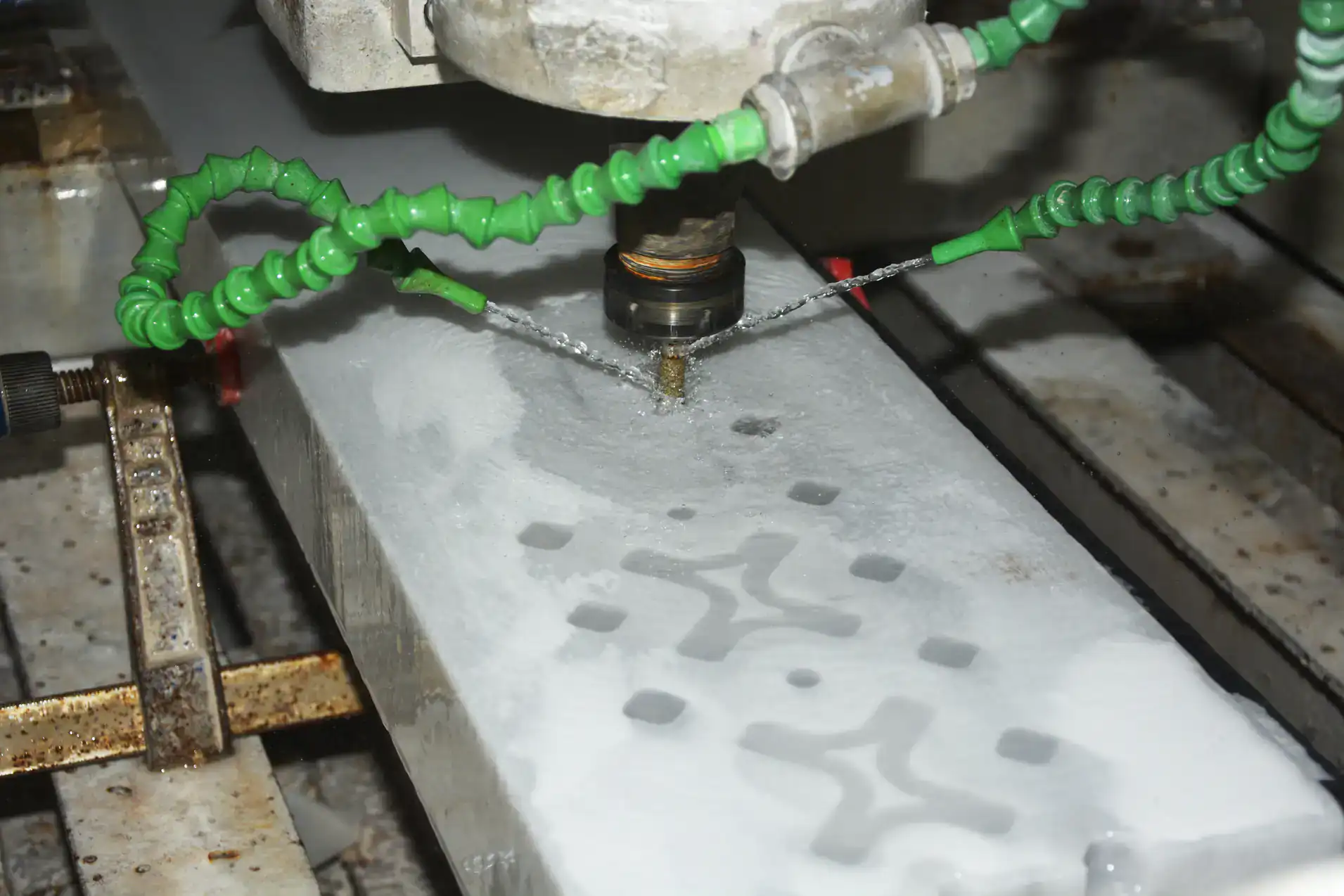
One of the practical advantages of waterjet for architectural work is the material range. The same process that cuts stainless steel also cuts marble, granite, non-tempered glass, acrylic, ceramic tile, carbon fiber, brass, copper, and aluminum — without changing equipment or process. For a mixed-material installation, that means one shop can handle multiple components rather than splitting the work across different fabricators.
For metals specifically, we cut aluminum, stainless steel, carbon steel, titanium, brass, copper, and tool steel. Thickness isn’t a limiting factor for most architectural applications — waterjet can cut steel plate well beyond what most architectural specs call for, and stone up to 12 inches thick. The two materials waterjet can’t cut are tempered glass and diamond. Everything else is fair game.
This matters for architects working on projects that combine materials — a feature wall with metal panels and stone inlays, a reception desk with brass accents and a stone top, a decorative screen with metal and acrylic elements. Rather than coordinating multiple cutting vendors with different file requirements, lead times, and quality standards, the entire cutting scope can come to us.
Reflective metals like copper and brass are worth a specific mention. Laser cutting struggles with these materials because the reflectivity can damage the laser equipment and produce inconsistent cuts. Waterjet handles them cleanly, which is why we’re often the right choice for high-end architectural metalwork where material selection is driven by aesthetics, not by what’s easiest to cut.
File format is another practical consideration. We accept DXF, DWG, and STEP files from AutoCAD, SolidWorks, Rhino, and Fusion 360. For signage and graphic work, AI and EPS files from Adobe Illustrator work directly. Most architects and designers are already working in one of these formats — there’s no conversion step or additional CAD work required to get a file into production.
Want live answers?
Connect with a Tri-State Waterjet expert for fast, friendly support.
Sending a file and getting parts back sounds simple. In practice, the quality of what happens between those two steps determines whether the parts are right or not. The workflow matters, and it’s worth understanding what a professional shop does before the machine starts moving.
Every job gets a file review before cutting begins. That means checking for open lines, overlapping paths, scaling errors, and any tolerance concerns based on the specific material and thickness. It also means reviewing the layout for nesting opportunities — ways to arrange parts on the sheet that reduce material waste and keep cost per part reasonable. Catching a problem on screen costs nothing. Catching it after the cut is a different conversation.
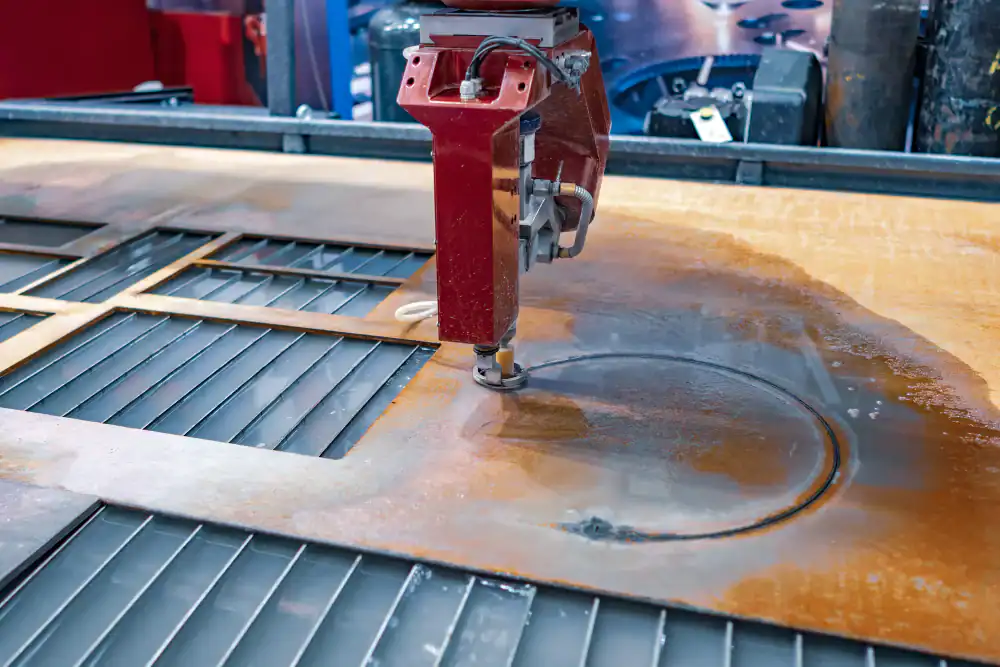
The most common friction point in getting architectural metalwork cut is file preparation — not because the requirements are complicated, but because architects and designers aren’t always sure what we need. Here’s what actually matters.
The file format should be DXF or DWG for most metal cutting work. STEP files work well for three-dimensional geometry. If you’re working in Rhino or Fusion 360, export to DXF or STEP before sending. If the project involves signage, logos, or graphic elements, AI or EPS files from Adobe Illustrator work directly — no conversion needed.
The geometry itself should be clean vector paths with no open lines or duplicate segments. Scaling should be confirmed — files that arrive at the wrong scale are a common source of errors, and a pre-cut review catches this before it becomes a scrap part. If your design includes very tight internal radii, it’s worth flagging those specifically, since the minimum achievable radius depends on material thickness and the geometry of the cut path.
Tolerance requirements should be stated explicitly. For most architectural applications, ±0.003 to ±0.005 inches is the standard range, and waterjet hits that consistently. If your application requires tighter than ±0.003 inches, that’s worth a conversation before the job is quoted — not after. Being upfront about what the installation requires means we can tell you honestly whether waterjet is the right process or whether something else is better suited.
One thing that’s easy to overlook: note which edges are visible finish surfaces. For decorative screens, custom panels, and lobby features, the cut edge quality matters aesthetically. Knowing which surfaces are exposed helps us confirm that the as-cut finish meets the requirement or flag if any secondary finishing is needed for the specific material and application.
This is one of the most common questions we hear from architects and designers, and the answer is straightforward: waterjet cutting works equally well for a single custom piece and for a production run of identical parts. There’s no tooling to amortize, no die or mold that makes small quantities expensive. The setup process is the same whether you’re cutting one panel or fifty.
For architectural projects, this is practically significant. A design might call for a prototype panel to confirm dimensions, edge quality, and material selection before committing to the full scope. That prototype goes through the same review and cutting process as a production run — same tolerances, same edge quality, same file review. If the prototype reveals a design adjustment, the file is updated and the production run reflects the change. There’s no tooling cost to absorb when the design evolves.
This also applies to replacement parts. If a panel is damaged during installation or a component needs to be replicated for a renovation project years later, the original file can be pulled and the part recut to the same specification. For architects working on commercial interiors where components may need replacement over the life of the building, that repeatability is worth factoring into the specification decision.
Long Island’s active commercial construction market makes this relevant in a practical way. With 1.4 million square feet of commercial space under construction in 2025 and a strong pipeline of high-end residential work on the North Shore — in markets like Manhasset, Oyster Bay, and Cold Spring Harbor — architects and fabricators here are regularly specifying custom architectural metalwork under real project timelines. The ability to prototype quickly, confirm fit, and move into production without retooling is a meaningful workflow advantage.
There’s also the logistics reality of being on an island. Shipping large custom metal panels from an out-of-state fabricator adds transit time, freight damage risk, and the possibility of discovering a dimensional problem at the job site with no one nearby to fix it quickly. Working with us — based in Ronkonkoma, geographically central to Long Island’s construction activity — means faster turnaround, easier communication, and a local resource if something needs to be addressed before installation.
The right shop for architectural waterjet cutting isn’t necessarily the closest one or the cheapest one — it’s the one that reviews your file before cutting, holds the tolerances your installation actually requires, and understands that the cut edge on a decorative screen is a finish surface, not an industrial byproduct.
For architects and fabricators working on Long Island, NY projects, the combination of local presence and professional process matters more than it might in other markets. Tight timelines, high-end material specifications, and the logistical realities of the island make a reliable local shop genuinely valuable — not just convenient.
If you have a project coming up that involves custom panels, decorative metalwork, stone inlays, or any precision architectural components, we’re worth a conversation. Call Tri-State Waterjet at 631-422-0888 and let’s look at what you’re working with.
Summary:
Article details:
Share: