The Science Behind Abrasive Waterjet Cutting: How Garnet Makes It Possible
Abrasive waterjet cutting relies on garnet to turn a high-pressure stream of water into a powerful, precise tool capable of cutting hard materials without heat damage.
Waterjet cutting may look simple on the surface, but its precision depends on far more than water alone. For hard materials like steel, stone, glass, and composites, the real cutting power comes from abrasive technology — especially the use of garnet. By combining high-pressure water with a carefully controlled abrasive stream, waterjet systems can create clean, accurate cuts while preserving the material’s strength, finish, and structural integrity. Understanding how this process works helps explain why abrasive waterjet cutting is trusted for some of the most demanding fabrication applications.
What Is Abrasive Waterjet Cutting?
Water alone can cut soft materials like foam, rubber, or gasket stock — but it can’t handle harder materials. That’s where abrasive particles come in.
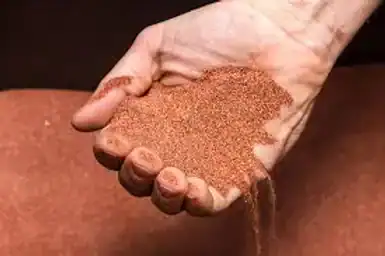
By injecting garnet — a naturally hard mineral — into the high-pressure water stream, we create a micro-sandblasting effect that erodes material at up to Mach 3 velocity.
Water stream: 60,000 – 90,000 PSI
Garnet flow rate: 0.5 – 1 lb/min
Particle speed: over 2,000 ft/sec
Together, water and abrasive form a focused jet capable of cutting through up to 12 inches of solid steel without heat, stress, or deformation.
Why Garnet? The Perfect Cutting Mineral
Not all abrasives are created equal. Garnet stands out because of its:
Hardness: 7.5–8 on the Mohs scale — harder than steel but softer than diamond.
Shape: Angular, which enhances cutting efficiency.
Density: Heavy enough to maintain momentum in the jet stream.
Purity: Low dust and consistent particle size prevent clogging or edge striations.
Tri-State Waterjet uses high-grade Australian almandine garnet, the gold standard for industrial waterjet cutting, ensuring clean, consistent edges every time.
How Abrasive Cutting Works — Step by Step
Pressurization: Water is compressed to ~60,000 PSI inside the intensifier pump.
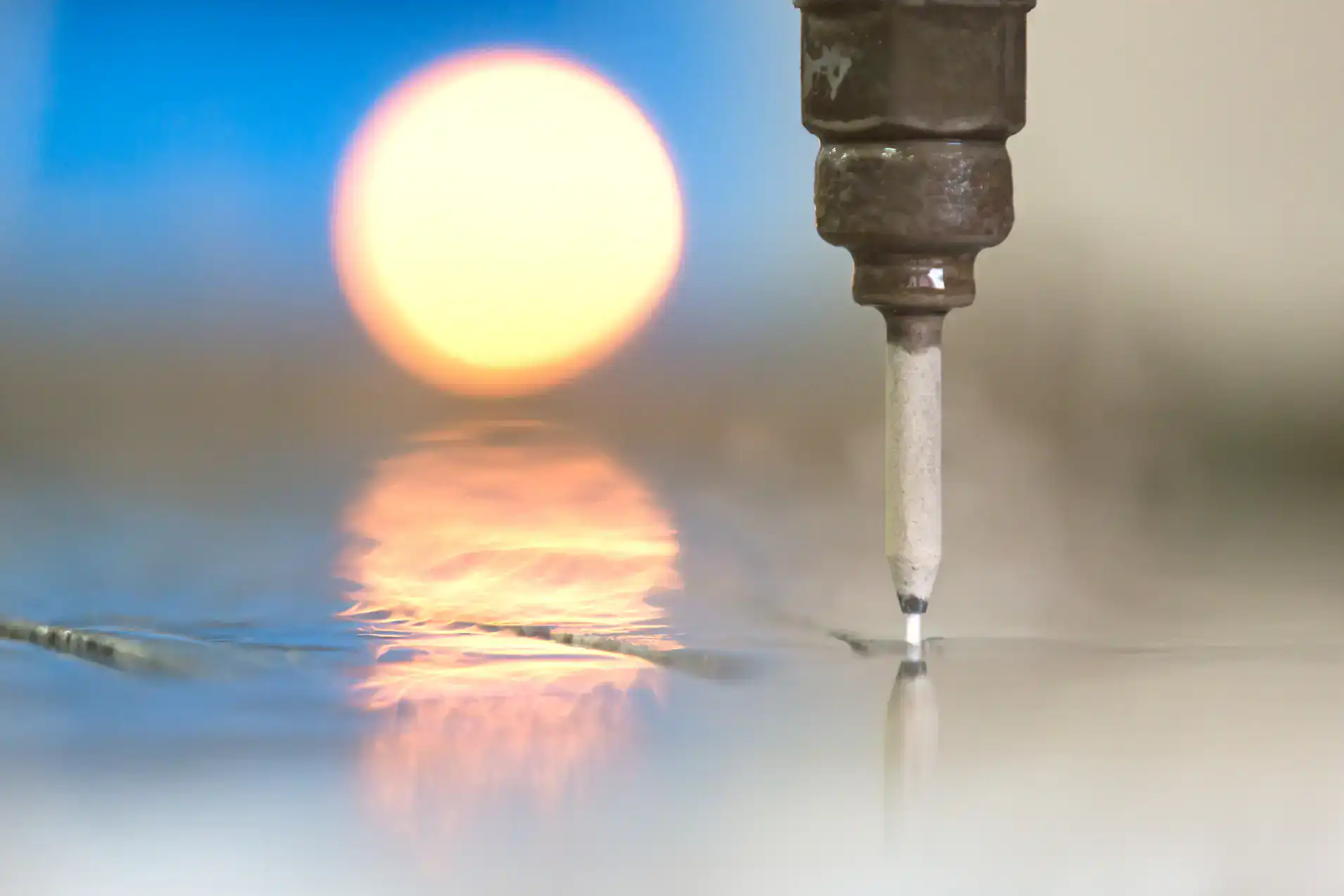
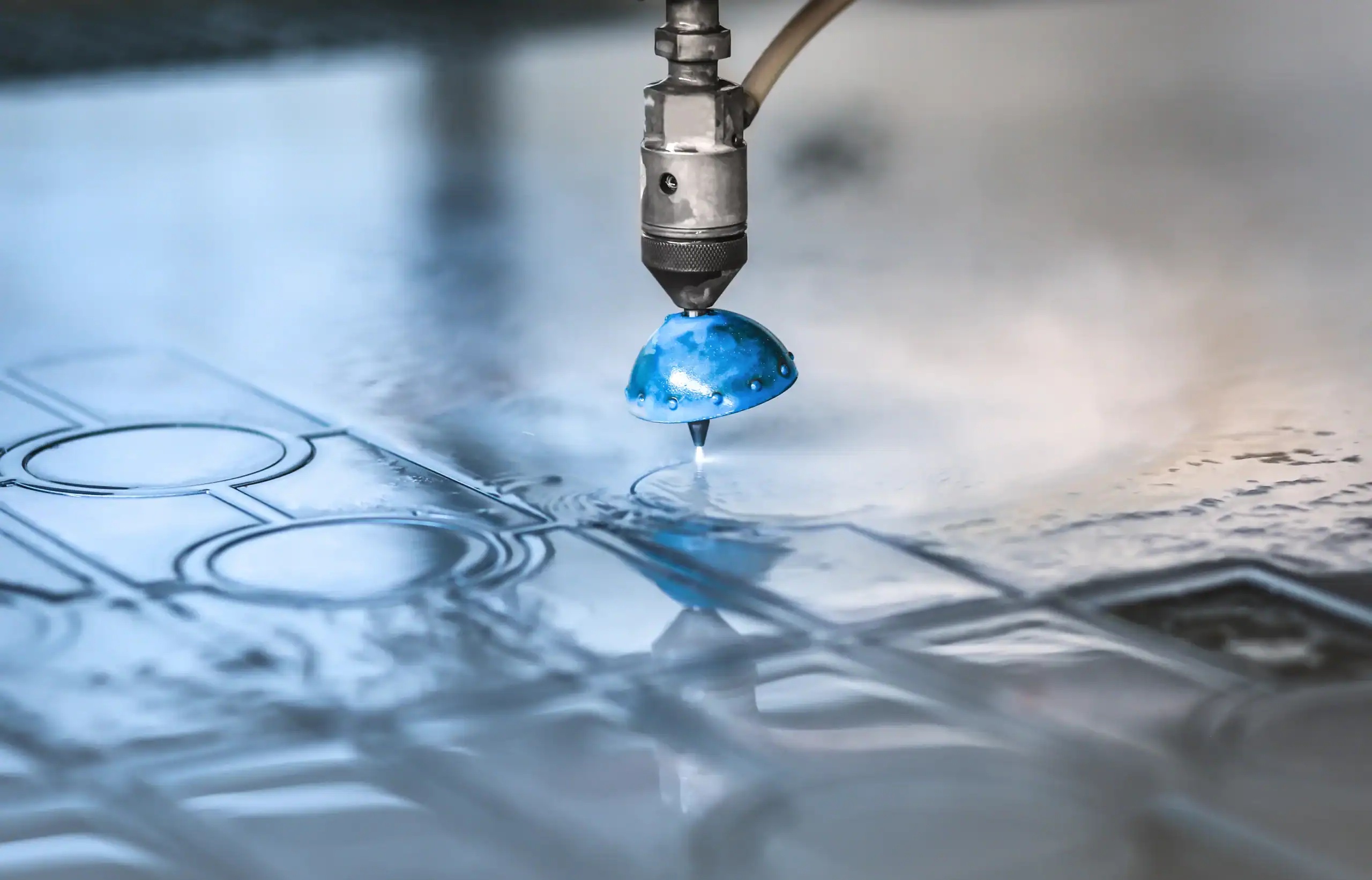
Acceleration: The water exits through a sapphire orifice, forming a high-speed jet.
Abrasive Injection: Garnet is metered into the stream inside a mixing chamber.
Material Erosion: The mixture strikes the surface, removing microscopic layers until it fully penetrates.
This process creates no heat-affected zone, so the material’s properties — strength, hardness, color, and finish — remain intact.
Want live answers?
Connect with a Tri-State Waterjet expert for fast, friendly support.
No hazardous fumes or dust compared to plasma or laser.
Abrasive recycling systems reclaim up to 60% of used garnet.
Minimal waste material — only a thin kerf of ~0.040″.
Lower tool wear and zero heat damage reduce rework and scrap.
Waterjet cutting is not only the most precise, but also one of the most sustainable manufacturing technologies available today.
Why Tri-State Waterjet Leads in Abrasive Precision
Our team understands the chemistry, physics, and geometry behind every cut. By optimizing abrasive flow, pressure, and motion control, we deliver unmatched consistency and edge quality — whether cutting ACM panels, ballistic glass, or architectural metals.
When precision matters most, we don’t just cut materials — we engineer perfection.
FAQ:
Q1: What type of abrasive is used in waterjet cutting?
Industrial-grade almandine garnet — chosen for its hardness, purity, and angular grain structure.
Q2: Can other abrasives be used?
Yes, but alternatives like olivine or aluminum oxide typically cause more wear and inconsistent cuts.
Q3: What’s the difference between pure waterjet and abrasive waterjet?
Pure waterjets cut soft materials; abrasive jets add garnet to cut metals, glass, and composites.
Q4: How fine can the edge quality get?
With fine mesh garnet and dynamic taper control, edges can reach Q5 quality — near-machined smoothness.
Q5: Is the abrasive recyclable?
Yes. Spent garnet can be filtered and reused several times, reducing environmental impact and cost.
Summary:
This blog explains the science behind abrasive waterjet cutting and the critical role garnet plays in making the process so effective. It covers how abrasive particles are introduced into a high-pressure water stream to cut through dense materials with speed and precision, while avoiding heat, stress, and deformation. The article also explores why garnet is the preferred abrasive due to its hardness, shape, density, and purity, along with how factors like mesh size, feed rate, water pressure, and standoff distance affect edge quality and tolerance. Overall, it shows how Tri-State Waterjet uses abrasive science to deliver precise, efficient, and sustainable cutting across a wide range of materials.