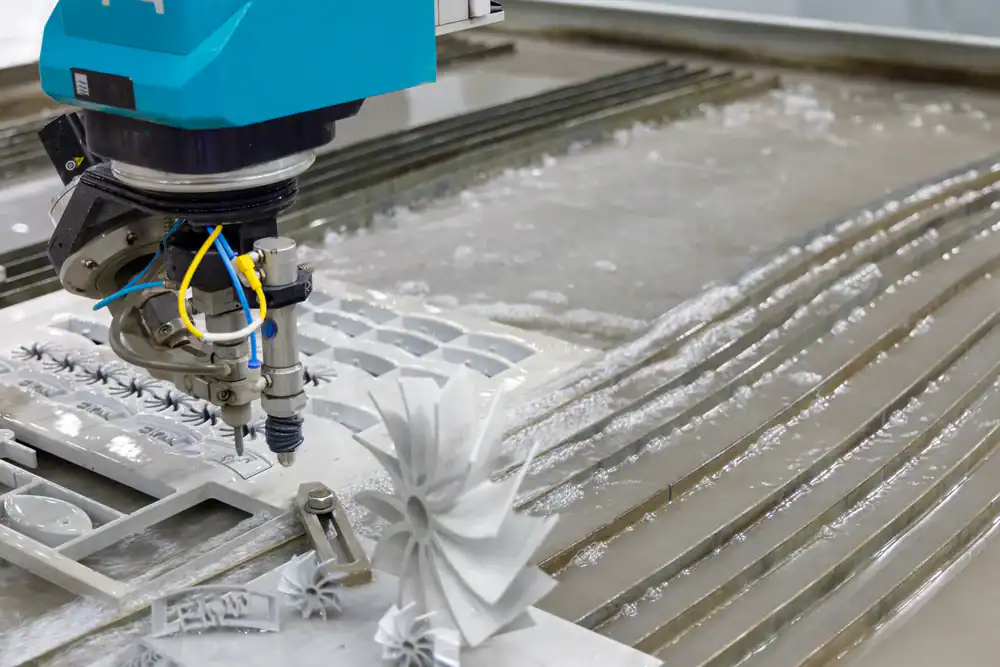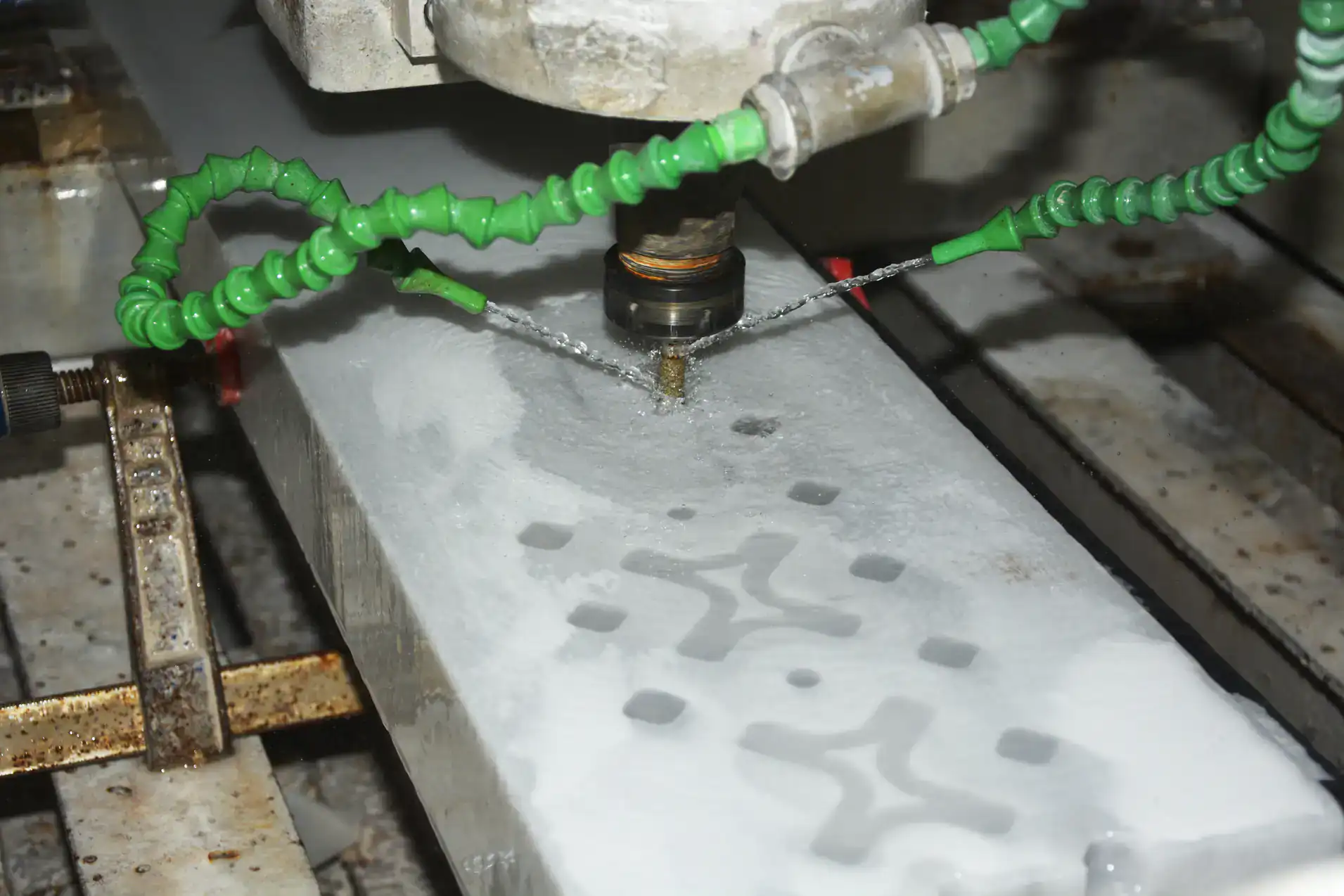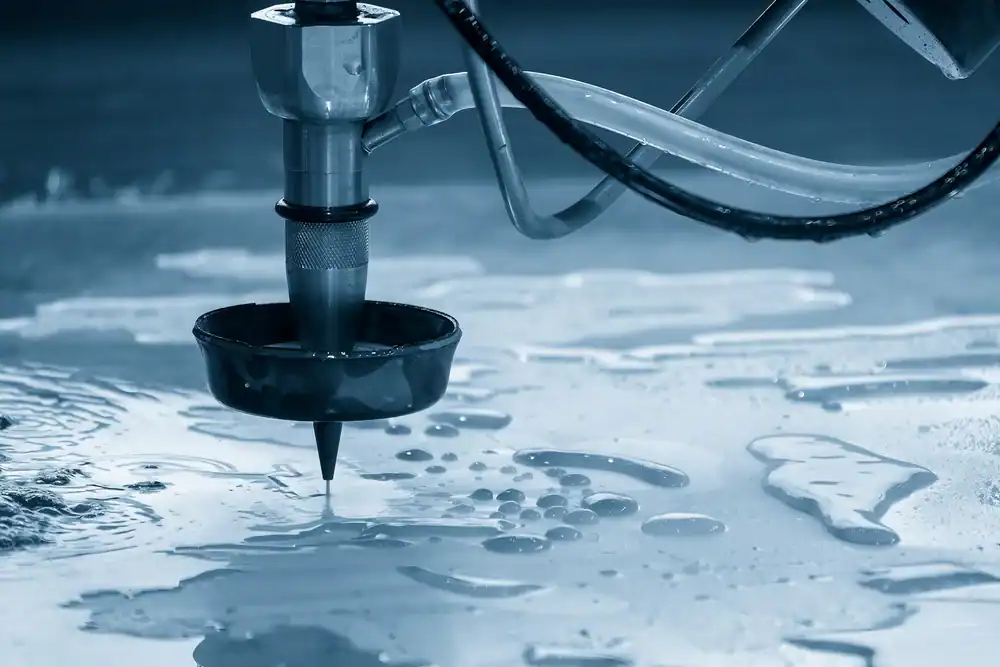
Glass waterjet cutting delivers precision results — but only when the material is properly prepped. Here's what you need to know before your first cut.
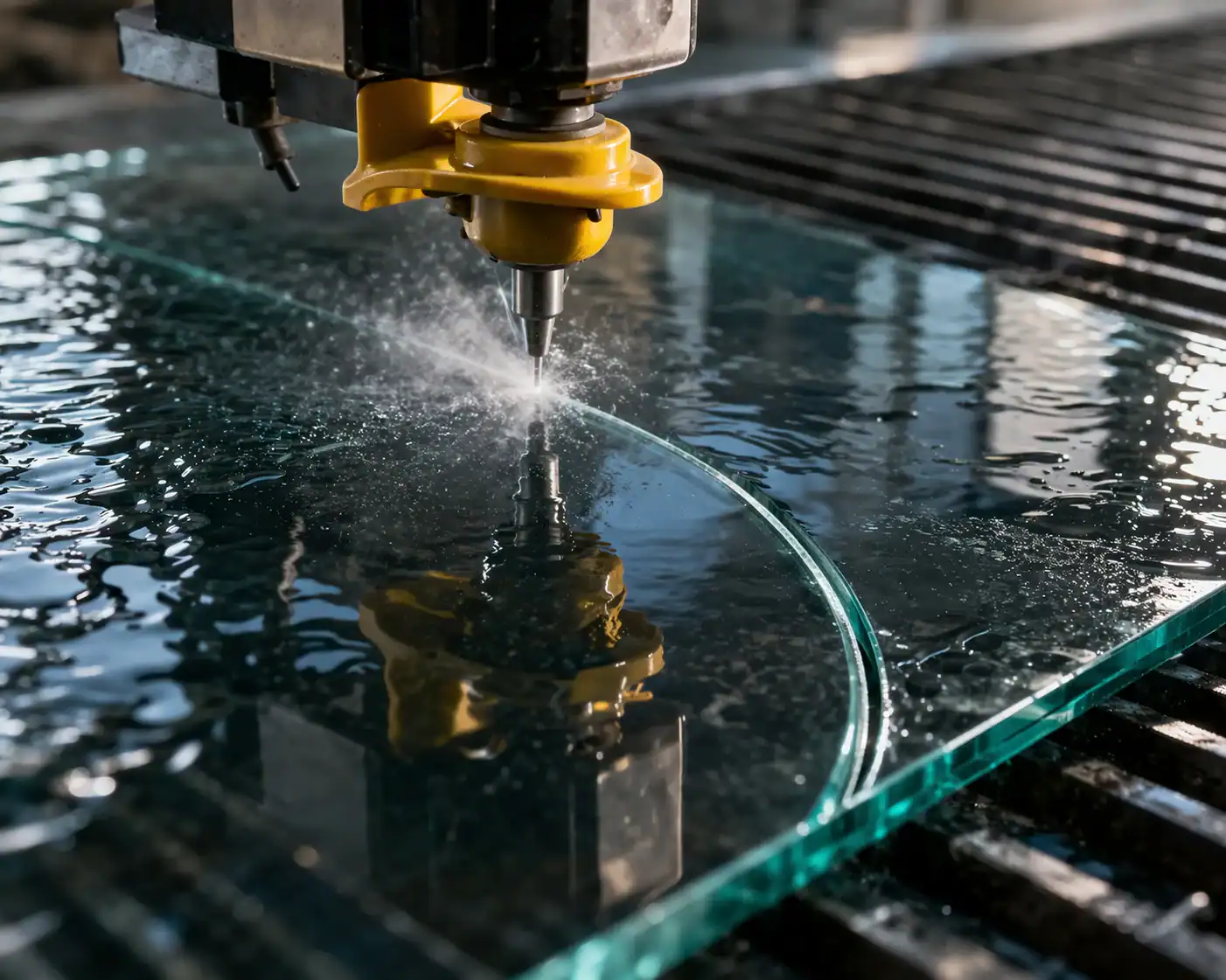
Glass is unforgiving. One wrong move — too much pressure, the wrong abrasive, a pierce point in the wrong spot — and an expensive panel is gone. That’s not a hypothetical. It’s what happens when glass gets handed off to a shop that treats it like any other material on the table.
If you’re planning a custom glass cut for an architectural installation, a decorative inlay, a shower enclosure, or an industrial application here on Long Island, this guide is for you. We’re going to walk through how waterjet glass cutting actually works, what you need to do before your material ever hits our table, and what questions are worth asking your cutting shop before you commit.
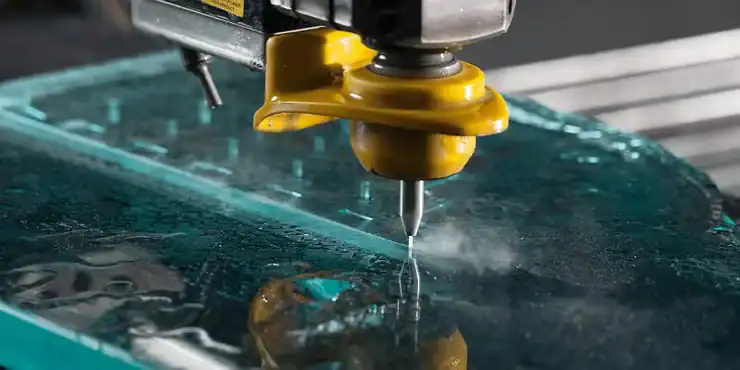
Waterjet cutting uses a high-pressure stream of water mixed with fine abrasive particles — typically garnet — to cut through material without generating heat. That last part matters more for glass than almost any other material. Heat is what causes glass to crack, fracture, and develop stress lines that don’t show up until days later. Waterjet eliminates that risk entirely because it’s a cold process from start to finish.
For glass specifically, we run our machines at a lower pressure than we would for steel or aluminum — typically in the 15,000 to 20,000 PSI range rather than the 60,000-plus PSI used for thick metals. The abrasive is also dialed in tighter, using a finer mesh garnet at a lower flow rate to produce a clean edge without micro-chipping the surface. These aren’t minor adjustments. They’re the difference between a usable panel and a cracked one.

Most glass can be waterjet cut without issue — but not all of it, and that distinction is worth understanding before you order material or send a file.
Annealed glass, also called float glass, is the most common type and cuts cleanly with waterjet. Laminated glass — the kind used in safety applications and some architectural installations — can also be cut, though the interlayer between panes requires a slightly different approach to avoid delamination at the edges. Mirror glass cuts well. Borosilicate glass, used in laboratory and specialty applications, handles waterjet cutting reliably. Decorative and art glass, including stained glass, is one of the most common applications we see on Long Island — the narrow kerf and CNC precision make it ideal for intricate patterns that would be impossible to score and break by hand.
Tempered glass is the exception, and it’s an important one. Tempered glass is pre-stressed during manufacturing — that’s what gives it its strength and safety properties. The moment a waterjet pierces it, that stored stress releases all at once, and the panel shatters. There’s no workaround. If your project requires tempered glass, it needs to be tempered after cutting, not before. This is one of the most common and costly mistakes we see from buyers who are new to the process, and it’s worth confirming with us before any material is ordered.
Beyond glass type, thickness is a practical consideration. We regularly cut glass panels up to eight inches thick, and the process scales well across a wide range — from thin decorative sheets used in residential installations across the North Shore to heavier structural panels used in commercial lobby builds. The technique adjusts, but the capability doesn’t change.
One more thing worth knowing: if your project involves identical pieces — say, matching panels for a lobby installation or a run of custom decorative elements — we can cut multiple sheets stacked together simultaneously. The results are consistent across every piece in the stack, which matters when you’re fitting glass into millwork or tile patterns where even small variations show.
This is where most projects run into trouble — not at the machine, but in the file. A drawing that works perfectly for a metal part can cause serious problems when it’s applied to glass, and most buyers don’t find out until after a panel cracks.
The file formats we work with are DXF, DWG, and STEP. If you’re working with an architect or designer, any of those should be straightforward to export. If you’re working from a sketch or a concept, we can help translate that into a cuttable file — but the more precise your input, the faster and cleaner the result.
What matters most in the file itself is how the geometry is set up. Inside corners are one of the biggest risk points for glass. A sharp inside corner — a true 90-degree notch, for example — concentrates stress at that point during cutting and can initiate a crack. Rounding those corners slightly, even just a small radius, distributes that stress and dramatically reduces the risk. It’s a small change in the drawing that makes a meaningful difference in the outcome.
Bridge widths — the thin sections of glass connecting two parts of a design — are another area that needs attention. If a bridge is too narrow relative to the thickness of the glass, it won’t survive the cutting process intact. The right minimum width depends on your glass type and thickness, and it’s something we review in every file before we cut.
Pierce points are the third factor. When a waterjet starts a cut in the middle of a piece of glass rather than entering from the edge, it has to pierce through the surface first. That initial pierce creates more stress than edge-entry cutting does. For glass, we use edge-entry cuts wherever the geometry allows, and when interior piercing is unavoidable, we use specific techniques to minimize the stress at that point. This isn’t something most buyers need to manage on their end — but it’s worth knowing why your file review matters and what we’re actually looking for when we go through it.
Every file we receive gets reviewed before a single cut is made. If something in the geometry is likely to cause a problem, we flag it and talk it through with you. That step alone has saved a lot of expensive glass panels.
Want live answers?
Connect with a Tri-State Waterjet expert for fast, friendly support.
Edge quality is the first thing most buyers look at when a panel comes back, and it’s a fair measure of whether a shop knows what it’s doing with glass. A properly cut waterjet edge on glass should be clean, consistent, and free of the micro-chipping and frosting that come from incorrect abrasive selection or cutting speed.
For most applications — industrial panels, glass inlays, architectural cutouts, custom shapes for framing — the edge that comes off our table is ready to use. No grinding, no secondary finishing, no repair work. If you need a polished edge for an aesthetic application where the edge itself is visible and needs to look finished, that’s a separate step, but you’re starting from a clean cut rather than trying to fix damage from a rough one.
It’s a fair question, and it comes up constantly — especially from architects and interior designers working on high-end residential projects across the North Shore and East End. When you’re specifying a custom glass panel for a lobby installation in a commercial build near the Nassau Hub, or a decorative inlay for a renovation in Cold Spring Harbor or Oyster Bay, the edge isn’t just structural. It’s visible. It has to look right.
The edge quality you get from waterjet cutting depends on a few variables working together: the abrasive mesh size, the cutting speed, the water pressure, and whether the machine has taper compensation. Taper is a natural byproduct of the waterjet stream — the cut is slightly wider at the top than at the bottom, which produces an angled edge rather than a square one. Our Flow Dynamic Waterjet systems include taper compensation technology that corrects for this automatically, producing edges that are plumb and consistent across the full thickness of the glass.
What you want to avoid is frosting — a hazy, abraded surface finish that appears when stray abrasive particles contact the face of the glass during cutting. This happens when the glass isn’t properly supported, when the abrasive flow rate is too high, or when the cutting parameters aren’t calibrated for glass specifically. Our cutting table uses vibration dampening designed for brittle materials, which keeps the glass stable during the cut and prevents the kind of movement that causes frosting and surface damage.
The practical takeaway is this: if you’re getting glass panels back from a shop with frosted faces, chipped edges, or visible taper, those aren’t acceptable results — they’re signs that the shop isn’t running glass-specific protocols. Clean edges are the baseline, not a premium outcome.
Turnaround is one of the first practical questions that comes up, and it’s a reasonable one — especially if you’re working against an installation schedule or a contractor’s timeline. Construction on Long Island moves fast, and a cutting service that takes two weeks to turn around a glass panel isn’t useful to anyone trying to hit a punch list.
For most standard glass cutting jobs, we work on a one-to-three business day turnaround. If the geometry is straightforward and material is in stock, same-day or next-day is often possible. More complex projects — intricate decorative patterns, tight tolerance requirements, larger production runs — typically land in the three-to-five day range. Rush requests are something we handle regularly.
What makes that speed possible is the direct CAD-to-cut workflow. There’s no tooling to build, no dies to set up, no lengthy machine changeover between jobs. You send a file, we review it, we cut it. The setup time is minimal compared to traditional fabrication methods, which is part of why waterjet is well-suited for both one-off custom pieces and repeat production runs.
For contractors and fabricators working out of the Hauppauge Industrial Park or running jobs across Suffolk County, the local advantage matters beyond just turnaround time. Your glass isn’t being shipped across the country in a box and hoped to arrive intact. It’s being cut locally and handed back to you locally — which eliminates the real and expensive risk of receiving a cracked panel that was damaged in transit. We’ve been operating on Long Island since 1981, and the pace and standards of this market aren’t something we had to learn from a distance.
If you’re not sure whether your timeline is workable, the fastest way to find out is to send the file and ask. We’ll tell you straight.
The short version of everything above: glass waterjet cutting delivers excellent results when the prep work is done right. Know your glass type before you order material — and remember that tempered glass cannot be cut this way. Set up your CAD file with glass-specific constraints in mind, particularly inside corners, bridge widths, and pierce points. And work with a shop that reviews your file before cutting, not after something goes wrong.
Edge quality, tolerance, and turnaround time are all achievable at a high level — but they depend on the shop running glass-specific protocols, not just general waterjet settings applied to whatever lands on the table.
If you have a glass cutting project on Long Island, NY — whether it’s a single custom panel or a production run — we’ve been doing this work here since 1981. Send us your file, and we’ll take a look before anything gets cut.
Summary:
Article details:
Share: